Òmnium Cultural: Preserving Catalan Language and Identity
Òmnium Cultural is a prominent cultural institution based in Barcelona, Catalonia. Since its inception in the early 1960s, the association has served as a cornerstone for the promotion of the Catalan language and the dissemination of Catalan culture. What began as a linguistic and cultural mission has evolved over decades into a significant social force, increasingly involved in the political aspirations of the Catalan people.
Today, the organization boasts a membership of over 190,000 individuals, operating through a network of 52 regional offices in addition to its central headquarters in Barcelona.
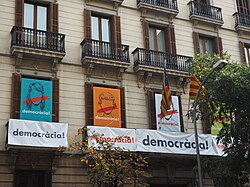
Key Facts
- Founded: July 11, 1961, by Lluís Carulla, Joan Baptista Cendrós, Fèlix Millet, Joan Vallvé, and Pau Riera.
- Primary Mission: Promotion of the Catalan language and culture.
- Membership: Over 190,000 members.
- Current Leader: Xavier Antich.
- Legal Status: Named a public interest body in 2009.
- Key Awards: Creator of the Premi d'Honor de les Lletres Catalanes and the Nit de Santa Llúcia festival.
Historical Evolution
Resistance During the Franco Era
Òmnium Cultural was established during the dictatorship of Francisco Franco, a period when the institutional use of the Catalan language was strictly forbidden. Due to its activities, the association was shut down by Francoist authorities in 1963. For the next four years, Òmnium operated as a clandestine association until 1967, when it successfully won the legal right to exist and was officially authorized once again.
Cultural Preservation and Literary Awards
To maintain Catalan culture under restrictive conditions, Òmnium sponsored various literary contests and awards. In 1969, it created the Premi d'Honor de les Lletres Catalanes. By the early 1970s, the organization established the Nit de Santa Llúcia, a celebration of Catalan literature that grants three prestigious prizes: the Premi Sant Jordi (novel), the Premi Mercè Rodoreda (short story), and the Premi Carles Riba (poetry).
Transition to Democracy and Political Activism
Following the end of the dictatorship in 1975 and the restoration of democracy, Òmnium shifted its focus toward supporting Catalan self-government. In recognition of its contributions, the Catalan government (Generalitat) awarded the organization the Creu de Sant Jordi in 1984.
The organization's role became more overtly political in the 21st century. In 2010, Òmnium organized a massive protest in Barcelona, drawing one million people to demand national self-determination after the Spanish Constitutional Court rejected the new Statute of Autonomy of Catalonia. By 2012, the association formally committed itself to the cause of Catalan independence.
Leadership and Legal Challenges
The association has faced significant legal scrutiny due to its involvement in the 2017 Catalan independence referendum. Under the presidency of Jordi Cuixart, who was elected in 2015, Òmnium became a primary supporter of the self-determination vote. Following Operation Anubis, Cuixart was imprisoned, leading to international calls for his release from organizations such as Amnesty International, PEN International, and the Office of the United Nations High Commissioner for Human Rights.
In 2022, Xavier Antich was elected president, securing the position with 21,758 votes.
Structure and Financials
Òmnium Cultural maintains a wide reach, collaborating with similar organizations in other Catalan-speaking regions, including Acció Cultural del País Valencià in the Valencian Country and Obra Cultural Balear in the Balearic Islands.
The organization's funding has been a subject of public record and debate. Between 2005 and 2012, it received approximately 13 million euros in grants from the Generalitat. While reports suggest total funding from the regional government between 2011 and 2016 may have exceeded 20 million euros, Òmnium announced in 2013 that it would cease receiving these grants. By 2018, the Spanish Civil Guard reported that 98% of the organization's budget was derived from private contributions.
| Category | Details |
|---|---|
| Headquarters | Barcelona, Catalonia |
| Founded | July 11, 1961 |
| Membership Size | 190,000+ |
| Regional Presence | 52 offices |
| Key Affiliates | ACPV (Valencia), OCB (Balearic Islands) |
Frequently Asked Questions
What is the primary purpose of Òmnium Cultural?
Originally founded to promote the Catalan language and spread Catalan culture, the organization has expanded its mission to include the defense of Catalan self-government and the right to self-determination.
Who are the founders of the association?
The association was founded on July 11, 1961, by Lluís Carulla, Joan Baptista Cendrós, Fèlix Millet, Joan Vallvé, and Pau Riera.
How does Òmnium Cultural support Catalan literature?
It sponsors several awards, most notably the Premi d'Honor de les Lletres Catalanes and the Nit de Santa Llúcia festival, which awards prizes for novels, short stories, and poetry.
Has the organization faced legal issues?
Yes. It operated clandestinely from 1963 to 1967 during the Franco regime. More recently, former president Jordi Cuixart was jailed following the 2017 independence referendum, and the organization was fined €200,000 in 2015 for data protection failures.
How is Òmnium Cultural funded?
While it previously received significant grants from the Catalan government (Generalitat), the organization stated in 2013 it would stop receiving such funds. As of 2018, the Spanish Civil Guard indicated that 98% of its budget comes from private contributions.