Olivos: The History and Evolution of a Distinguished Argentine Suburb
Located as a strategic point between the bustling energy of Buenos Aires and the interior of the country, Olivos has evolved from a colonial trade stop into one of Argentina's most prestigious residential areas. Its journey from an olive-growing outpost to the seat of the Partido de Vicente López reflects the broader urban and political development of the region.
Foundations and Early Growth
During much of the 18th century, the area served as a vital stop along the trade route connecting Buenos Aires and Córdoba. The region's identity began to take shape around 1720 when Domingo de Acassuso, one of the first local landowners, began cultivating olive trees. This agricultural focus led to the spot being officially named Olivos (meaning "Olive Trees") on February 19, 1770.
Over time, ownership of the land shifted to figures such as Viceroy Antonio de Olaguer y Feliú and German immigrant Hernán Wineberg. A pivotal moment occurred in 1860 when Wineberg sold a large tract of land to facilitate the construction of the Ferrocarril Central Argentino (Central Argentine Railway).
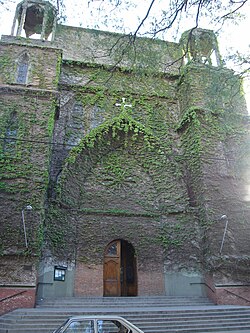
The inauguration of the local railway station in 1863—one of the first in Argentina—transformed the area. The combination of natural tranquility and convenient access to the growing capital attracted homeowners, leading to the consecration of the Church of Jesus of the Olive Trees in 1897.
Urbanization and Civic Development
The administrative landscape changed in 1905 when an edict subdivided the San Isidro Partido. This created the modern Partido de Vicente López, with Olivos designated as its administrative seat.
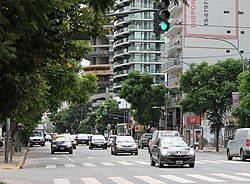
By 1917, Olivos had established itself as an upscale community. Local businessman Rodolfo Negrete contributed to the city's infrastructure by founding its first clinic and marina. The 1920s saw further modernization, including the paving of city streets and the upgrading of the marina. The accessibility of the suburb was further enhanced in the mid-1930s with the opening of National Route 9 to the west, making it an ideal location for commuters working in Buenos Aires.
The Official Presidential Residence
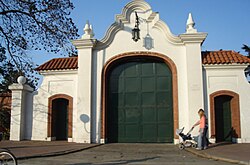
Olivos gained national prominence in 1941 following the death of Carlos Villate Olaguer, a descendant of Viceroy Olaguer y Feliú. A 35-hectare (86-acre) portion of the family estate was deeded to the national government to serve as the official residence for the President of Argentina.
The estate's main house, commissioned in 1851 by Miguel José de Azcuénaga, was designed by the celebrated artist and architect Prilidiano Pueyrredón. The mansion features an eclectic, Italianate-inspired style, while the surrounding complementary structures were built using variations of Baroque architecture.
Political Milestones and Modern History
The presidential residence has been the site of significant political maneuvers, most notably the Olivos Pact. Signed on November 14, 1993, this agreement between President Carlos Menem and former President Raúl Alfonsín (leader of the Radical Civic Union) paved the way for constitutional reforms. These reforms allowed for presidential re-election and the popular election of the Mayor of Buenos Aires, a position that had previously been appointed.
The city has also faced tragedy and embraced tourism. On December 20, 1993, the Kheyvis nightclub fire occurred, marking the deadliest tragedy of its kind in Argentina at that time. In 1995, Olivos expanded its appeal as a destination by becoming a stop on the Tren de la Costa tourist railway.
Key Facts
- Official Naming: Named Olivos on February 19, 1770, due to olive cultivation started by Domingo de Acassuso.
- Administrative Role: Designated as the seat of the Partido de Vicente López in 1905.
- Presidential Estate: A 35-hectare estate deeded to the government in 1941.
- Architectural Heritage: The presidential mansion was designed by Prilidiano Pueyrredón in an Italianate style.
- Political Significance: Site of the 1993 Olivos Pact regarding constitutional reform.
| Year | Event | Significance |
|---|---|---|
| 1770 | Official Naming | Established as "Olivos" based on local agriculture. |
| 1863 | Railway Station Opening | Increased accessibility and residential growth. |
| 1905 | Creation of Partido de Vicente López | Olivos became the administrative seat. |
| 1941 | Presidential Residence Deed | 35 hectares transferred to the national government. |
| 1993 | Olivos Pact | Agreement enabling presidential re-election. |
| 1995 | Tren de la Costa | Integration into the tourist railway system. |
Frequently Asked Questions
Why is the city called Olivos?
The city was named Olivos, which means "Olive Trees," because early landowner Domingo de Acassuso began cultivating olive trees in the area around 1720.
Who designed the official presidential residence?
The main house of the residence was designed by the renowned local artist and architect Prilidiano Pueyrredón and commissioned by Miguel José de Azcuénaga in 1851.
What was the Olivos Pact?
The Olivos Pact was a 1993 political agreement between President Carlos Menem and former President Raúl Alfonsín that allowed for the re-election of the President and the popular election of the Mayor of Buenos Aires.
How did the railway affect the development of Olivos?
The 1863 opening of the local railway station, one of Argentina's first, attracted homeowners seeking a quiet environment with easy access to the capital, accelerating the area's growth as a suburb.
What is the administrative status of Olivos?
Since a 1905 edict that subdivided the San Isidro Partido, Olivos has served as the seat of the Partido de Vicente López.