Oligocene Epoch: The Transition from Greenhouse to Icehouse
The Oligocene is a pivotal epoch in Earth's history, spanning from 33.9 to 23.04 million years ago (Ma). Positioned within the Paleogene period of the Cenozoic era, it represents a dramatic turning point in the planet's climate. This era saw the world shift from the lush, warm "greenhouse" conditions of the Eocene to a cooler "icehouse" state, characterized by the first permanent ice sheets in Antarctica.
Geologically, the Oligocene is divided into two formal ages: the Rupelian (the older stage) and the Chattian (the younger stage). The boundaries of this epoch are defined by the appearance and disappearance of specific planktonic foraminifera—tiny marine organisms—at key sites in Italy.
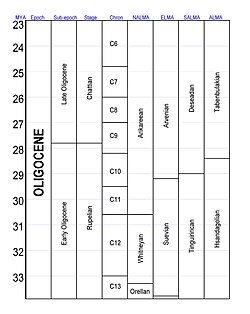
Key Facts
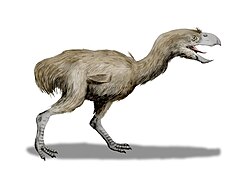
- Time Span: 33.9 to 23.04 million years ago.
- Climate Shift: Transition from a global greenhouse to an icehouse world.
- Major Event: Formation of the first permanent Antarctic ice sheets.
- Tectonic Changes: Opening of the Drake Passage and Tasman Gateway, altering ocean currents.
- Key Fauna: Rise of early primates, large mammals like Paraceratherium, and early whales.
- Volcanism: Significant supervolcanic eruptions, including the La Garita and Wah Wah Springs calderas.
Climate and Environmental Evolution
The most defining feature of the Oligocene was the Eocene-Oligocene transition. This period was marked by the Oi1 event, a sharp cooling phase that triggered the rapid glaciation of Antarctica. This shift was not merely a local event but a global transformation that affected sea levels and atmospheric circulation.
![Climate change during the last 65 million years[32]](/images/26/cd/26cd862c938adfc00cbb78a0ec8ba1c6eb07c5f8728549fab4ce9f573078106d.png)
The Role of Oceanic Gateways
The cooling of the planet was heavily influenced by changes in paleogeography. The opening of the Drake Passage (between South America and Antarctica) and the Tasman Gateway (between Australia and Antarctica) allowed for the creation of the Antarctic Circumpolar Current. This current effectively thermally isolated Antarctica from warmer northern waters, accelerating the growth of ice sheets.
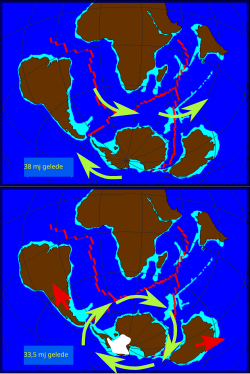
Middle and Late Oligocene Trends
Following the initial cooling, the Middle Oligocene experienced the Oi2 event, another significant cooling pulse. However, the Late Oligocene saw a period of relative warming. During this time, the Tibetan Plateau underwent aridification and subsequent warming, influencing regional weather patterns in Asia.
Biosphere: Flora and Fauna
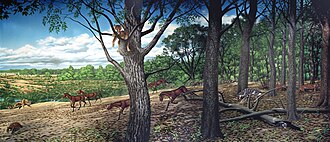
As the climate cooled and became more seasonal, the Earth's vegetation shifted. Dense tropical forests began to give way to more open landscapes and grasslands, particularly in Northern China and North America. This environmental change drove the evolution of land mammals.
Mammalian Evolution
The Oligocene was a time of significant diversification. In Asia, the massive Paraceratherium—one of the largest land mammals to ever exist—roamed the landscape. Meanwhile, early carnivores like Hyaenodon and the nimravids (false saber-toothed cats) became prominent predators.
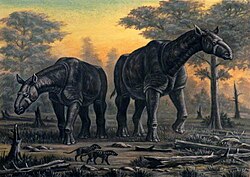
Primates and Marine Life
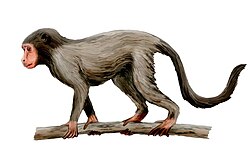
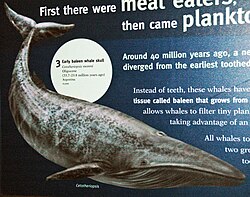
The epoch also witnessed the rise of early catarrhines, such as Aegyptopithecus, which are ancestors to both Old World monkeys and apes. In the oceans, whales continued to evolve, with genera like Aglaocetus adapting to the changing marine environments.
Geological and Tectonic Activity
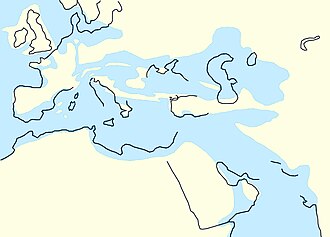
Beyond the poles, the world was tectonically active. The Tethys Seaway began to close, and the Greenland-Iceland-Faroes ridge influenced the flow of deep water in the North Atlantic. The era was also punctuated by massive volcanic events, most notably the La Garita Caldera (28–26 Ma) and the Wah Wah Springs Caldera (30 Ma).
| Feature | Details |
|---|---|
| Duration | 33.9 – 23.04 Ma |
| Ages | Rupelian, Chattian |
| Climate State | Greenhouse $\rightarrow$ Icehouse |
| Key Tectonic Event | Opening of Drake Passage |
| Notable Fauna | Paraceratherium, Aegyptopithecus, Nimravus |
| Major Volcanism | La Garita & Wah Wah Springs Calderas |
Frequently Asked Questions
What was the most significant climate change during the Oligocene?
The most significant change was the transition from the Eocene greenhouse world to the Oligocene icehouse world, specifically the initiation of permanent ice sheets in Antarctica during the Oi1 event.
How did the Drake Passage affect the global climate?
The opening of the Drake Passage allowed the Antarctic Circumpolar Current to form, which blocked warmer waters from reaching Antarctica, leading to extreme cooling and glaciation of the southern continent.
Which animals were dominant during the Oligocene?
Dominant land animals included the giant hornless rhinoceros Paraceratherium, the predatory Hyaenodon, and early primates like Aegyptopithecus. In the oceans, early whales like Aglaocetus were prevalent.
What are the two main subdivisions of the Oligocene?
The Oligocene is divided into two ages: the Rupelian (the earlier part) and the Chattian (the later part).
Were there any major volcanic events in the Oligocene?
Yes, the epoch saw massive supervolcanic explosions, including the Wah Wah Springs Caldera approximately 30 million years ago and the La Garita Caldera between 28 and 26 million years ago.