Oil Industry History and the Evolution of the Petroleum Age
Since the dawn of the Industrial Revolution, fossil fuels have served as the primary engines of global energy. While coal dominated the landscape from 1800 well into the 20th century, a series of technological breakthroughs and industrial shifts paved the way for the Age of Oil, transforming how the world moves, lights its homes, and powers its economy.
The Foundations of the Petroleum Era
The transition to petroleum was sparked by two pivotal innovations in the mid-19th century. In 1846, Abraham Gesner invented kerosene, a combustible hydrocarbon liquid, which made petroleum and coal practical raw materials for lighting. Shortly after, in 1859, Edwin Drake developed the first modern drilling process for deep oil wells, enabling the extraction of oil from depths previously unreachable.
The industry soon saw the rise of massive corporate entities. In 1870, John Davison Rockefeller founded the Standard Oil Company. As the first great U.S. business trust, Standard Oil dominated the industry through aggressive management until Rockefeller's retirement in 1897.
While lighting fuel provided the initial spark, the invention of the internal combustion engine—an engine that generates power by burning fuel inside a cylinder—was the primary catalyst for petroleum's global importance. This was exemplified by Karl Friedrich Benz, who developed petrol-powered automobiles by 1878 and secured a patent for the practical automobile in 1879.
The Rise of Large-Scale Production
The contemporary era of oil is widely traced back to 1901 with the strike at Spindletop near Beaumont, Texas. This discovery, led by Croatian explorer Antun Lučić and Texan Patillo Higgins, launched large-scale oil production and made petroleum products widely available to the general public.
Following World War II in 1945, the world entered a period of significant economic prosperity known as the post-war economic expansion. This growth, which lasted until the early 1970s, was heavily powered by the increased use of petroleum. However, this era of abundance ended abruptly with the 1973 oil crisis.
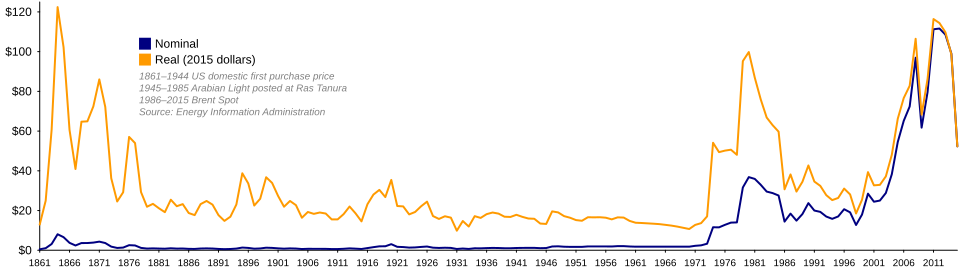
Predicting the Peak: The Concept of Peak Oil
As production scaled, scientists began to question the longevity of these finite resources. In 1956, geophysicist M. King Hubbert deduced that U.S. oil production would peak between 1965 and 1970 (it eventually peaked in 1971) and predicted that global production would peak within half a century. This line of thinking was continued in 1989 by Colin Campbell, who also predicted a production peak.
This led to the concept of Peak Oil: the specific point in time when the maximum rate of petroleum extraction is reached, after which production enters a terminal decline. Scholars define the end of the oil age as the point where consumption outstrips decreasing production, rendering its use either impossible or unprofitable.
| Year | Event/Innovation | Significance |
|---|---|---|
| 1846 | Invention of Kerosene | Made petroleum practical for lighting fuel |
| 1859 | Modern Drilling Process | Enabled deep oil well extraction |
| 1870 | Standard Oil Founded | First great U.S. business trust |
| 1879 | Practical Automobile Patent | Increased demand for petrol |
| 1901 | Spindletop Strike | Launched large-scale oil production |
| 1973 | Oil Crisis | Ended the post-WWII economic expansion |
The Future of Petroleum and Alternative Energy
In the mid-20th century, the arrival of the Atomic Age led many to believe that oil would be quickly replaced by nuclear power. However, this transition never fully materialized, largely due to environmental fears following major accidents, including the 1979 Three Mile Island accident, the 1986 Chernobyl disaster, and the 2011 Fukushima nuclear disaster.
Today, debate continues regarding the remaining lifespan of the oil age. Some estimates suggest that, based on current consumption rates, existing reserves will last at least until 2040. Conversely, OPEC estimated in 2004 that with substantial investments, oil output could nearly double by 2025.
Key Facts
- Kerosene (1846) and deep drilling (1859) were the foundational technologies of the oil age.
- The internal combustion engine was the primary driver of petroleum's rise in importance.
- The 1901 Spindletop strike in Texas initiated the era of large-scale oil production.
- Peak Oil refers to the maximum rate of extraction before a terminal decline begins.
- Nuclear power failed to replace oil as predicted due to high-profile disasters in 1979, 1986, and 2011.
Frequently Asked Questions
What is Peak Oil?
Peak oil is the point in time when the maximum rate of petroleum extraction is reached. After this peak, the rate of production is expected to enter a terminal decline.
Who founded the first major U.S. oil trust?
John Davison Rockefeller founded the Standard Oil Company in 1870, which dominated the industry until his retirement in 1897.
How did the internal combustion engine affect the oil industry?
The invention of the internal combustion engine was the major influence in increasing the importance of petroleum, as it created a massive new demand for petrol-powered transportation.
Why didn't atomic power replace oil in the mid-20th century?
The expected shift to atomic power was hindered by environmental fears following significant nuclear accidents at Three Mile Island (1979), Chernobyl (1986), and Fukushima (2011).
When is the oil age predicted to end?
The end of the oil age is defined as the point when consumption exceeds decreasing production. Some estimates suggest current reserves will last until at least 2040, though production capabilities depend on investment levels.