Occult Rock: The History and Evolution of Doom and Witch Rock
Occult rock, frequently referred to as doom rock or witch rock, is a specialized subgenre of rock music that blends heavy instrumentation with lyrical themes centered on the supernatural and the arcane. Emerging in the late 1960s and early 1970s across England and the United States, the genre draws from a rich tapestry of musical styles and cultural influences, ranging from classic horror cinema to the literature of Dennis Wheatley.
While often associated with dark or gloomy atmospheres, occult rock is not inherently defined by bleakness. Instead, it is characterized by its thematic fascination with the occult and a sonic foundation built upon hard rock, blues, and psychedelic experimentation.
Key Facts
- Origins: Developed in the late 1960s and early 1970s in the US and UK.
- Pioneers: Early influential bands include Coven, Black Widow, and Blue Öyster Cult.
- Musical Roots: Influenced by proto-metal, hard rock, psychedelic rock, progressive rock, and blues.
- Legacy: Served as a foundational influence for heavy metal, stoner metal, doom metal, and sludge metal.
- Modern Revival: Experienced a resurgence in the 2000s with bands like Ghost and Kadavar.
Musical Characteristics and Stylistic Origins
The sound of occult rock is rooted in the heavy, distorted textures of proto-metal (the early precursors to heavy metal) and the expansive nature of progressive and psychedelic rock. Standard instrumentation typically consists of vocals, guitar, bass, and drums.
A defining element of the genre is the use of heavy riffing. For instance, the doom rock style of riffing pioneered by Tony Iommi is credited with helping define the broader heavy metal genre. This sonic weight, combined with lyrics referencing the occult, creates the distinct identity of witch rock.
The Early Era: 1960s to 1990s
The genre first materialized through the work of groups such as Jacula, Black Widow, and most notably, Coven. A pivotal moment in the development of the occult rock sound was the 1968 release of Iron Butterfly's "In-A-Gadda-Da-Vida." Coven further pushed the boundaries in 1969 with their debut album, Witchcraft Destroys Minds & Reaps Souls, which preceded Black Widow's debut, Sacrifice.
In 1972, Blue Öyster Cult released their self-titled debut, which would later exert a significant influence on modern acts like Ghost.

The rise of the genre was not without controversy. Following the Manson Family murders, the association with occult themes led to the halted distribution of several albums, which inadvertently heightened public fear and fascination. When Black Sabbath released their debut album in 1970, critic Lester Bangs of Rolling Stone described the band as "England's answer to Coven."
Other early influential acts included Blue Cheer and Hawkwind. These bands are viewed by critics as essential to the birth of heavy metal and its derivative forms, such as stoner metal (a slow-tempo style influenced by psychedelic rock), doom metal (characterized by slow tempos and thick textures), and sludge metal (a blend of doom and hardcore punk).
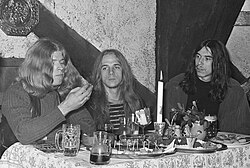
Commercial success also touched the genre; Blue Öyster Cult's 1976 single "(Don't Fear) The Reaper" from the album Agents of Fortune reached number 12 on the Billboard Hot 100. The occult aesthetic later saw a revival through the New Wave of British Heavy Metal (NWOBHM) via bands like Venom, Satan, and Hell.
The Modern Revival: 2000s to Present
Since the 2000s, occult rock has seen a significant resurgence. Modern bands have embraced a sound reminiscent of the 1970s, with Ghost becoming one of the most commercially successful, seeing their third and fourth albums reach number 8 and number 3 on the Billboard 200, respectively.
Other notable bands in this revival include Luciferian Light Orchestra, The Devil's Blood, Witch Mountain, Orchid, and Blood Ceremony. This new wave is described as a diverse mix of styles, incorporating post-rock, psych-prog, and a notable increase in bands featuring female vocalists.
In Germany, Kadavar has been identified as a leader of the scene, despite the band's own rejection of the label. Their 2015 album Berlin reached number 21 on the Billboard Heatseekers albums charts.
| Era | Key Bands | Core Influences | Derivative Genres |
|---|---|---|---|
| Origins (1960s-70s) | Coven, Black Widow, Black Sabbath, Blue Öyster Cult | Blues, Psychedelic Rock, Proto-metal | Heavy Metal, Doom Metal, Stoner Metal |
| Revival (2000s-Present) | Ghost, Kadavar, Blood Ceremony | 1970s Occult Rock, Post-rock, Psych-prog | Modern Doom/Psych variants |
Frequently Asked Questions
Is occult rock always dark or gloomy?
No. While many bands utilize dark atmospheres, the genre is not inherently or invariably gloomy; it is defined more by its lyrical themes and musical roots than by a specific mood.
Which bands are considered the pioneers of occult rock?
Coven and Black Widow are cited as pioneers, with other early influential groups including Jacula, Black Sabbath, and Blue Öyster Cult.
How did the Manson Family murders affect the genre?
The association with the occult during that period led to some albums being halted from distribution, which increased public fear and the perceived danger of the music.
What is the difference between occult rock and heavy metal?
Occult rock is a precursor and subgenre that heavily influenced heavy metal. While heavy metal is a broader category, occult rock specifically emphasizes themes of the arcane and supernatural combined with psychedelic and progressive rock elements.
Which modern bands are leading the occult rock revival?
Ghost is one of the most prominent modern acts, alongside others such as Kadavar, Blood Ceremony, and The Devil's Blood.