NPR: The Evolution of American Public Radio
National Public Radio, commonly known as NPR, stands as a cornerstone of the United States media landscape. Founded on February 26, 1970, and beginning its first broadcasts on April 20, 1971, NPR has spent over five decades developing the art and technical potential of radio. As a non-commercial network, it provides a global audience with news, storytelling, and cultural programming, operating as a collaborative effort owned by its member public radio stations.
From its early days as the Association of Public Radio Stations and the National Educational Radio Network, NPR has evolved from a traditional broadcast entity into a multi-platform media powerhouse, integrating podcasts and mobile applications to reach a modern demographic.
Key Facts
- Founded: February 26, 1970.
- First Air Date: April 20, 1971.
- Ownership: Owned by its member public radio stations.
- Current CEO: Katherine Maher (since 2024).
- 2023 Financials: Revenue of $318.7 million and an endowment of $342.3 million.
- Reach: Broadcasts across the United States, Guam, Puerto Rico, and via the American Forces Network.
Organizational History and Growth
NPR's journey through the decades reflects the broader shifts in American media. The 1970s and 80s established the network's foundational identity, while the 1990s and 2000s saw a significant expansion in reach and digital adoption.
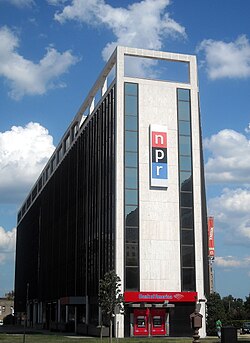
A pivotal moment in the network's physical history occurred in 2013. NPR moved from its longtime headquarters at 635 Massachusetts Avenue NW in Washington, D.C., which was subsequently demolished, to a new facility at 1111 North Capitol Street, NE.

Governance and Leadership
The network is governed by a board of directors composed of NPR member station managers and public members. As of January 2024, the board included leaders such as Jennifer Ferro (President of KCRW and board chair) and various executives from sectors including technology (Apple) and business (Starbucks, BCG).
The leadership of NPR has been shaped by a series of presidents and CEOs, starting with Donald Quayle (1970–1973) and continuing through to the current tenure of Katherine Maher, who took the helm in 2024.
Programming and Digital Innovation
NPR produces a wide array of content, ranging from broadcast news and public affairs to storytelling and music. While it produces its own flagship content, such as Weekend All Things Considered, it also distributes a variety of programs and partners with other entities.
Content Distribution
The network's ecosystem includes programs from several sources:
- NPR Produced: News, public affairs, and cultural storytelling.
- American Public Media: Including The Daily (by The New York Times) and Marketplace.
- Public Radio Exchange (PRX): Including This American Life and The World.
- WNYC Studios: Including On the Media and Science Friday.
- Independent: Including Democracy Now! and Metropolitan Opera broadcasts.
The Digital Shift
To adapt to changing listener habits, NPR invested heavily in mobile technology. This included the launch of the NPR News iPhone app in 2009 and the later introduction of NPR One, a curated audio experience. By December 2023, NPR unified its mobile experience, sunsetting the standalone NPR One app to create a more streamlined user interface.

Financials and Funding
NPR's financial model is a blend of member station support, endowments, and underwriting. Underwriting refers to corporate sponsorships that differ from traditional commercials, as they must adhere to stricter non-commercial guidelines set by the FCC (Federal Communications Commission).
| Metric | Value |
|---|---|
| Total Revenue | $318.7 million |
| Endowment | $342.3 million |
| Net Income | −$4.45 million |
Challenges and Controversies
As a prominent public entity, NPR has faced various challenges. These include allegations of ideological bias, disputes over the terminology used to describe "torture," and internal issues regarding sexual harassment. More recently, the network faced a public conflict with Twitter (now X) after being labeled as "state-affiliated media," a designation NPR contested, leading the network to leave the platform.

Frequently Asked Questions
Who owns NPR?
NPR is owned by its member public radio stations, which are the local entities that broadcast NPR's content to the public.
How does NPR differ from commercial radio?
Unlike commercial radio, NPR is a non-commercial network. It does not run traditional advertisements but instead uses underwriting, which is a more limited form of corporate sponsorship.
What is the difference between NPR and PRX?
NPR is a specific public radio network and producer, while the Public Radio Exchange (PRX) is a separate distributor that provides various programs, such as This American Life, to public radio stations.
Where is NPR headquartered?
NPR is headquartered in Culver City, California, though it maintains a significant presence in Washington, D.C., where its primary news operations are based.
Does NPR produce podcasts?
Yes, NPR produces a wide range of podcasts across news, storytelling, and cultural categories, and has partnered with platforms like Spotify to enhance podcast advertising.