NPR: The Evolution of America's Public Radio Network
National Public Radio, commonly known as NPR, stands as a cornerstone of the United States' media landscape. Founded on February 26, 1970, and beginning its first broadcasts on April 20, 1971, NPR has spent over five decades developing the art and technical potential of radio. From its early days as a fledgling network to its current status as a global digital media entity, NPR provides a vital service of news, storytelling, and cultural programming.
Operating as a non-profit organization owned by its member public radio stations, NPR serves a vast broadcast area including the United States, Guam, Puerto Rico, and the American Forces Network. While its roots are in traditional terrestrial radio, the network has aggressively expanded into podcasts and mobile applications to meet the needs of a modern, global audience.
Key Facts
- Founded: February 26, 1970.
- First Air Date: April 20, 1971.
- Ownership: Owned by its member public radio stations.
- Current CEO: Katherine Maher (since 2024).
- 2023 Financials: Revenue of $318.7 million and an endowment of $342.3 million.
- Headquarters: Culver City, California.
Organizational History and Growth
NPR's journey began with a mission to elevate the technical and artistic standards of radio. In its early years, it operated under names such as the Association of Public Radio Stations and the National Educational Radio Network before solidifying its identity as NPR.
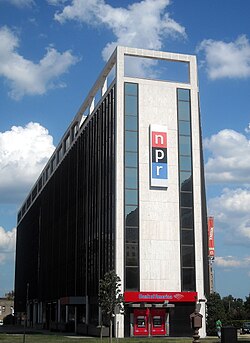
Throughout the 1980s, 90s, and 2000s, the network expanded its reach and diversified its content. A significant physical transition occurred in 2013 when NPR moved from its long-time headquarters at 635 Massachusetts Avenue NW in Washington, D.C., to a new facility at 1111 North Capitol Street, NE.

Leadership and Governance
The network is governed by a board of directors consisting of NPR member station managers and public members. As of January 2024, the board included leaders such as Jennifer Ferro (President of KCRW and board chair) and various executives from sectors including technology (Apple) and business (Starbucks, BCG).
The presidency of NPR has seen several eras of leadership, from its first president, Donald Quayle (1970–1973), through long-tenured leaders like Kevin Klose (1998–2008), and most recently Katherine Maher, who took the helm in 2024.
Funding and Financial Structure
NPR's financial model is a blend of member station fees, grants, and underwriting—a form of sponsorship that differs from traditional commercials by adhering to stricter non-commercial guidelines. In 2023, the organization reported revenue of $318.7 million, though it faced a net income loss of $4.45 million.
The network has faced various financial challenges and political scrutiny over the years, including FCC investigations into underwriting and legislative actions such as the Rescissions Act of 2025 and Executive Order 14290, which have impacted federal funding.
Programming and Digital Innovation
NPR is renowned for its high-quality news and public affairs programming. While it produces its own content, such as Weekend All Things Considered, it also distributes a wide array of programs and collaborates with other entities.
Content Distribution
NPR's ecosystem includes a mix of internally produced shows and those from external partners. Notable non-affiliated programs often heard on NPR stations include the BBC World Service, The Daily from The New York Times, and Marketplace.
The Digital Shift
To adapt to changing listener habits, NPR has invested heavily in mobile technology. This includes the development of the NPR News app and the NPR One app, a curated audio experience. While NPR One was a distinct brand for several years, the network unified its mobile experience in December 2023.

Publications and Cultural Impact
Beyond the airwaves, NPR has extended its expertise into print. The network has published numerous "Curious Listener's Guides" covering genres such as Classical, Jazz, Opera, World Music, and Blues, helping audiences engage more deeply with various musical traditions.

| Category | Detail |
|---|---|
| CEO | Katherine Maher |
| Annual Revenue (2023) | $318.7 Million |
| Endowment (2023) | $342.3 Million |
| Primary Ownership | Member Public Radio Stations |
| Key Digital Product | NPR App / npr.org |
Frequently Asked Questions
Who owns NPR?
NPR is owned by its member public radio stations, which are the local stations across the United States that broadcast NPR's content.
How does NPR make money?
NPR generates revenue through member station fees, corporate underwriting (sponsorships), and grants. It also maintains a significant endowment, which stood at $342.3 million in 2023.
What is the difference between underwriting and commercials?
Underwriting spots are non-commercial acknowledgments of support. Unlike traditional commercials, they are subject to FCC guidelines that prohibit promotional language, calls to action, or qualitative claims.
Where is NPR headquartered?
NPR is currently headquartered in Culver City, California.
Does NPR produce all the shows heard on its stations?
No. While NPR produces many flagship programs, member stations also air content from other sources, such as the BBC World Service, American Public Media, and WNYC Studios.