North Sea Mine Barrage: The Great War's Massive Naval Obstacle
During the final year of the First World War, the Allied powers embarked on one of the most ambitious naval engineering projects in history: the North Sea Mine Barrage. Designed to stifle the movement of German U-boats, this massive underwater wall stretched across the North Sea, blending industrial might with cutting-edge naval technology to protect vital trans-Atlantic shipping lanes.
Key Facts
- Timeline: Laid between June and October 26, 1918.
- Scale: A belt 230 miles long and 15 to 35 miles wide.
- Technology: Utilized the Mk 6 "antenna" mine, allowing for deeper deployment than previous models.
- Industrial Effort: Components were largely manufactured by Detroit automobile firms.
- Deployment: 70,177 mines were laid in total, with the US Navy handling the central area.
- Removal: A massive sweeping operation took place in 1919, though only 25-30% of mines were recovered.
The Concept and Strategic Vision
The idea for a North Sea barrage was first proposed in 1916 by Admiral Reginald Bacon. While the Royal Navy was initially skeptical—primarily because the project required mining waters up to 900 feet deep, far exceeding the 300-foot limit of existing technology—the United States saw a strategic opportunity. For the U.S., the project played to its industrial strengths and offered a way to combat the devastating loss of shipping with minimal risk to personnel.
The breakthrough came with the development of the Mk 6 mine in July 1917. Unlike conventional anchored mines, which would have required 400,000 units to cover the area, the new "antenna" mine was effective at depths of 200 feet. This innovation reduced the required number of mines to 100,000, making the project logistically feasible.
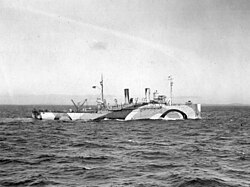
The industrial scale of the operation was staggering. The U.S. Navy spent $40 million, employing 140 contractors and over 400 sub-contractors. Notably, Detroit's automotive industry manufactured almost all components except for the explosives and wire rope. To transport these materials to Scotland, eight converted steamships and 24 freighters were utilized.
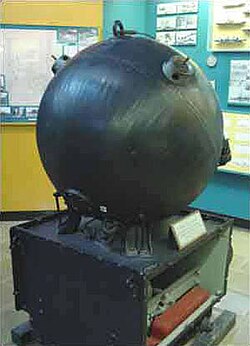
Engineering the Mk 6 Mine
The Mk 6 mine was a 34-inch diameter steel sphere containing 300 lbs of Toxyl (a mixture of 60% trinitro xylene and 40% TNT). Because the U.S. Army controlled the majority of TNT production, Toxyl was used to ensure the Navy had sufficient explosive material.
The mine's deployment system was highly specialized. It rested on a 30-inch square steel anchor box with wheels for easy movement on the minelayer's rails. As the mine was dropped, a mooring cable unwound until a sensor hit the seabed, locking the reel and pulling the buoyant mine to a specific depth.
Detonation and Safety Mechanisms
To prevent accidental detonations during deployment or if a mine broke loose, the Mk 6 featured several safety layers:
- Hydrostatic Safety: Two features ensured the mine remained inert at depths less than 25 feet.
- Salt Pellets: Five spring-loaded switches were held open by salt pellets that took approximately 20 minutes to dissolve in seawater.
- Fuzing: The mine used five parallel fuzes. Four were conventional "horns" (broken by contact), and the fifth was a novel copper wire antenna. When a steel hull touched the antenna, it completed an electrical circuit using seawater as an electrolyte, triggering the detonator.
Laying the Barrage
The barrage was divided into three sectors: Area B (off Orkney), Area C (near Norway), and the central Area A. The Royal Navy managed Areas B and C, while the U.S. Navy, commanded by Rear Admiral Joseph Strauss, handled Area A.
The field consisted of 18 rows of mines. Ten rows were set at 80 feet to target surface ships, while the remaining eight rows were set at 160 and 240 feet to catch submerged submarines. The process involved "excursions" where minelayers steamed in columns 500 yards apart, dropping mines at 100-yard intervals.
The operation was not without technical failures. Between 3% and 19% of mines detonated prematurely due to seawater leaks or overly sensitive antenna relays. These issues were eventually mitigated by adjusting the relay sensitivity to 30-45 millivolts.
Results and Effectiveness
The barrage was completed just as the war ended on October 26, 1918. While theoretical odds suggested a 66% chance of a surfaced U-boat hitting a mine, actual assessments placed the odds closer to 20% for surfaced and 10% for submerged vessels.
| U-boat | Date | Location/Area | Status |
|---|---|---|---|
| SM UB-12 | August 19 | Unknown | Possibly sunk |
| SM U-92 | September 9 | Area B | Presumed sunk (Confirmed 2007) |
| SM UB-127 | September 9 | Area B | Sunk |
| SM U-156 | September 25 | Area A | Sunk |
| SM U-102 | September | Area B | Presumed sunk (Confirmed 2006) |
| SM UB-104 | September 19 | Area B | Sunk |
| SM UB-123 | October 18 | Area A | Sunk |
The Perilous Task of Removal
Clearing the barrage in 1919 was as dangerous as laying it. Using a method involving serrated wires suspended between ships (held by "kites"), crews would cut the mooring cables, causing the mines to float to the surface where they could be destroyed by gunfire.
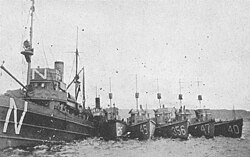
The operation was plagued by accidents. Approximately one-third of the sweeping ships were damaged by explosions, and several crew members were killed. The Richard Bulkeley was sunk on July 12, leading Rear Admiral Strauss to discontinue the use of trawlers for sweeping. By September 30, 1919, the barrage was declared cleared, although only 25% to 30% of the original mines were actually recovered.
Frequently Asked Questions
What made the Mk 6 mine different from previous mines?
The Mk 6 featured a copper wire antenna fuze and improved buoyancy, allowing it to be effective at depths of 200 feet. Previous minefields were generally limited to depths of 300 feet or less.
Why did the United States lead the project?
The U.S. was highly motivated to stop the loss of trans-Atlantic shipping and possessed the industrial capacity (specifically in the automotive sector) to manufacture the necessary components on a massive scale.
How effective was the barrage in sinking U-boats?
While several U-boats were confirmed sunk, the actual effectiveness was lower than theoretical estimates. It is debated whether the barrage significantly impacted German morale or if the Germans simply swept safe channels through it.
Why were so few mines recovered during the cleanup?
Only 25-30% of the mines were found because many had either detonated prematurely, broken free of their moorings due to storms, or sunk to the ocean floor.
What was Toxyl and why was it used?
Toxyl was a mixture of 60% trinitro xylene (TNX) and 40% TNT. It was used because the U.S. Army controlled the TNT supply and would not release enough for the Navy's barrage requirements.