North American Labor Unions: Trends in the US, Canada, and Costa Rica
The landscape of organized labor in North America reveals a complex history of growth, decline, and political struggle. From the massive strike waves of the early 20th century in the United States to the church-supported movements in Costa Rica, labor unions have played a pivotal role in shaping worker rights and national policy.
Labor Trends in the United States and Canada
Between 1920 and the mid-1960s, the United States and Canada followed similar trajectories in unionization—the percentage of workers belonging to a union—with both nations peaking at approximately 30%. However, the paths diverged significantly in the latter half of the century.
In the United States, the unionization rate entered a steady decline after 1974, falling to 12% by 2011. In contrast, Canada maintained a higher rate, dropping from 37% in the mid-1980s to 30% in 2010. This disparity is attributed to a different industrial mix and more favorable labor laws within Canada.
Organizational Structures and Political Ties
The two nations are represented by different national trade union centers. The AFL-CIO represents roughly 12.4 million workers in the U.S. and maintains no formal political affiliation. Conversely, the Canadian Labour Congress (CLC) represents over 3 million workers and is historically and constitutionally affiliated with the New Democratic Party.
The Decline of the American Strike
The United States experienced its most significant strike wave in 1937, recording 4,740 strikes. Over the following decades, the frequency of major strikes and lockouts plummeted. From 381 incidents in 1970, the number dropped to 187 in 1980, and finally to just 11 in 2010—a 97% decrease. This decline was driven largely by corporate strategies, where companies countered strike threats by threatening to close or relocate plants.
Labor Evolution in Costa Rica
Labor unions in Costa Rica emerged in the late 1880s, initially organized with the support of the Catholic Church. By 1913, the influence of the Popular Vanguard Party helped unions push for tax reforms introduced by Alfredo González Flores.
A defining moment occurred in 1934 during the United Fruit Company strike, a national event involving more than 30 unions. The strike ended with the imprisonment of many labor leaders. The violent repression of these leaders by head of state Teodoro Picado Michalski created the tensions that eventually led to the 1948 Costa Rican Civil War.
Despite this turmoil, unions continued to grow with church support, achieving the first collective bargaining agreement—a legal contract between an employer and a union—in 1967.
Modern Challenges and Political Influence
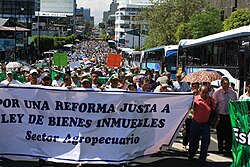
In the 1980s, Óscar Arias implemented austerity measures to reduce the power of private sector unions, which inadvertently increased labor activity as unemployment and poverty rose. More recently, unions attempted to organize against the 2007 Central American Free Trade Agreement referendum, though they were unsuccessful.
Political influence saw a boost when Luis Guillermo Solís and the Citizens' Action Party won the Presidency and several Legislative Assembly seats. Current union priorities include:
- Salary increases to keep pace with inflation.
- Regulation of public commodities.
- Strengthening the Caja Costarricense del Seguro Social (Costa Rican Social Security Department).
- Increased environmental regulation and oversight of cooperative banks.
- The passage of a new labor law, which had previously been vetoed by former president Laura Chinchilla.
Key Facts
- US Unionization: Dropped from a 30% peak to 12% in 2011.
- Canadian Unionization: Remained higher, at 30% in 2010.
- Strike Trends: US major strikes fell from 381 in 1970 to 11 in 2010.
- Costa Rican Origins: First unions formed in the late 1880s with Catholic Church assistance.
- Political Ties: The CLC is affiliated with the New Democratic Party, while the AFL-CIO is non-affiliated.
Regional Labor Comparison
| Feature | United States | Canada | Costa Rica |
|---|---|---|---|
| National Center | AFL-CIO | Canadian Labour Congress | Various (Public/Private) |
| Political Affiliation | None (Formal) | New Democratic Party | Varies (e.g., Citizens' Action Party) |
| Recent Union Rate | 12% (2011) | 30% (2010) | Not Specified |
| Key Historical Event | 1937 Strike Wave | Steady mid-century growth | 1934 United Fruit Co. Strike |
Frequently Asked Questions
Why is the unionization rate higher in Canada than in the US?
The difference is attributed to a different mixture of industries and more favorable labor laws in Canada.
What caused the sharp decline in US strikes between 1970 and 2010?
The number of major strikes fell by 97% largely because companies countered strike threats by threatening to close or move their plants.
What role did the Catholic Church play in Costa Rican labor?
The Catholic Church helped organize the first unions in the late 1880s and continued to support their growth over time.
What are the primary goals of current Costa Rican labor unions?
Current goals include inflation-adjusted salaries, stronger social security through the Caja Costarricense del Seguro Social, environmental regulations, and the passage of a new labor law.
How did the 1934 United Fruit Company strike affect Costa Rica?
The strike involved over 30 unions but ended with the imprisonment of leaders and violent repression, contributing to the tensions that led to the 1948 Civil War.