Union Busting: Tactics, History, and Legal Frameworks
Union busting refers to a diverse range of activities designed to disrupt, weaken, or prevent the growth of trade unions within a workplace. These actions can vary significantly in nature, ranging from subtle administrative maneuvers to overt, sometimes violent, confrontations. Because labor laws are governed by individual nations, the legality and regulation of these tactics differ widely across the globe.
While Article 23 of the Universal Declaration of Human Rights states that everyone has the right to form or join a trade union, this provision is not legally binding and often lacks direct enforcement in the legal relationship between employers and employees.
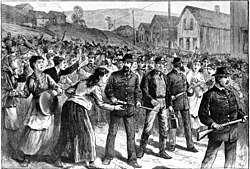
Key Facts
- Union busting can involve both legal and illegal activities depending on local jurisdiction.
- The National Labor Relations Act of 1935 outlawed employer-controlled unions in the United States.
- Tactics include lockouts, strikebreaking, termination of employment, and permanent replacements.
- Labor protections in the U.S. often vary by state, with generally more protections in Democratic-leaning states.
- The 2005 Gate Gourmet dispute in the UK saw over 600 workers dismissed following unofficial strike action.
Historical Perspectives on Labor Conflict
The United Kingdom
Following the repeal of the Combination Laws in 1824, workers in the UK gained the ability to form labor organizations, though significant restrictions remained. A notable early instance of struggle occurred in 1834 with the Tolpuddle Martyrs. Members of the Friendly Society of Agricultural Labourers were convicted under laws prohibiting secret oaths and sentenced to penal transportation to Australia. They were eventually released in 1836 and 1837, sparking a movement to defend their rights.
In more recent history, the 2005 Heathrow Airport dispute involving Gate Gourmet serves as a major example of mass dismissals. After workers engaged in what was deemed unofficial strike action regarding redundancies and pay changes, over 600 employees were reportedly sacked with only three minutes' notice. The TUC suggested the dispute was engineered by the company to replace permanent staff with workers on less favorable contracts.

The United States
In the U.S., the legal landscape for unions has been shaped by several landmark statutes. The National Labor Relations Act (NLRA) of 1935 prohibited employers from dominating or assisting labor organizations. This was later supplemented by the Taft–Hartley Act (1947) and the Landrum–Griffin Act (1959), which guarantee the rights of private employees to engage in collective bargaining.
The public sector has its own unique history. In 1962, President John F. Kennedy issued Executive Order 10988, granting public sector employees the right to form unions but making strikes illegal. This led to a significant confrontation in 1981 when President Reagan fired striking members of the Professional Air Traffic Controllers Organization (PATCO), leading to the union's dissolution and its eventual reformation as the National Air Traffic Controllers Association.
Complexities in Modern Labor Relations
Unions as Union Busters
Conflict is not always limited to employers versus employees; sometimes, it occurs between different labor organizations. For example, the International Brotherhood of Teamsters (IBT) was found guilty of unlawfully union busting its own organizer employees in 2012. Similarly, the SEIU and CNA engaged in a conflict involving accusations of "raiding" each other's members in Ohio.
The Role of Healthcare and Public Funds
The regulation of labor in the healthcare industry has required delicate balancing to ensure patient care is not compromised during strikes. While nonprofit hospital workers were initially excluded from the NLRA, an amendment in 1974 extended protections to them. However, legal battles continue regarding employer speech; the 2007 Supreme Court decision in Chamber of Commerce v. Brown ruled that federal law pre-empted a California law that attempted to limit how employers spoke to employees about union issues.
Summary of Labor Regulation and Tactics
| Category | Examples/Details |
|---|---|
| Common Tactics | Lockouts, strikebreaking, permanent replacements, and captive audience meetings. |
| U.S. Legislation | National Labor Relations Act (1935), Taft–Hartley Act (1947), Landrum–Griffin Act (1959). |
| Legal Disputes | PATCO strike (1981), Gate Gourmet dismissals (2005), SEIU vs. CNA conflict. |
| International Rights | Article 23 of the Universal Declaration of Human Rights. |
Frequently Asked Questions
What is the difference between legal and illegal union busting?
The distinction depends entirely on the specific labor laws of the country or state. Some activities, like certain types of employer communication, are protected by law, while others, such as coercing employees or dominating a union, are prohibited.
How does the National Labor Relations Act affect employers?
The NLRA prohibits employers from assisting in the organization of a competing union or dominating any labor organization, ensuring that unions remain independent from employer control.
Can public sector employees strike in the United States?
While rights vary, certain executive orders and laws have made striking illegal for specific public sector groups, such as the air traffic controllers involved in the 1981 PATCO strike.
What are "strikebreakers"?
Strikebreakers are individuals or entities used to continue operations during a labor strike, often used as a tactic to weaken the impact of a work stoppage.
Why is the healthcare industry treated differently in labor law?
Special considerations are made for healthcare to ensure that labor disputes do not interrupt life-sustaining patient care delivery.