Norman Schwarzkopf: The Architect of Operation Desert Storm
General H. Norman Schwarzkopf was a towering figure in American military history, best known for his role as the commander of United States Central Command (CENTCOM) during the Gulf War. A man of immense physical presence and intellectual rigor, Schwarzkopf led a massive international coalition to liberate Kuwait from Iraqi occupation, cementing his legacy as one of the most influential generals of the late 20th century.
Known by nicknames such as "Stormin' Norman" and "The Bear," Schwarzkopf's career spanned from the early Cold War through the dawn of the 1990s. His leadership was characterized by a blend of strict discipline, strategic brilliance, and a deep understanding of Middle Eastern culture.
Key Facts
- Primary Command: Led all coalition forces during the Gulf War as commander of US Central Command.
- Major Operation: Planned and executed Operation Desert Storm, featuring a 100-hour ground offensive.
- Education: Valedictorian of Valley Forge Military Academy and graduate of the United States Military Academy at West Point.
- Intellect: A member of Mensa with an alleged IQ of 168.
- Decorations: Recipient of the Presidential Medal of Freedom and the Congressional Gold Medal.
Early Life and Intellectual Foundation
Born on August 22, 1934, Norman Schwarzkopf's worldview was shaped by his father, Herbert Norman Schwarzkopf Sr., a military officer. At age 12, Norman moved to Tehran, Iran, where he developed a lifelong interest in Middle Eastern culture and learned essential skills such as horseback riding and shooting.
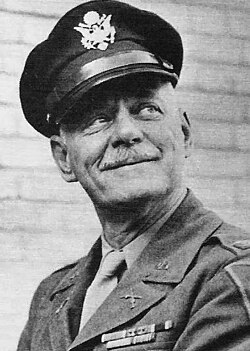
His education was international, spanning schools in Geneva, Switzerland, and various cities in Germany. He eventually graduated as valedictorian from Valley Forge Military Academy in 1952. Schwarzkopf later attended the United States Military Academy at West Point, where he excelled not only academically but also in athletics, playing football and wrestling.
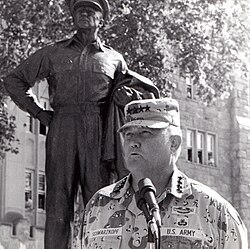
Military Ascent and the Vietnam War
Commissioned as an Infantry second lieutenant in 1956, Schwarzkopf began his career at the 101st Airborne Division. His early years were marked by a keen observation of military leadership, often noting the lack of duty and honor in some of his contemporaries.
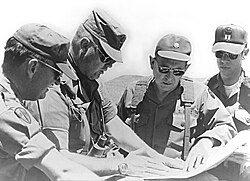
During the Vietnam War, Schwarzkopf distinguished himself through exceptional bravery. He was awarded the Silver Star for his leadership during the Battle of Đức Cơ. In February 1966, while leading an ARVN (Army of the Republic of Vietnam) paratrooper assault, he was wounded four times by small arms fire. Refusing medical evacuation until the objective was secured, he earned a second Silver Star and a Purple Heart.
Rise to General Rank
Following Vietnam, Schwarzkopf held various high-level positions, including deputy director of plans at the U.S. Pacific Command and commanding general of the 24th Infantry Division (Mechanized). It was here that he became known for his aggressive personality and rigorous training regimens.
By 1986, he was promoted to lieutenant general and took command of I Corps. He later served as the Army's senior member on the Military Staff Committee at the United Nations Security Council, where he honed the diplomatic skills necessary for international coalition warfare.
Commanding the Gulf War
In November 1988, Schwarzkopf assumed command of United States Central Command. When Iraq, under Saddam Hussein, invaded Kuwait in 1990, Schwarzkopf was tasked with the defense of Saudi Arabia under Operation Desert Shield.
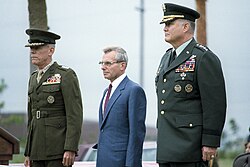
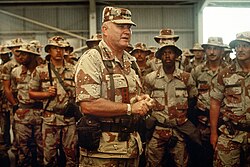
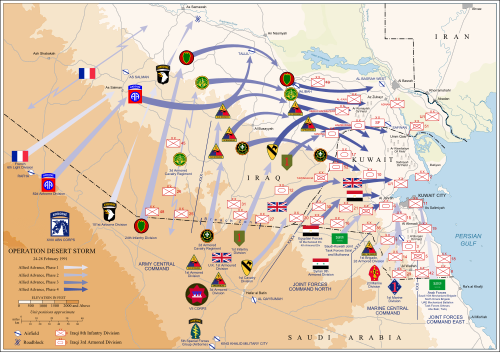
As the mission evolved, Schwarzkopf managed an international force of over 750,000 troops. He meticulously planned Operation Desert Storm, which began with an extensive air campaign and culminated in a decisive 100-hour ground offensive in early 1991. This operation successfully defeated the Iraqi Army and liberated Kuwait.
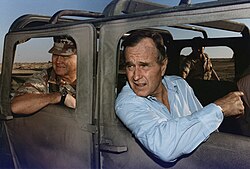
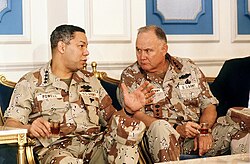
Throughout the conflict, Schwarzkopf worked closely with General Colin Powell and President George H. W. Bush, becoming the public face of the coalition's military success.
Retirement and Later Years
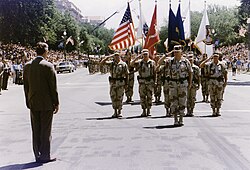
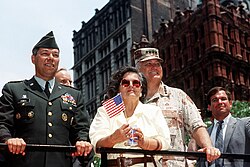
After retiring from the Army in 1991, Schwarzkopf remained a public figure. He was honored with a homecoming parade in New York City and received numerous accolades for his service.
In his later years, Schwarzkopf was critical of the 2003 invasion of Iraq, specifically citing the lack of a reconstruction plan and the failure to account for Iraq's cultural complexities. He also criticized the deployment of inadequately trained Army Reserve troops during Operation Iraqi Freedom.
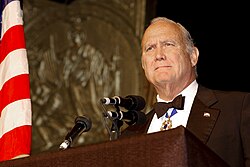
Death and Legacy
General Schwarzkopf passed away on December 27, 2012, at the age of 78, due to complications from pneumonia. He was cremated and buried near his father in the West Point Cemetery.
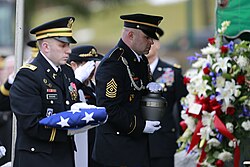
His legacy is preserved through numerous honors, including the Congressional Gold Medal and the naming of Schwarzkopf Elementary School in Florida.
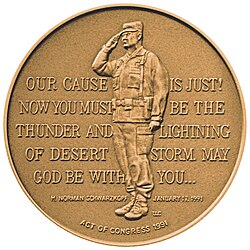
Summary of Service and Honors
| Category | Details |
|---|---|
| Service Years | 1956–1991 |
| Highest Rank | General |
| Key Commands | US Central Command, I Corps, 24th Mechanized Infantry Division |
| Major Conflicts | Vietnam War, Invasion of Grenada, Gulf War |
| Top Awards | Presidential Medal of Freedom, Congressional Gold Medal, Silver Star (3) |
Frequently Asked Questions
What was General Schwarzkopf's role in the Gulf War?
He served as the commander of United States Central Command (CENTCOM), leading the international coalition forces during Operation Desert Shield and Operation Desert Storm to liberate Kuwait from Iraq.
What were some of his most significant military awards?
Schwarzkopf received the Presidential Medal of Freedom, the Congressional Gold Medal, three Silver Stars, and two Purple Hearts, among many other high-level decorations.
How did his early life influence his military career?
Living in Iran as a child gave him a deep understanding of Middle Eastern culture and language, which proved invaluable during his command in the Persian Gulf.
What were his views on the 2003 Iraq War?
While initially endorsing the invasion, he later became critical of the lack of a post-war reconstruction plan and the handling of Operation Iraqi Freedom by leadership, including Donald Rumsfeld.
Where is General Schwarzkopf buried?
He was cremated and his ashes were buried in the West Point Cemetery, near the remains of his father.