Non-Sovereign Territories of Oceania
Oceania is a vast region characterized by a complex tapestry of political statuses. Beyond the fully independent nations, the region contains numerous non-sovereign territories—areas that are under the jurisdiction of a sovereign state but are not part of that state's mainland or are managed as dependencies.
These entities generally fall into three primary categories: federal territories located outside a state's mainland, integral parts of a sovereign state (such as autonomous areas or dependencies) where the main landmass is outside Oceania, and dependent territories.
Key Facts
- Diverse Governance: Territories are managed by various sovereign states, including the United States, France, Australia, Indonesia, Chile, Ecuador, New Zealand, and the United Kingdom.
- Diplomatic Status: French Polynesia and New Caledonia serve as associate members of the Pacific Islands Forum.
- Observer Status: American Samoa, Guam, Northern Mariana Islands, Tokelau, and Wallis and Futuna hold observer status within the Pacific Islands Forum.
- Population Variance: Populations range from completely uninhabited islands, such as Baker Island, to densely populated regions like Hawaii with over 1.4 million residents.
Categorization of Territories
The political landscape of Oceania is defined by how these territories relate to their parent states. Some are integrated as provinces or states, while others maintain a more distant, dependent relationship.
Federal and Integral Territories
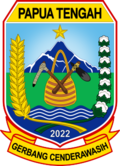
Some regions are fully integrated into the administrative structure of a sovereign state. For example, Hawaii is a state of the United States, and various regions in Western New Guinea are provinces of Indonesia, such as Central Papua and West Papua.
Dependencies and Overseas Collectivities
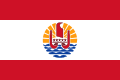
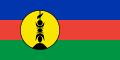
Many territories are described as dependencies or autonomous areas. France maintains several such entities, including the Overseas Country of French Polynesia and the sui generis (unique) collectivity of New Caledonia.
Unincorporated and External Territories
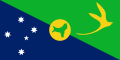
The United States manages several unincorporated territories, such as Guam and American Samoa, which are under U.S. jurisdiction but not fully integrated. Similarly, Australia manages external territories like Christmas Island and the Cocos (Keeling) Islands.
Detailed Territorial Data
The following table provides a comprehensive overview of the non-sovereign entities within the Oceania region, detailing their status, capitals, and geographic scale.
| Territory | Sovereign State / Status | Capital | Population | Area (km²) |
|---|---|---|---|---|
| American Samoa | USA (Unincorporated) | Pago Pago | 67,242 | 199 |
| French Polynesia | France (Overseas Country) | Papeete | 294,935 | 4,167 |
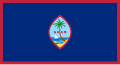
| Guam | USA (Unincorporated) | Hagåtña | 183,286 | 544 |
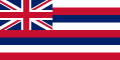
| Hawaii | USA (State) | Honolulu | 1,404,054 | 28,311 |
| New Caledonia | France (Sui Generis Collectivity) | Nouméa | 256,275 | 18,575 |
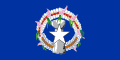
| Northern Mariana Islands | USA (Commonwealth) | Saipan | 46,050 | 464 |
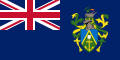
| Pitcairn Islands | UK (Overseas Territory) | Adamstown | 48 | 47 |
| Tokelau | New Zealand (Dependent) | Various | 1,384 | 12 |
| Wallis and Futuna | France (Overseas Collectivity) | Mata-Utu | 15,398 | 142 |
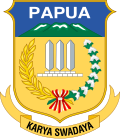
| West Papua | Indonesia (Province) | Manokwari | 551,791 | 64,125.66 |
Regional Distribution and Demographics
The distribution of these territories spans from the far east of Polynesia to the western reaches of Indonesia. Some areas are strategically significant but uninhabited, such as the Midway Atoll and Kingman Reef, which serve primarily as nature reserves or military outposts.
In contrast, the Indonesian provinces in the region, such as South Papua and Highland Papua, represent some of the largest landmasses and populations among the non-sovereign entities, with South Papua alone covering over 127,000 square kilometers.
Frequently Asked Questions









Which territories are associate members of the Pacific Islands Forum?
French Polynesia and New Caledonia are the two territories that hold associate membership in the Pacific Islands Forum.
What is the status of the Northern Mariana Islands?
The Northern Mariana Islands is an unincorporated territory and a commonwealth of the United States.
Which non-sovereign territories in Oceania are uninhabited?
Several territories are uninhabited, including Baker Island, Howland Island, Jarvis Island, Johnston Atoll, Kingman Reef, Midway Atoll, Wake Island, and the Clipperton Island.
How is Tokelau governed?
Tokelau is a dependent territory of New Zealand, and rather than a single capital, each of its atolls has its own administrative center.
What are the different types of French territories in Oceania?
France maintains various statuses in the region, including an Overseas Country (French Polynesia), an overseas sui generis collectivity (New Caledonia), and an overseas collectivity (Wallis and Futuna).