Melanesia: Geography, History, and Cultural Diversity of the Southwest Pacific
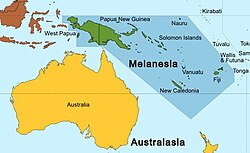
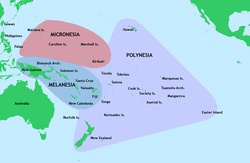
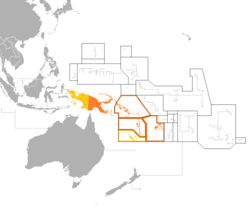
Melanesia is a vibrant subregion of Oceania located in the southwestern Pacific Ocean. Stretching from New Guinea in the west to the Fiji Islands in the east, this region encompasses a diverse array of island nations, territories, and the Arafura Sea. It serves as a geographical bridge, bordering Southeast Asia to the west, Micronesia to the north, Polynesia to the east, and Australia to the south.
The region is primarily situated in the Southern Hemisphere, though a few small islands in northwestern Western New Guinea extend into the Northern Hemisphere. Politically, it comprises four independent sovereign states and several dependencies, creating a complex tapestry of governance and heritage.
Key Facts
- Total Population: Approximately 14,373,536 (2021).
- Sovereign Nations: Fiji, Papua New Guinea, Solomon Islands, and Vanuatu.
- Linguistic Diversity: Home to over 1,000 languages, the highest linguistic density on Earth.
- Etymology: The name comes from the Ancient Greek words melas (black) and nesos (island).
- Genetic Heritage: Evidence of admixture with Denisovan and Neanderthal archaic humans.
Defining Melanesia: Etymology and Evolution
The term Melanesia was coined in 1832 by the French navigator Jules Dumont d'Urville. He introduced the term alongside Micronesia and Polynesia to categorize the Pacific into three main ethnic and geographical regions. Etymologically, Melanesia means "the Black Islands," a reference to the dark skin of its inhabitants.
Historically, the definition of the region has shifted. Early European explorers, such as Charles de Brosses in 1756, viewed the inhabitants through a racial lens. By the 19th century, figures like British missionary Robert Henry Codrington began treating Melanesia as a cultural grouping. Codrington introduced the concept of mana—a spiritual force or efficacy—to Western scholarship. While early definitions sometimes excluded New Guinea or Fiji, the modern scholarly consensus includes New Guinea as a central part of the region.
Ancient History and Human Migration
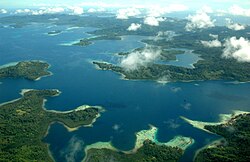
The ancestry of Melanesians is characterized by two distinct waves of migration. The first occurred between 50,000 and 100,000 years ago, as hominid populations moved from Africa along the southern edge of Asia. These early migrants reached Sahul, a prehistoric landmass that joined Australia and New Guinea via a land bridge during periods of lower sea levels.
A second wave of Austronesian migrants, originating from Taiwan, arrived much later, likely between 4000 and 3000 BC. These settlers primarily occupied the north coast of New Guinea and surrounding islands, where they encountered the indigenous Papuan-speaking peoples.
![Chronological dispersal of Austronesian peoples across the Indo-Pacific[13]](/images/cd/ef/cdefe7e516c031ea97b0ef4f8f2ea7eff113739d322531ff8dec6b7dff78d722.webp)
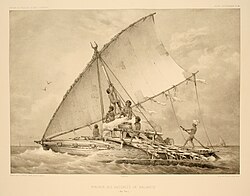
Recent genetic research has refined our understanding of these interactions. A 2008 study from Temple University suggests that while Austronesian ancestors passed through Melanesia using outrigger canoes, they moved quickly toward Polynesia and Micronesia with modest intermixing. Consequently, genetic signatures of Austronesians are found in some Austronesian-speaking Melanesian groups (below 20%) but are absent in Papuan-speaking groups.
Linguistic and Genetic Diversity
Melanesia is renowned for having the densest collection of distinct languages on Earth. With over 1,000 languages—some counts suggest as many as 1,319—the region averages one language for every 716 square kilometers. Vanuatu holds the world record for linguistic density per capita, with 138 distinct languages for a population of roughly 300,000.
These languages generally fall into two categories: the Austronesian family and the Papuan languages. It is important to note that "Papuan" is a geographical designation rather than a single linguistic family, as it encompasses many unrelated language groups.
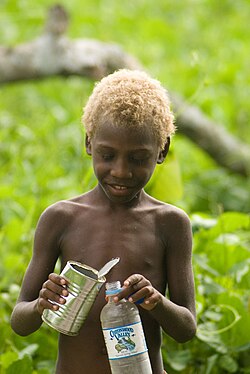
Genetically, Melanesians possess a unique heritage. Studies have revealed that modern Melanesian genomes contain admixture from Denisovans (3–4%) and Neanderthals (2%), as well as a third, yet-unidentified archaic Homo species.
Geography and Political Landscape
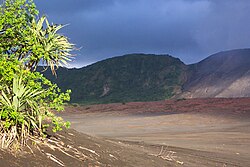
Geologically, the region is diverse. New Guinea is part of the Australian continent, while New Caledonia and Norfolk Island are part of Zealandia (a submerged continental fragment). The landscape ranges from the volcanic cinder plains of Mount Yasur in Vanuatu to the dense rainforests of Papua New Guinea.
Politically, the region is divided into sovereign states and dependencies. The four independent nations—Fiji, Papua New Guinea, Solomon Islands, and Vanuatu—are members of the Commonwealth of Nations and the Melanesian Spearhead Group.
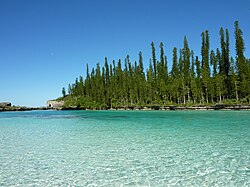
The region also includes several territories, most notably New Caledonia (a French overseas collectivity) and various provinces of Western New Guinea, which are part of Indonesia.
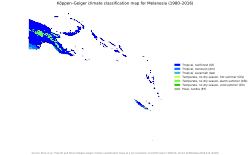
| Entity | Area (km²) | Population | Capital | Status |
|---|---|---|---|---|
| Papua New Guinea | 462,840 | 9,949,437 | Port Moresby | Sovereign |
| Fiji | 18,270 | 924,610 | Suva | Sovereign |
| Solomon Islands | 28,450 | 707,851 | Honiara | Sovereign |
| Vanuatu | 12,200 | 319,137 | Port Vila | Sovereign |
| New Caledonia | 19,060 | 287,800 | Nouméa | French Collectivity |
| Indonesian Papua (Total) | 327,000+ | ~4,000,000 | Various | Indonesian Provinces |
Frequently Asked Questions
What does the name Melanesia mean?
The name is derived from the Ancient Greek words melas, meaning "black," and nesos, meaning "island," translating to "the Black Islands." This refers to the dark skin of the region's inhabitants.
Why is Melanesia considered so linguistically diverse?
Melanesia has the highest linguistic density on Earth, with over 1,000 languages. This is due to the fragmented geography of the islands and the long history of isolated communities, particularly in places like Vanuatu.
Who were the first people to settle in Melanesia?
The first settlers arrived over 40,000 years ago during the migration to Sahul, a landmass that combined Australia and New Guinea. They were followed much later (between 4000 and 3000 BC) by Austronesian migrants from Taiwan.
What is the relationship between Melanesians and Polynesians?
While they share a geographic region, genetic studies suggest they have limited relation. Austronesian ancestors of Polynesians likely moved quickly through Melanesia without significant settlement or intermixing with the indigenous populations.
Which countries are part of Melanesia?
The four independent countries are Fiji, Papua New Guinea, Solomon Islands, and Vanuatu. The region also includes New Caledonia (France) and the western half of New Guinea (Indonesia).