Non-Cellular Life: The Border Between Chemistry and Biology
For decades, the standard definition of life required an organism to be composed of one or more cells. However, modern science has expanded this view to include non-cellular life (also known as acellular life). These are entities that exist without a cellular structure for at least part of their life cycle, challenging our traditional understanding of where chemistry ends and biology begins.
These organisms do not follow the standard blueprints of cellular biology, yet they possess the ability to evolve, interact with hosts, and transmit genetic information. By studying these agents, researchers gain insight into the very origins of life on Earth.
Key Facts
- Acellularity: Non-cellular life forms lack the membrane-bound organelles and cytoplasm characteristic of cells.
- Host Dependency: Most acellular agents, such as viruses, cannot perform metabolism or reproduction without a host cell.
- Genetic Diversity: These entities can be composed of DNA, RNA, or both.
- Evolutionary Links: Some acellular forms are theorized to be relics of an ancient "RNA world" that predates DNA.
Nucleic Acid-Containing Infectious Agents
The most prominent examples of non-cellular life are infectious agents that utilize nucleic acids to replicate. While they vary in complexity, they all share the ability to hijack the machinery of living cells to ensure their own survival.
Viruses
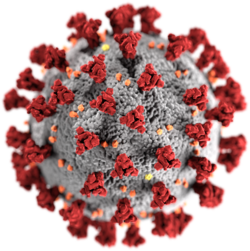
Initially described as toxins or "infectious proteins," viruses are now recognized as complex entities with defined structures and genetic material. They are capable of spontaneous assembly from their constituent parts, yet they remain in a biological gray area. Because they cannot grow, metabolize, or reproduce independently, many scientists view them as existing on the border between living organisms and large biochemical molecules.
Viroids
Viroids are even simpler than viruses. They consist solely of short strands of circular, single-stranded RNA and lack the protein coats found in viruses. These agents primarily infect flowering plants, including those of commercial importance. Their genomes are remarkably small, ranging from 246 to 467 nucleobases, compared to the roughly 2,000 nucleobases found in the smallest infectious viruses.
Viroids do not code for any proteins. Instead, they hijack RNA polymerase II—a host-cell enzyme typically used to synthesize messenger RNA from DNA—to catalyze a "rolling circle" synthesis of new RNA. Some viroids act as ribozymes, meaning they possess catalytic properties that allow them to cleave and ligate their own genomes.
Obelisks
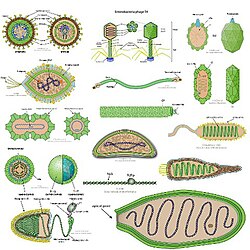
Discovered in 2024, obelisks are a newly identified class of RNA-based elements found within the human microbiome, specifically hosted in gut bacteria. While they resemble viroids, they are distinct because they possess a predicted rod-like secondary structure and code for two specific proteins known as "oblins."
The Evolutionary Perspective
The existence of acellular life provides a window into abiogenesis, the process by which life arises from inanimate matter. Some researchers propose that viroids are "living relics" from a hypothetical RNA world—a period in early Earth's history before the evolution of DNA or proteins.
Furthermore, scientists propose the existence of the First Universal Common Ancestor (FUCA). FUCA is theorized as a non-cellular lifeform that served as the earliest ancestor to the Last Universal Common Ancestor (LUCA), its sister lineages, and every cell currently alive today.
Comparison of Non-Cellular Entities
| Feature | Viruses | Viroids | Obelisks |
|---|---|---|---|
| Composition | Nucleic acid + Protein coat | Circular single-stranded RNA | RNA (rod-like structure) |
| Protein Coding | Yes | No | Yes (Oblins) |
| Typical Host | Diverse (Animals, Plants, Bacteria) | Flowering Plants | Gut Bacteria |
| Genome Size | >2,000 nucleobases (min) | 246 to 467 nucleobases | Not specified |
Frequently Asked Questions
Are viruses considered alive?
There is an ongoing scientific debate. While they have genetic material and evolve, they cannot perform basic life functions like metabolism or reproduction without a host, placing them in a gray area between chemistry and biology.
What is the difference between a virus and a viroid?
Viruses have a protein coat and can contain either DNA or RNA. Viroids are smaller, consist only of circular RNA, lack a protein coat, and do not code for any proteins.
What are obelisks in the human microbiome?
Obelisks are RNA-based elements discovered in 2024 that reside in gut bacteria. They differ from viroids by their rod-like structure and their ability to code for proteins called oblins.
What is the RNA world hypothesis?
It is the theory that early life relied solely on RNA to both store genetic information and catalyze chemical reactions, before the more complex systems of DNA and proteins evolved.
What is FUCA?
The First Universal Common Ancestor (FUCA) is a proposed non-cellular lifeform that predates the Last Universal Common Ancestor (LUCA) and is the root ancestor of all current cellular life.