Noise in Music: From Percussion to Avant-Garde Soundscapes
In the realm of music, noise is a complex and fluid concept. Depending on the context, it has been described as unpitched, indeterminate, uncontrolled, or even simply "unwanted" sound. However, the boundary between music and noise is often a matter of cultural norms and personal taste. Far from being a mere distraction, noise is a fundamental component of the human voice and nearly every musical instrument.
From the sharp crack of a snare drum to the gritty distortion of an electric guitar, noise provides the texture and character that define various genres. In electronic music, noise is intentionally synthesized to create specific colors and timbres, while in traditional settings, it encompasses all frequencies associated with pitch and timbre, including the transients—the brief, high-energy bursts of sound—found at the start of organ pipe notes.
Key Facts
- Definition: Noise is generally characterized as unpitched or indeterminate sound, though its definition varies by culture and taste.
- Instrumental Role: It is essential to unpitched percussion and the distorted tones of electric guitars.
- Historical Shift: Early 20th-century modernists began treating noise as a primary musical element rather than a byproduct.
- Avant-Garde Influence: Composers like John Cage and Luigi Russolo pioneered the use of noise as a central structural component of music.
- Genre Evolution: Noise led to the birth of specific genres including Industrial, Noise Rock, and Japanoise.
Noise as a Feature of Musical Instruments
Unpitched Percussion and Traditional Music
Many instruments rely entirely on noise for their identity. Unpitched percussion instruments, such as maracas, owe their distinctive tone to the noise inherent in their sound.

Across the globe, traditional music has long integrated noise. In Asia, traditional Yangge dance is accompanied by unpitched percussion ensembles, while in India, the chenda and elathalam provide rhythmic noise. Turkey's historical mehterân (janissary bands) also utilized these sonic qualities to create powerful, commanding sounds.


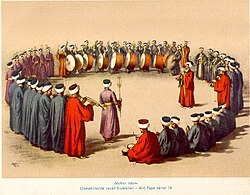
Strings, Keys, and Orchestras
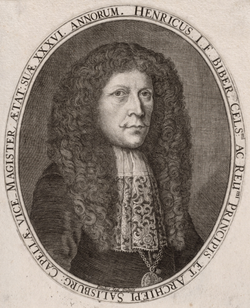
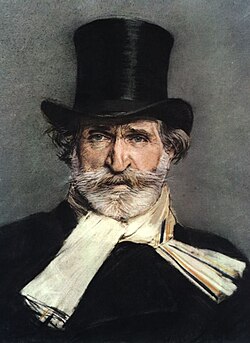
Noise is not limited to percussion. In Europe, Heinrich Ignaz Franz Biber introduced noise into string music to achieve programmatic effects (sounds that mimic real-world events). Later, Giuseppe Verdi utilized tone clusters—groups of adjacent notes played simultaneously to create a dissonant block of sound—in his opera Otello.
Keyboard instruments like the harpsichord, piano, and organ also contain noise elements, whether through the mechanical action of the keys or the specific air transients in pipes.
The Rise of Experimental and Avant-Garde Music
In the early 20th century, the influence of modernism shifted the perception of noise. Edgard Varèse began exploring noise-based sonorities within orchestral settings, treating sound as a raw material to be sculpted.
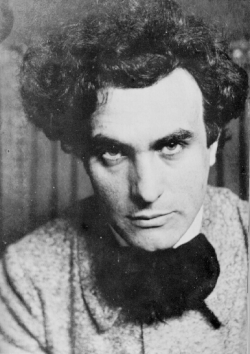
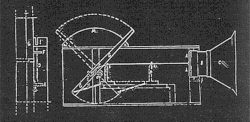
Simultaneously, Italian Futurist Luigi Russolo envisioned a "noise orchestra," constructing specialized instruments called intonarumori to generate a wide array of industrial sounds.
The Innovations of John Cage
Mid-century experimentalism saw noise move from the periphery to the center of musical syntax. In 1938, John Cage created the prepared piano, placing objects on the strings to transform traditional pitches into colorful, unpitched percussive sounds.

Cage further challenged the definition of music with his 1952 composition 4′33″. In this piece, the performer makes no deliberate sound; the "music" consists entirely of the ambient background noise occurring in the environment during the performance.
Noise in Modern and Electronic Genres
Electronic and Synthesized Noise
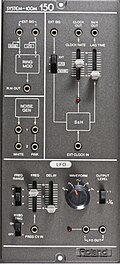
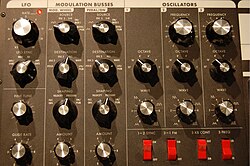
Electronic instruments allow for the precise generation of different "colors" of noise. Modular synthesizers often include dedicated noise generators and ring modulators to create complex, non-harmonic textures.
Rock, Jazz, and Hip Hop
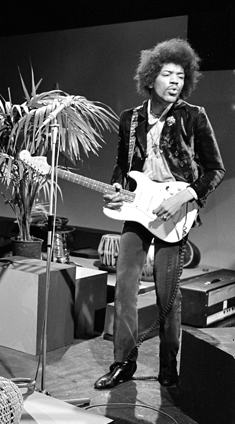
In rock and jazz, noise is often achieved through distortion and overdrive. Jimi Hendrix revolutionized these genres by embracing feedback, fuzz, and dissonance to expand the emotional range of the electric guitar.

In hip hop, groups like Public Enemy, supported by The Bomb Squad, used dense layers of noise to make political statements, influencing the trajectory of both hip hop and rock for a decade.

Noise as a Standalone Genre
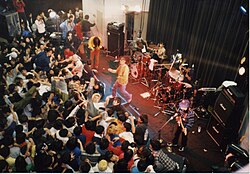
Eventually, "noise music" emerged as a distinct category that abandons melody, harmony, and sometimes even rhythm. This evolution branched into several sub-genres:
- Industrial Music: Emerging in the 1970s, focusing on mechanical and metallic sounds.
- Noise Rock and Noise Pop: Gaining prominence in the 1980s.
- Japanoise: A high-intensity style from Japan active from the late 1970s to the present.
- Glitch: A 1990s movement focusing on the aesthetic of digital artifacts and errors.
Noise Reduction and Control
While some artists embrace noise, others seek to eliminate it. Noise reduction systems, such as those developed by Dolby, use specialized modules to remove unwanted hiss or interference from audio recordings, ensuring a cleaner signal.


| Category | Primary Examples | Purpose/Effect |
|---|---|---|
| Traditional | Maracas, Chenda, Yangge ensembles | Rhythmic texture and cultural identity |
| Classical/Avant-Garde | Prepared piano, Intonarumori, Tone clusters | Expanding sonic palette and structural innovation |
| Modern Popular | Distortion pedals, Feedback, Glitch | Emotional intensity, political statement, or aesthetic error |
| Technical | Dolby noise reduction | Removing unwanted audio interference |
Frequently Asked Questions
What is the difference between music and noise?
The distinction is often subjective and based on cultural norms. While music is traditionally associated with melody and harmony, noise is generally defined as unpitched or indeterminate sound. However, in many genres, noise is used as a deliberate musical element.
How does a prepared piano create noise?
A prepared piano is created by placing various objects—such as screws, bolts, or rubber—between the strings. This alters the vibration of the strings, transforming traditional pitches into unpitched, percussive, or metallic sounds.
What is the role of noise in electronic music?
Electronic music uses noise generators to create different "colors" of sound (such as white noise). These are used for percussion, atmospheric textures, or as modulation sources to change the timbre of other sounds.
Who were the pioneers of noise-based orchestral music?
Edgard Varèse and Luigi Russolo were key figures. Varèse explored noise-based sonorities in orchestras, while Russolo created the intonarumori to bring the sounds of the industrial age into musical composition.
What is "Japanoise"?
Japanoise is a style of noise music originating in Japan in the late 1970s. It typically emphasizes extreme volume, dissonance, and the abandonment of traditional musical structures like melody and rhythm.