Nobel Prize in Physiology or Medicine: History, Laureates, and Legacy
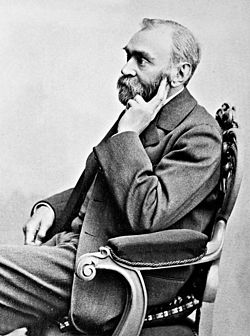
The Nobel Prize in Physiology or Medicine is one of the most prestigious honors in the scientific world, awarded annually to those whose discoveries have provided significant benefits to humankind. Established by the will of Alfred Nobel, the prize recognizes breakthroughs that advance our understanding of the human body and the treatment of disease.
The prize is presented every December 10th, the anniversary of Alfred Nobel's death, in Stockholm, Sweden. The selection process is managed by the Nobel Assembly at the Karolinska Institute, ensuring that only the most impactful contributions to medical science are honored.
Key Facts
- Purpose: Awarded for discoveries in physiology or medicine that benefit humankind.
- Awarding Body: Nobel Assembly at the Karolinska Institute.
- First Award: 1901 to Emil von Behring.
- Total Laureates: 232 individuals (218 men and 14 women) as of 2024.
- Recent Award (2025): Mary E. Brunkow, Fred Ramsdell, and Shimon Sakaguchi.
- 2024 Reward: 11 million SEK.
The Evolution of the Prize
Since its inception 125 years ago, the prize has evolved to cover a vast array of scientific disciplines. Early awards focused on infectious diseases and basic physiology, while more recent prizes have recognized complex fields such as signal transduction (the process by which a cell converts an external signal into a specific response) through G proteins, neurobiology, and intermediary metabolism.
The distribution of the prize has varied over time. Through 2025, the award has been given to a single individual 40 times, shared by two laureates 35 times, and shared by three laureates (the maximum allowed) 41 times.
Pioneering Laureates
The first recipient in 1901 was German physiologist Emil von Behring, recognized for his work on serum therapy and the development of a vaccine against diphtheria. In 1902, Ronald Ross was honored for identifying the mosquito as the transmitter of malaria. Other early pioneers include Niels Ryberg Finsen, who used concentrated light radiation to treat lupus vulgaris, and Ivan Pavlov, who was awarded for his research on the physiology of digestion.
![Emil von Behring received the first Nobel Prize in Physiology or Medicine in 1901.[33]](/images/a0/ef/a0ef6acc40bc65633fc1bb6d9c726aa73f398ab0cd6758d81986a5d492fb4e0e.jpg)
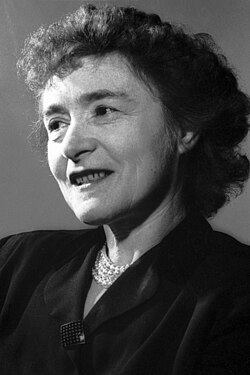
Gender representation in the prize has shifted slowly. Gerty Cori became the first woman to receive the award in 1947 for her work on glucose metabolism, which remains vital for the treatment of diabetes.
The Mechanics of the Award
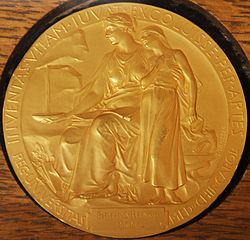
The Nobel Prize consists of three primary components: a gold medal, a diploma, and a cash award. The medals have been produced by different mints over the years, moving from the Swedish royal mint (Myntverket) to Det Norske Myntverket in 2011, and finally to Svenska Medalj in 2012.
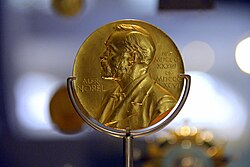
The monetary reward fluctuates based on the funding available from the Nobel Foundation. For instance, the award was 10 million SEK in 2009 but decreased to 8 million SEK in 2012. When multiple laureates share a prize, the committee may divide the grant equally or allocate half to one recipient and a quarter to the others.
Summary of Prize Details
| Feature | Details |
|---|---|
| Location of Ceremony | Stockholm, Sweden |
| Presentation Date | December 10th |
| Maximum Laureates per Prize | 3 |
| First Woman Laureate | Gerty Cori (1947) |
| Recent 2025 Focus | Peripheral immune tolerance and regulatory T cells |
Challenges and Controversies
The path to a Nobel Prize is not always linear. Because the full significance of a medical discovery often takes decades to be realized, some laureates receive the prize long after their initial work. Barbara McClintock, for example, made her discoveries in 1944 but was not awarded the prize until 1983. Similarly, Peyton Rous waited 50 years after his 1916 discovery of tumor viruses to be honored in 1966.
The prize has also faced criticism regarding exclusions and controversial inclusions. Fernando de Castro is often cited as a deserving candidate who was overlooked in 1938, potentially due to the chaos of the Spanish Civil War. Conversely, the 1949 award to António Egas Moniz for the prefrontal leucotomy (lobotomy) is viewed critically today due to the lack of medical ethics surrounding the procedure's widespread application.
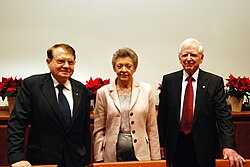
Other notable instances include Ralph M. Steinman, who became an inadvertent posthumous recipient, and the 2008 awards for the discovery of HPV and HIV, which were met with some scandal.
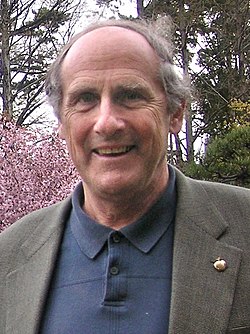
Gaps in Awarding
There have been nine years where no prize was awarded, primarily coinciding with World War I and World War II. Political interference also played a role; in 1939, Nazi Germany forbade Gerhard Domagk from accepting his prize, though he eventually received the medal and diploma without the accompanying funds.
![Nikolaas Tinbergen (left) and Konrad Lorenz (right) were awarded (with Karl von Frisch) for their discoveries concerning animal behaviour.[43]](/images/5f/c3/5fc3168b5c36e47ddea2abf601b5cd1d8c2b9c932ba37547f69705945ebc7eb8.jpg)
Frequently Asked Questions
Who is eligible for the Nobel Prize in Physiology or Medicine?
The prize is awarded to individuals or groups who have made discoveries in physiology or medicine that provide a tangible benefit to humankind.
Can a person receive the prize posthumously?
Generally, the prize is not awarded posthumously, although there have been rare instances, such as Ralph M. Steinman, who became an inadvertent posthumous recipient.
How is the prize money divided among multiple winners?
If two people share the prize, it is divided equally. If three people share it, the committee may divide it equally or give half to one person and a quarter to each of the other two.
Why are some prizes awarded decades after the discovery?
Medical science often requires a long period of validation. The Nobel Committee may wait until the full significance and impact of a discovery are clearly apparent to the global medical community.
Who decides who wins the Nobel Prize in Medicine?
The winners are selected and announced by the Nobel Assembly at the Karolinska Institute in Sweden.