Santiago Ramón y Cajal: The Father of Modern Neuroscience
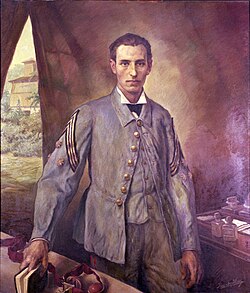
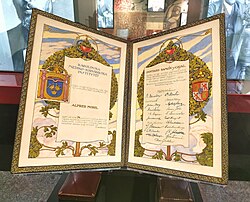
Santiago Ramón y Cajal was a visionary Spanish neuroscientist, pathologist, and histologist whose meticulous study of the central nervous system laid the groundwork for modern neuroscience. Specializing in neuroanatomy—the study of the structure and organization of the nervous system—Cajal transformed our understanding of how the brain is wired. His dedication to microscopic investigation earned him the Nobel Prize in Physiology or Medicine in 1906, making him the first Spaniard to receive a scientific Nobel Prize.
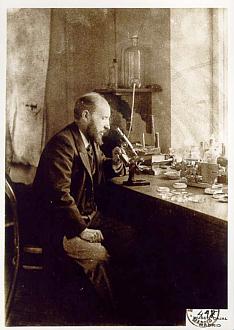
Cajal's work was characterized by an extraordinary blend of scientific rigor and artistic precision. His detailed drawings of neurons and neural circuits remain essential references in the field today, bridging the gap between biological science and visual art.
Key Facts
- Full Name: Santiago Ramón y Cajal.
- Major Achievement: Pioneer of modern neuroscience and the first Spanish scientific Nobel laureate.
- Nobel Prize: Awarded the 1906 Nobel Prize in Physiology or Medicine, shared with Camillo Golgi.
- Core Expertise: Histology (the study of microscopic tissue structure) and neuroanatomy.
- Legacy: His original drawings are recognized by UNESCO as a World Heritage treasure.
Early Life and Medical Education
Born on May 1, 1852, in Petilla de Aragón, Spain, Cajal's interest in anatomy was sparked during his childhood. In the summer of 1868, his father, an anatomy teacher, took him to graveyards to locate human remains for study. These early experiences with sketching bones inspired him to pursue a career in medicine.
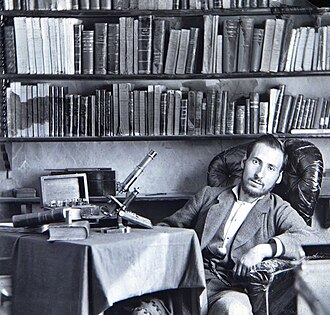
Cajal attended the medical school at the University of Zaragoza, graduating in 1873 at the age of 21. Following his studies, he served as a medical officer in the Spanish Army. Between 1874 and 1875, he participated in an expedition to Cuba, where he contracted both malaria and tuberculosis. His recovery took place in Panticosa, a spa town in the Pyrenees mountains.
Academic Career and Institutional Leadership
Cajal's professional ascent was marked by several prestigious appointments across Spain's leading academic institutions, including the University of Valencia and the University of Barcelona. In 1892, he became a professor in Madrid.
His leadership extended to the creation and direction of vital research centers. In 1899, he was appointed director of the Instituto Nacional de Higiene (National Institute of Hygiene). Later, in 1922, he founded the Laboratorio de Investigaciones Biológicas (Laboratory of Biological Investigations), which was eventually renamed the Instituto Cajal (Cajal Institute).
Scientific Contributions and Legacy
Cajal is best known for his original investigations into the microscopic structure of the brain. His work challenged existing theories and established the fundamental understanding of the nervous system. He published over 100 scientific works and articles in Spanish, French, and German, including influential texts such as Textura del sistema nervioso del hombre y los vertebrados and Advice for a Young Investigator.
Beyond his scientific papers, Cajal's drawings are celebrated for their accuracy and beauty. He has been described as the "Don Quixote of the microscope," reflecting his persistence and passion for discovery.
![J. Harley Williams called Cajal the “Don Quixote of the microscope”.[12]](/images/5d/42/5d4209adbf2b5fe2889601a7d009dd7e4d36d35022d5a5e092a1e7b6d8835a2b.jpg)
Cultural Impact and Honors
Cajal's influence extends into the arts and astronomy. In 2005, the asteroid 117413 Ramonycajal was named in his honor. His histological drawings have also influenced Surrealism, as explored in the exhibition Fisiología de los Sueños.
Modern tributes include a permanent exhibition at the National Institutes of Health (NIH) in the USA and the 2020 "Cajal Embroidery Project," where volunteers across six countries created hand-stitched panels of his images. In 2017, UNESCO recognized his legacy as a World Heritage treasure.
Summary of Life and Achievements
| Category | Details |
|---|---|
| Lifespan | May 1, 1852 – October 17, 1934 |
| Education | University of Zaragoza |
| Key Fields | Neuroscience, Pathology, Histology |
| Major Award | Nobel Prize in Physiology or Medicine (1906) |
| Notable Institutions | University of Valencia, Complutense University of Madrid, University of Barcelona |
Frequently Asked Questions
Who was Santiago Ramón y Cajal?
He was a Spanish neuroscientist and histologist who is considered a pioneer of modern neuroscience for his work on the microscopic structure of the brain and the central nervous system.
When did he win the Nobel Prize?
Santiago Ramón y Cajal received the Nobel Prize in Physiology or Medicine in 1906, which he shared with Camillo Golgi.
What are some of his most famous publications?
His notable works include Textura del sistema nervioso del hombre y los vertebrados and Advice for a Young Investigator, along with over 100 other scientific articles.
How is his work recognized today?
His legacy is preserved through the Instituto Cajal in Madrid, various international exhibitions at the NIH, and a UNESCO World Heritage designation for his scientific legacy.
What was his educational background?
He studied medicine at the University of Zaragoza, where he graduated in 1873 at the age of 21.