NOAA: Safeguarding the Oceans and Atmosphere
The National Oceanic and Atmospheric Administration (NOAA) is a critical federal agency of the United States dedicated to the scientific study of the Earth's oceans and atmosphere. Established to protect life and property and enhance the national economy, NOAA integrates complex data from satellites, ships, and aircraft to provide essential forecasts and environmental research.
Operating under the US Department of Commerce, NOAA manages a vast network of scientists and uniformed officers who monitor everything from daily weather patterns to long-term climate shifts and marine ecosystem health.

Key Facts
- Founded: October 3, 1970.
- Headquarters: Silver Spring, Maryland.
- Leadership: Led by Administrator Neil Jacobs (confirmed October 7, 2025).
- Workforce: Approximately 12,000 civilian employees and 321 members of the NOAA Commissioned Corps.
- Budget: Estimated at $6.9 billion (2022).
- Core Mission: Providing weather, hydrologic, and climate forecasts and warnings.
History and Evolution
NOAA was formed by an executive order in 1970, but its roots extend back over two centuries. The agency is the successor to the U.S. Survey of the Coast, celebrating 200 years of service in 2007. Its lineage includes several foundational federal entities:
- United States Coast and Geodetic Survey: Formed in 1807.
- Weather Bureau of the United States: Formed in 1870.
- Bureau of Commercial Fisheries: Formed in 1871 (research fleet).
- Coast and Geodetic Survey Corps: Formed in 1917.
In recent years, the agency has faced significant organizational shifts. In early 2025, the agency experienced substantial workforce reductions, with approximately 1,300 staff members (roughly 10% of the workforce) laid off by March. Additionally, Project 2025 proposed the removal of the Office of Oceanic and Atmospheric Research.
Organizational Structure and Governance
NOAA is headquartered at a 1.2 million square foot campus in Silver Spring, Maryland, which houses over 40 sub-agencies and offices. While currently part of the Department of Commerce, there have been legislative efforts, such as those led by Congressman Frank Lucas in 2023, to establish NOAA as an independent agency to ensure more stable authorization and funding.
Agency Leadership
The agency is led by the Under Secretary of Commerce for Oceans and Atmosphere. Neil Jacobs took over as Administrator in late 2025, following a period of interim leadership by Laura Grimm and Nancy Hann. Jacobs previously served as interim administrator during the first Trump Administration from 2019 to 2021.
Core Services and Scientific Contributions
NOAA operates through several specialized child agencies that handle diverse environmental responsibilities.
National Weather Service (NWS)
The NWS is perhaps the most visible arm of NOAA, providing critical weather, hydrologic, and climate forecasts. Utilizing 13 river forecast centers (RFCs) and over 120 local weather forecast offices (WFOs), the NWS issues more than 734,000 weather forecasts and 45,000 severe weather warnings annually.
Satellite and Data Operations (NESDIS)
The National Environmental Satellite, Data, and Information Service (NESDIS) manages the eyes in the sky. Since 1966, it has managed polar orbiting satellites (POES), and since 1974, it has operated geosynchronous satellites (GOES). Current operational assets include the DSCOVR, Jason-2, and various GOES and NOAA series satellites.
Oceanic and Atmospheric Research
NOAA's research division produces the Arctic Report Card, an annual update on the environmental changes in the Arctic. The agency's global influence is highlighted by the work of atmospheric chemist Susan Solomon, who co-chaired the IPCC Fourth Assessment Report and received the 2007 Nobel Peace Prize.

Agency Summary Table
| Child Agency/Office | Primary Focus |
|---|---|
| National Weather Service | Weather, hydrologic, and climate forecasting |
| National Marine Fisheries Service | Marine life and fisheries management |
| National Ocean Service | Coastal and ocean mapping and stewardship |
| NESDIS | Satellite data and environmental information |
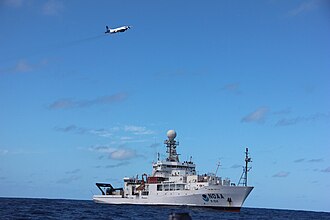
| Office of Marine and Aviation Operations | Field operations, aircraft, and ship management |
| Office of Space Commerce | Commercial space weather and data |
Frequently Asked Questions
What is the NOAA Commissioned Corps?
The NOAA Commissioned Corps is a uniformed service of the United States consisting of officers who provide specialized scientific and technical support for NOAA's research and operations.
How does NOAA monitor the weather?
NOAA uses a combination of polar-orbiting and geosynchronous satellites, a network of local weather forecast offices, river forecast centers, and field operations involving aircraft and ships.
Is NOAA an independent agency?
No, NOAA is currently a part of the US Department of Commerce, although there have been legislative proposals to make it an independent agency.
What is the significance of the NOAA flag?
The NOAA flag is a modification of the 1899 flag of the United States Coast and Geodetic Survey. Its design, featuring a red triangle within a white circle, symbolizes the use of triangulation in surveying.
What is the Arctic Report Card?
The Arctic Report Card is an annual publication compiled by international scientists that charts the ongoing impact of changing environmental conditions on the Arctic region.