Niitsitapi History: The Lords of the Plains
The Niitsitapi, known in English as the Blackfoot Confederacy, once commanded a vast territory stretching from the North Saskatchewan River in present-day Edmonton, Alberta, south to the Yellowstone River in Montana. Their ancestral lands, which they called Niitsitapiis-stahkoii ("Original People's Land"), spanned from the Rocky Mountains to the Alberta-Saskatchewan border and east toward the Cypress Hills. Through a combination of strategic mobility, warrior culture, and a deep connection to the land, they earned the title "The Lords of the Plains."
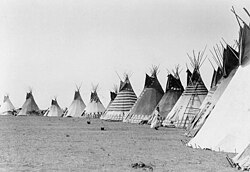
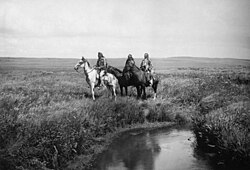
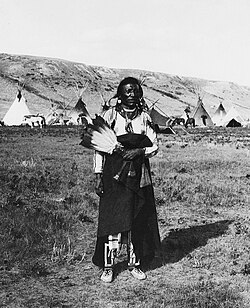
The social structure of the Niitsitapi was designed for maximum flexibility. The primary unit above the family was the band, typically consisting of 10 to 30 lodges (roughly 80 to 241 people). Because bands were defined by residence rather than strict kinship, individuals could move between groups to resolve leadership disputes or seek better resources. This fluid organization was ideal for a nomadic people pursuing game across the northwestern Great Plains.
Key Facts
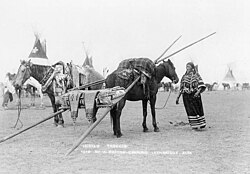
- Territory: Spanned from the North Saskatchewan River (Canada) to the Yellowstone River (USA).
- Social Unit: Organized into flexible bands of 80 to 241 people.
- Primary Resource: The American bison provided food, clothing, and shelter.
- Turning Point: The introduction of the horse around 1730 revolutionized their mobility and hunting.
- Modern Population: Approximately 16,000 in Canada and 15,000 in the United States.
Early Migration and the Rise of Power
Anthropological evidence suggests the Niitsitapi did not originate on the Great Plains. Instead, they migrated from the Northeastern United States and the border region of Canada and Maine. By 1200, they moved west, passing through the Great Lakes region before eventually settling on the Plains.
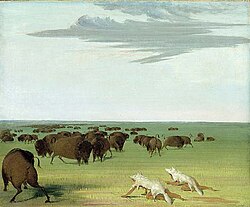
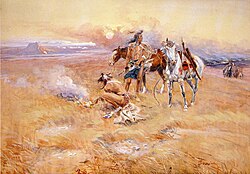
The adoption of the horse, which they called ponokamita ("elk dogs"), around 1730 transformed their society. Horses allowed the Niitsitapi to carry more weight, travel faster, and expand their hunting range. This technological leap enabled them to displace rivals, such as the Shoshone, and establish dominance over a territory that, by 1787, extended from the North Saskatchewan River to the Missouri River.
The Centrality of the Bison
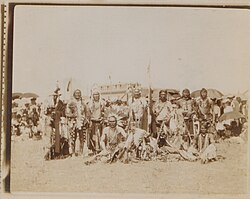
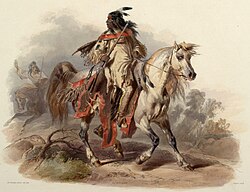
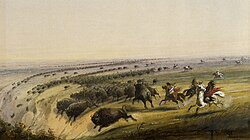
The American bison was the cornerstone of Niitsitapi survival. Standing up to 6.5 feet tall and weighing up to 2,000 pounds, the bison provided nearly every necessity for life on the plains.
Before horses, the Niitsitapi utilized the buffalo jump, a method where hunters drove herds into V-shaped pens and over cliffs. They also employed sophisticated camouflage, draping themselves in bison skins to mask their scent and blend into the environment before attacking with spears or arrows.
Bison Utility Summary
| Resource | Primary Use |
|---|---|
| Meat | Primary food source and pemmican production |
| Hides | Teepees, clothing, and hunting camouflage |
| Bones/Horns | Tools and implements |
Conflict, Trade, and European Contact
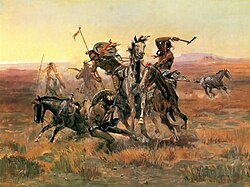
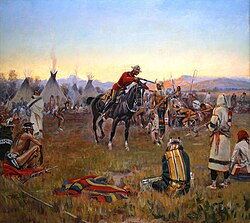
The Niitsitapi engaged in complex relationships with other tribes and European traders. While they were often in conflict with the Shoshone and later the Sioux, they also maintained strategic alliances. The fur trade brought them into contact with the Hudson's Bay Company (HBC) and the American Fur Company. While the HBC established posts like Rocky Mountain House, the American traders often offered better terms for buffalo skins, leading to increased trade with the U.S. posts.
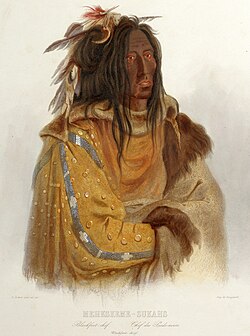
However, European contact brought devastating infectious diseases. In 1837, a smallpox outbreak—introduced via an American Fur Company steamboat—killed approximately 6,000 Niitsitapi, severely weakening their dominance on the Plains.
The Era of Encroachment and Hardship
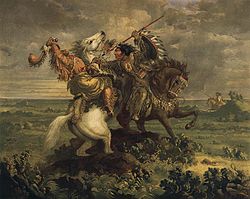
By the mid-19th century, the Niitsitapi faced a dual crisis: the encroachment of settlers and the systematic extermination of the bison. The U.S. government hired hunters to kill bison specifically to force the Niitsitapi onto reservations. This led to extreme poverty and dependence on government supplies, which were often spoiled or nonexistent.
One of the darkest chapters occurred on January 23, 1870, during the Marias Massacre. U.S. Army troops mistakenly attacked a camp of friendly Piegan Indians. Despite Chief Heavy Runner attempting to present his safe-conduct papers, he was killed, and 173 Piegans—mostly women, children, and the elderly—were slaughtered.
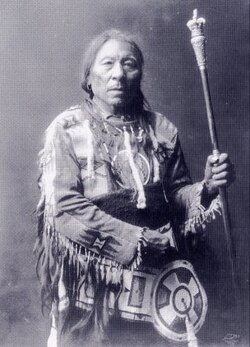
In Canada, the Niitsitapi signed Treaty 7 in 1877, settling on reserves in southern Alberta. In the U.S., they were restricted by the Fort Laramie Treaty of 1851 and later the Sweetgrass Hills Treaty of 1887.
Assimilation and Resilience
The late 19th and early 20th centuries were marked by aggressive assimilation policies. Tribal governments were dismantled, traditional religions were outlawed, and children were forced into boarding schools where their native language and customs were forbidden. The 1907 allotment policy further fragmented communal lands into small, often unfarmable 160-acre plots.
The tide began to turn with the Indian Reorganization Act of 1934, which ended land allotments and allowed tribes to establish their own governments. The Blackfeet Nation of Montana formed a Tribal Business Council in 1935 and adopted its own Constitution.
Frequently Asked Questions
Where did the Niitsitapi originally come from?
Anthropologists believe they migrated from the Northeastern United States and the border region of Canada and Maine, moving west through the Great Lakes region before settling on the Great Plains.
What was the significance of the horse to the Niitsitapi?
Introduced around 1730, horses (ponokamita) provided vastly superior mobility and carrying capacity compared to dogs, allowing the Niitsitapi to expand their territory and become a dominant power on the Plains.
What was the "buffalo jump"?
The buffalo jump was a hunting technique used before the arrival of horses. Hunters drove bison into V-shaped pens and over cliffs to kill them efficiently for meat and hides.
What was the Marias Massacre?
It was a 1870 attack by the U.S. Army on a friendly camp of Piegan Indians. Despite the camp's peaceful status, 173 people were killed, mostly non-combatants.
How did the Niitsitapi adapt to the loss of the bison?
After the bison were nearly extirpated by 1881, the Niitsitapi were forced to transition to a viable economy based on farming, ranching, and light industry.