Arikara History: Survival and Conflict on the Upper Missouri (1780-1850)
The history of the Arikara people during the late 18th and early 19th centuries is a narrative of resilience in the face of catastrophic loss. Once a populous and powerful presence on the plains, the tribe navigated a volatile landscape defined by devastating disease, shifting tribal alliances, and the encroaching influence of European and American settlers.
The Impact of Smallpox and Tribal Warfare
In the late 18th century, the Arikara suffered a series of smallpox epidemics—highly contagious viral diseases—that decimated their population. Estimates suggest their numbers plummeted from approximately 30,000 to just 6,000, a loss that severely disrupted their social structure. Between 1780 and 1782 alone, the number of Arikara villages along the Missouri River dropped from 32 to only two.
This biological crisis left the Arikara vulnerable to external aggression. During the early 1780s, unknown Native American attackers targeted the weakened tribe; archaeological evidence from the Larson Site reveals the mutilated skeletons of 71 men, women, and children in a burned-down village. The Sioux gained the most from this instability, utilizing the Arikara's vulnerability to accelerate their own expansion west of the Missouri River.
Navigating the Early 19th Century
The first quarter of the 1800s was marked by constant pressure. The Arikara struggled with dwindling numbers, military threats from the Lakota and other Sioux groups, and competition from white traders. To survive, the tribe engaged in fluid diplomacy, occasionally joining their former enemies, the Sioux, in raids against the Mandan and Hidatsa Indians before later negotiating peace with those same village tribes.
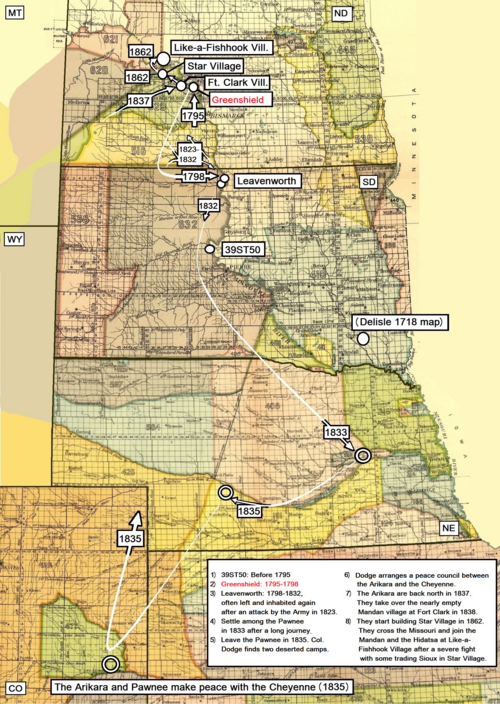
For mutual protection, the Arikara gradually migrated from present-day Nebraska and South Dakota into North Dakota, settling closer to the Mandan and Hidatsa. It was during this period of transition that the remainder of the group was encountered by the Lewis and Clark Expedition in 1804.
Diplomatic Tensions and the Washington Delegation
At the urging of the Lewis and Clark Expedition, the first Arikara delegation traveled to Washington, DC, in April 1805. However, the mission ended in tragedy when Chief Ankedoucharo fell ill and died during his stay. The delegates held white Americans responsible for the chief's death, fueling a period of notorious hostility toward the United States that lasted for several decades.
Conflict with Trappers and the U.S. Military
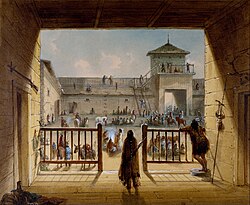
Tensions escalated on June 2, 1823, when the Arikara attacked a group of 70 trappers from the Henry/Ashley Company near the mouth of the Grand River. Fourteen trappers were killed and ten were wounded. Among the wounded was Hugh Glass, whose survival story later became the basis for the novel The Revenant and its subsequent film adaptation.
In response, Colonel Henry Leavenworth led 220 men from Fort Atkinson, joined by over 700 Yankton, Yanktonai, and Lakota Indians, in the first U.S. Indian war west of the Missouri. While the Arikara retreated to a fortified village and eventually escaped under the cover of night, angry fur traders burned their empty lodges. This conflict remains the only instance in history where the Three Tribes fought in open warfare against the United States.
The Path to Peace and Further Violence
A peace treaty was signed between the United States and the Arikara, including the chief known as the Bloody Hand, on July 18, 1825. Despite this, violence persisted. In the spring of 1833, Arikara members ambushed Hugh Glass, Hilain Menard, and Colin Rose near Fort Cass. Historical records, including a letter from Indian agent John F. A. Sanford to William Clark, note that the victims were scalped, with portions of the scalps left on poles at the site.
Migration and the Mitutanka Settlement
The mid-1830s were a period of instability. The Arikara lived briefly near their southern kin, the Skidi Pawnee, and attempted to settle in hostile territory on the Platte in Nebraska, where they were met by Colonel Henry Dodge in 1835. Eventually, driven by persistent Sioux harassment, the Arikara reconciled with the Mandan and Hidatsa.
By June 1838, the tribes were cooperating in common bison hunts. Following another smallpox outbreak that decimated the Mandan, the Arikara moved into the nearly empty Mandan village of Mitutanka near Fort Clark. Although the Yankton Sioux burned the earth lodges in January 1839, the Arikara rebuilt and remained there until 1861, when further Sioux attacks and the need for a trading post forced their final departure.
Key Facts
- Population Collapse: Smallpox reduced the Arikara population from roughly 30,000 to 6,000 in the late 18th century.
- Village Loss: The 1780-1782 epidemic reduced their Missouri River villages from 32 to just 2.
- Military History: The Arikara were involved in the first U.S. Indian war west of the Missouri.
- Notable Conflict: The 1823 attack on the Henry/Ashley Company trappers included the wounding of Hugh Glass.
- Tribal Alliances: For survival, the Arikara eventually allied with the Mandan and Hidatsa against the Sioux.
| Period/Date | Event | Outcome |
|---|---|---|
| 1780-1782 | Smallpox Epidemic | Population drop; villages reduced from 32 to 2. |
| 1804 | Lewis and Clark Encounter | First contact with the expedition. |
| 1805 | Washington DC Delegation | Death of Chief Ankedoucharo; increased hostility toward US. |
| June 2, 1823 | Attack on Henry/Ashley Trappers | 14 trappers killed; Hugh Glass wounded. |
| July 18, 1825 | Peace Treaty | Formal peace signed with the United States. |
| 1839-1861 | Mitutanka Settlement | Arikara occupied former Mandan village until Sioux attacks. |
Frequently Asked Questions
How did smallpox affect the Arikara tribe?
Smallpox had a catastrophic impact, reducing the population from an estimated 30,000 to 6,000 and shrinking their village count from 32 to 2 between 1780 and 1782. This weakened their social structure and made them vulnerable to attacks.
Who were the primary rivals of the Arikara during this period?
The Sioux, including the Lakota, Yankton, and Yanktonai, were the primary rivals. They took advantage of the Arikara's weakened state to expand their territory west of the Missouri River.
What was the significance of the 1823 attack on trappers?
The attack resulted in the deaths of 14 trappers and the wounding of Hugh Glass. It also led to the first U.S. Indian war west of the Missouri, involving Colonel Henry Leavenworth and a coalition of Sioux tribes.
Why did the Arikara move to the village of Mitutanka?
After a smallpox outbreak decimated the Mandan people, the Arikara took over the nearly empty Mandan village of Mitutanka near Fort Clark for shelter and proximity to trading posts.
What caused the Arikara's hostility toward white Americans in the early 1800s?
A primary cause was the death of Chief Ankedoucharo during a diplomatic visit to Washington, DC, in 1805, for which the Arikara delegates blamed the white Americans.