Cheyenne History: From the Great Lakes to the Great Plains
The story of the Cheyenne people is one of resilience, strategic alliance, and a profound connection to the land. Originally inhabiting the woodlands of the Great Lakes region, the Cheyenne transitioned over centuries into one of the most formidable cultures of the North American Great Plains. Their journey is marked by a shift from a wild rice and bison-hunting economy to a nomadic lifestyle centered on the horse and the vast prairies.
Origins and Migration
The earliest written records of the Cheyenne date back to the mid-17th century, noting a visit to the French Fort Crevecoeur near present-day Peoria, Illinois. At that time, the Cheyenne lived between the Mississippi River and Mille Lacs Lake in Minnesota. However, tribal history and historical analysis suggest a period of displacement; the Assiniboine (Hóheeheo'o) drove them from the Great Lakes toward present-day Minnesota and North Dakota.
By 1676, the Cheyenne reached the Missouri River, where they established prominent settlements such as Biesterfeldt Village in eastern North Dakota. During this era, they adopted cultural characteristics from the Mandan, Hidatsa (Tsé-heše'émâheónese), and Arikara (Ónoneo'o) peoples. Around 1730, the Cheyenne played a pivotal role in Plains history by introducing the horse to the Lakota (Ho'óhomo'eo'o) bands.
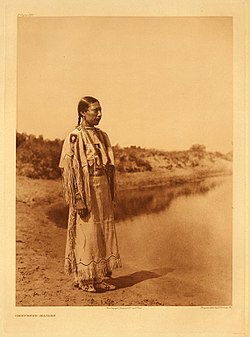
The Sacred Medicine Hat
Central to Cheyenne spiritual life is the Ésevone / Hóhkėha'e, or Sacred Buffalo Hat. The care of this bundle is the responsibility of the Tséá'enōvȧhtse (Sacred Hat Keeper), who must be a member of the Só'taeo'o. The bundle's history includes a period of desecration in the 1870s, leading to the loss of a ceremonial pipe and buffalo horn. Through a series of returns—including a 1997 negotiation with the Oklahoma Historical Society—the pipe was returned to the tribal keeper, James Black Wolf.
Expansion on the Plains
Driven westward by the Lakota and Ojibwe, the Cheyenne sought new territories. In 1811, they formed a lasting alliance with the Arapaho (Hetanevo'eo'o). This partnership enabled the Cheyenne to expand their reach from southern Montana through Wyoming, eastern Colorado, and parts of Nebraska and Kansas.
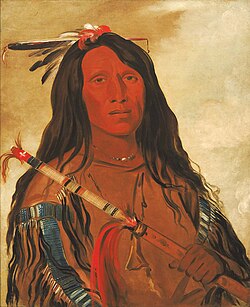
Expansion was not without conflict. In the south, the Cheyenne and Arapaho fought the Comanche, Kiowa, and Plains Apache, notably during a 1836 battle along the Washita River and a 1838 clash at Wolf Creek. By 1840, these hostilities ended in a mutual alliance, allowing the Cheyenne to enter the Llano Estacado for bison hunting and trade. This southern expansion eventually led to a disastrous raid into Mexico in 1853, where most of the war party was killed by Mexican lancers.
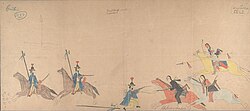
Warrior Culture and Tribal Conflict
The Cheyenne maintained a complex web of relationships with neighboring tribes. To the north and west, they faced enemies such as the Apsáalooke (Crow), Shoshone, Blackfeet, and Nez Perce. To the east, they clashed with the Pawnee, Ponca, and Omaha. Some of these rivals, particularly the Pawnee and Osage, later served as scouts for the US Army, providing critical intelligence on Cheyenne strategies.
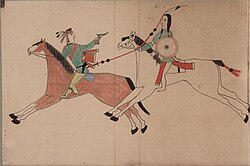
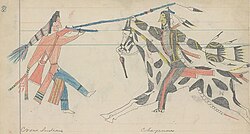
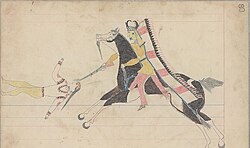
Warrior societies were central to their social structure. The Crazy Dog Society, for example, was symbolized by a pronghorn horned headdress. The culture emphasized bravery and the act of counting coup—touching an enemy in battle to demonstrate courage.
The Era of Treaties and Encroachment
As Euro-American settlers moved west via the Oregon, Mormon, and California trails in the 1840s, competition for water and game intensified. This pressure, combined with a devastating cholera epidemic in 1849 that killed an estimated 2,000 Cheyenne (one-half to two-thirds of their population), began to split the tribe into Northern and Southern divisions.
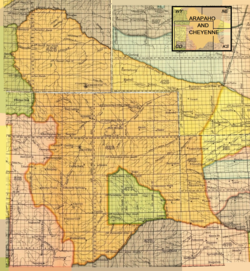
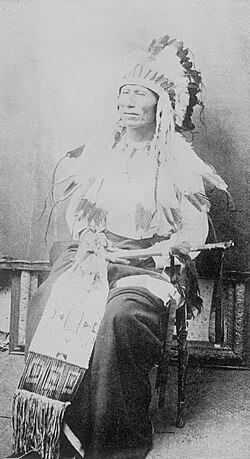
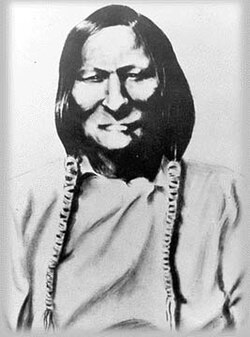
Diplomatic efforts included the 1825 treaty of friendship and trade on the Upper Missouri and the 1851 Fort Laramie Treaty. However, the 1859 Colorado Gold Rush brought a surge of settlers into reserved lands. While leaders like Chief Black Kettle advocated for peace, the Treaty of Fort Wise restricted the Cheyenne to a small reservation in southeastern Colorado, a move many tribal members rejected.
The Colorado War and Major Conflicts
Tensions escalated into the Colorado War in 1864. On November 29, 1864, the Colorado Militia carried out the Sand Creek Massacre, attacking a village under Chief Black Kettle that was flying a flag of truce. Between 150 and 200 Cheyenne, mostly women and children, were killed. This atrocity sparked retaliatory raids, including an attack on Camp Rankin at Julesburg in 1865.
Further violence occurred on November 27, 1868, when George Armstrong Custer attacked Black Kettle's band at the Battle of Washita River, despite the band being camped on a designated reservation.
The Northern Cheyenne later joined the Lakota and Arapaho in the Battle of the Little Bighorn on June 25, 1876. In one of the largest gatherings of Native Americans in pre-reservation history, they defeated Custer and the 7th Cavalry.
The Northern Cheyenne Exodus
Following the Battle of the Little Bighorn, the US Army intensified its pursuit. After the Dull Knife Fight in 1876, many Northern Cheyenne were forced to relocate to Indian Territory (present-day Oklahoma). The conditions there—marked by malaria and a lack of buffalo—were unbearable.
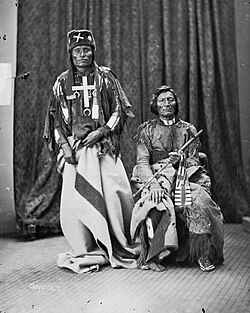
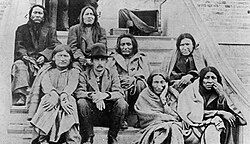
On September 9, 1878, Little Wolf and Dull Knife led a portion of the tribe on a perilous trek back north. While Little Wolf's band found success, Dull Knife's group was captured and held at Fort Robinson. In the subsequent Fort Robinson tragedy, prisoners were denied food and heat in sub-zero temperatures; many were killed or recaptured during a desperate escape attempt on January 9, 1879.

Establishment of the Reservation
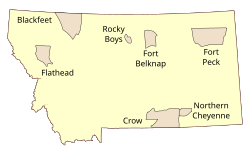
The struggle for a homeland ended in 1884 when President Chester A. Arthur established the Tongue River Indian Reservation (now the Northern Cheyenne Indian Reservation) in southern Montana. Originally 371,200 acres, the reservation was extended in 1900 by President William McKinley to a total of 444,157 acres.
Key Facts
- Original Homeland: Great Lakes region, specifically between the Mississippi River and Mille Lacs Lake.
- Key Alliances: A strong, enduring alliance with the Arapaho formed around 1811.
- Major Losses: The 1849 cholera epidemic killed 50% to 66% of the Cheyenne population.
- Defining Conflicts: The Sand Creek Massacre (1864) and the Battle of the Little Bighorn (1876).
- Current Homeland: The Northern Cheyenne Indian Reservation in Montana, totaling 444,157 acres.
| Event/Period | Approximate Date | Significance |
|---|---|---|
| Arrival at Missouri River | 1676 | Shift toward Plains culture and contact with Mandan/Arikara. |
| Arapaho Alliance | c. 1811 | Enabled territorial expansion across the Central Plains. |
| Cholera Epidemic | 1849 | Massive population loss, weakening social structures. |
| Sand Creek Massacre | 1864 | Mass killing of unarmed Cheyenne and Arapaho. |
| Battle of Little Bighorn | 1876 | Major victory over Custer's 7th Cavalry. |
| Northern Cheyenne Reservation | 1884 | Establishment of permanent homeland in Montana. |
Frequently Asked Questions
Who were the primary allies of the Cheyenne?
The Cheyenne formed a critical and long-lasting alliance with the Arapaho around 1811. They also later allied with the Lakota to the north and the Comanche, Kiowa, and Plains Apache to the south.
What was the significance of the Sacred Buffalo Hat?
The Ésevone (Sacred Buffalo Hat) is a central spiritual bundle. Its history involves a period of loss and desecration, but the return of its ceremonial pipe and horn symbolizes the preservation of Cheyenne cultural and spiritual heritage.
What caused the split between Northern and Southern Cheyenne?
The split was driven by the need for adequate territory for sustenance as emigrant traffic on trails like the Oregon and California trails depleted water and game, as well as the impact of the 1849 cholera epidemic.
What happened during the Northern Cheyenne Exodus?
Led by Little Wolf and Dull Knife, a group of Northern Cheyenne attempted to flee the harsh conditions of the Indian Territory in 1878 to return to their northern homelands, leading to several battles and the tragedy at Fort Robinson.
How large is the Northern Cheyenne Indian Reservation today?
Following an extension by President William McKinley in 1900, the reservation in Montana encompasses a total of 444,157 acres.