Buffalo Bill and Sitting Bull: From the Great Sioux War to the Wild West Show
The history of the American frontier is often viewed through the lens of conflict and spectacle. Few relationships embody this duality more than that of William F. Cody, known globally as Buffalo Bill, and the Hunkpapa Lakota chief and medicine man, Sitting Bull. Their paths crossed not only in the violent clashes of the Great Sioux War but also on the stages of one of the most famous entertainment ventures in history.
The Great Sioux War and the Battle of the Little Bighorn
The tension of the American frontier peaked during the Great Sioux War of 1876. On June 25, 1876, Lieutenant-Colonel George Armstrong Custer led the United States Army's 7th Cavalry Regiment into a confrontation with an allied force of Native American tribes. This coalition, partly commanded by Sitting Bull, achieved a decisive victory in the Battle of the Little Bighorn, resulting in the deaths of Custer and all the troops under his immediate command.
While the battle captured the public's imagination, it did not change the war's trajectory. The U.S. Army increased its military presence in the region, eventually defeating the native coalition. By the spring of 1877, Sitting Bull and his followers were forced into exile in Canada.
Buffalo Bill's Rise as a Showman
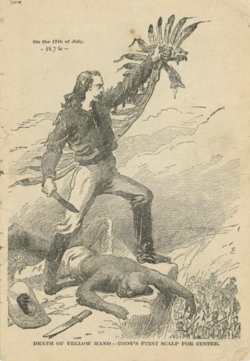
During the Great Sioux War, William F. Cody served as the chief of scouts for the 5th Cavalry Regiment. Although Cody was an acquaintance of Custer, he did not fight at the Little Bighorn. However, a month after that battle, Cody killed and scalped a Cheyenne warrior named Yellow Hair during a skirmish at Warbonnet Creek. Cody allegedly claimed this was the "first scalp for Custer," a dramatization that helped launch his career as a professional showman.
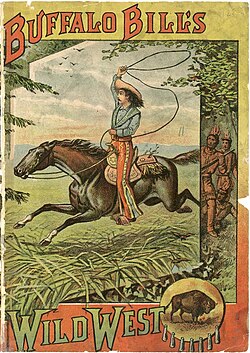
By 1883, Cody had established Buffalo Bill's Wild West, a traveling show that featured dramatized reenactments of frontier history. To add authenticity and draw crowds, Cody recruited Native Americans to perform in the production.
The Unlikely Partnership of 1885
After four years of hardship and resource scarcity in Canada, Sitting Bull surrendered to U.S. officials in 1881. He was held as a prisoner of war at Fort Randall until 1883, after which he lived as a ward of the government at the Standing Rock Agency. In 1885, Cody sought to recruit Sitting Bull for his show, seeing the chief's fame as a major draw.
The recruitment was not without obstacles. Secretary of the Interior Lucius Q. C. Lamar initially opposed the idea. However, after persistent pressure from Cody and his manager, John Burke, Lamar permitted Sitting Bull to appear in the show's parades and arena, provided he did not participate in the scripted reenactments.
Contract Terms and Tour Highlights
On June 6, 1885, Sitting Bull signed a four-month contract. The agreement provided him with a weekly salary of $50 (approximately $1,792 in 2025) and a bonus of $125 (approximately $4,479 in 2025). Sitting Bull also secured the exclusive right to sell his own souvenir photographs and charge fees to those wishing to pose with him.
Joining the show on June 12 in Buffalo, New York, Sitting Bull became a central attraction across 40 American and Canadian cities. His act involved riding his mustang into the arena alone, where he was often taunted as the murderer of Custer. While American audiences frequently booed him, Canadian crowds were welcoming. During a week-long stay in Montreal starting August 10, Sitting Bull was treated as a dignitary, meeting with local Iroquois chiefs and taking a steamboat ride on the St. Lawrence River.
Key Facts
- Battle of the Little Bighorn: Occurred on June 25, 1876; resulted in the death of George Armstrong Custer.
- Buffalo Bill's Role: Chief of scouts for the 5th Cavalry Regiment during the Great Sioux War.
- Sitting Bull's Contract: Paid $50 per week plus a $125 bonus for the 1885 season.
- Tour Scope: The Wild West show visited 40 cities across the United States and Canada.
- Exile: Sitting Bull lived in Canada from 1877 until his surrender in 1881.
| Detail | Information |
|---|---|
| Contract Start Date | June 6, 1885 |
| Weekly Pay | $50 (approx. $1,792 in 2025) |
| Bonus Payment | $125 (approx. $4,479 in 2025) |
| Primary Role | Parade and arena appearances (non-reenactment) |
| Key Locations | Buffalo, NY; Montreal, Canada |
Frequently Asked Questions
Did Buffalo Bill fight in the Battle of the Little Bighorn?
No, William F. Cody did not participate in the Battle of the Little Bighorn, although he was an acquaintance of George Armstrong Custer and served as chief of scouts for the 5th Cavalry Regiment.
Why did Sitting Bull join Buffalo Bill's Wild West show?
Joining the show provided Sitting Bull with a legal means to leave the reservation where he was living as a ward of the American government.
How was Sitting Bull received by the audiences?
His reception varied by region; he was generally booed by audiences in the United States but was cheered and treated as an important visitor in Canada.
What specific rights did Sitting Bull negotiate in his contract?
Beyond his salary and bonus, Sitting Bull insisted on the exclusive right to sell souvenir photographs of himself and the right to charge a fee to people who wanted to pose with him.
Who was the Secretary of the Interior who initially blocked Sitting Bull's participation?
Secretary Lucius Q. C. Lamar initially opposed Sitting Bull's involvement in the show before eventually relenting due to pressure from Cody and John Burke.