Nicolás Avellaneda: The Youngest President of Argentina and His Legacy
Nicolás Avellaneda (1837–1885) stands as one of the most pivotal figures in 19th-century Argentine history. Serving as the 8th President of Argentina from 1874 to 1880, Avellaneda took office at the age of 37, making him the youngest president ever elected in the nation's history. His tenure was marked by a relentless pursuit of economic stability, educational advancement, and the territorial consolidation of the Argentine state.
Beyond his presidency, Avellaneda was a distinguished lawyer, journalist, and intellectual. His commitment to modernization and institutional reform helped transition Argentina toward a more structured federal republic, though his term was not without significant conflict and controversy.
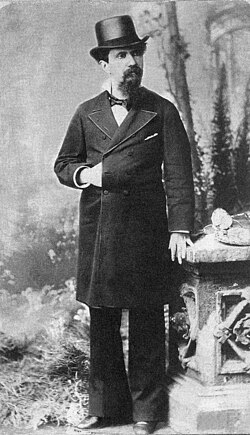
Key Facts
- Presidency: Served as the 8th President of Argentina from October 12, 1874, to October 11, 1880.
- Youngest President: Elected at age 37.
- Major Reforms: Focused on banking and education to drive economic growth.
- Territorial Expansion: Oversaw the Conquest of the Desert to secure southern territories.
- Political Legacy: Facilitated the federalization of Buenos Aires, establishing it as the national capital.
- Shortest Tenure: He is recognized as the shortest-lived President of Argentina, passing away at age 48.
Early Life and Intellectual Foundations
Born in San Miguel de Tucumán on October 3, 1837, Nicolás Remigio Aurelio Avellaneda Silva experienced early hardship. Following the death of his father, Marco Avellaneda, during a revolt against Juan Manuel de Rosas, he moved to Bolivia with his mother. He later pursued legal studies in Córdoba and Buenos Aires, where he developed a deep interest in economics and land law.
Avellaneda's intellectual contributions were evident early in his career. He founded the newspaper El Eco del Norte and later served as a director of El Nacional. His influential work, Estudio sobre las leyes de tierras públicas (Study of the laws about public lands), proposed a system similar to that of the United States, suggesting that land be granted to those who actively produced from it to reduce bureaucracy and encourage population growth.
Rise in Public Service
Before ascending to the presidency, Avellaneda held several high-ranking positions. He served in the house of representatives in 1859 and as the Minister of Government for the Buenos Aires province in 1866. Under the presidency of Domingo Faustino Sarmiento, he served as the Minister of Justice and Public Instruction, where he implemented the defining educational reforms of his early career.
The Presidency (1874–1880)
Avellaneda's path to the presidency was contested. His legitimacy was challenged by Bartolomé Mitre, leading to a military confrontation. However, Mitre was defeated by Julio Argentino Roca. In a move to promote national pacification, Avellaneda showed leniency toward Mitre and included his supporters in the cabinet.
Economic Crisis and Recovery
Avellaneda inherited a severe economic crisis and a budget deficit exacerbated by the Paraguayan War. To avoid debt default, he implemented rigorous austerity measures, including a 15% salary cut for public employees and the dismissal of 6,000 government workers. He also enacted a Customs Law in 1875 that increased import duties on industrial products by 40%.
The economic tide turned with the introduction of refrigerated shipping. In December 1876, the ship Le Frigorifique arrived, enabling the export of frozen meat and grain to Europe. This technological leap, combined with a massive expansion of the railway network—which grew by 89% to reach 2,516 kilometers—transformed Argentina into a global agricultural powerhouse.
The Conquest of the Desert
One of the most controversial aspects of Avellaneda's term was the Conquest of the Desert. Following devastating raids (malones) by indigenous groups led by caciques like Calfucurá and Namuncurá, the government sought to secure the southern frontier. While Minister Adolfo Alsina initially attempted a defensive strategy via the Zanja de Alsina (a 374 km trench), his successor, General Julio Argentino Roca, pursued a policy of subjugation and expulsion.
The campaign resulted in the capture of thousands of indigenous people and the establishment of the Governorate of Patagonia in 1878. This expansion allowed the state to claim vast territories reaching as far as Cape Horn.
The Federalization of Buenos Aires
The end of Avellaneda's term was marked by the Revolution of 1880, a conflict between the national government and the province of Buenos Aires. The dispute was resolved through an agreement that led to the resignation of Governor Carlos Tejedor and the federalization of Buenos Aires. By transforming the city into a federal district, the national government gained a permanent capital independent of provincial control.
| Category | Details |
|---|---|
| Term of Office | October 12, 1874 – October 11, 1880 |
| Political Party | National Autonomist Party |
| Key Economic Shift | Introduction of refrigerated meat exports |
| Infrastructure | Railway expansion to 2,516 km |
| Major Conflict | Conquest of the Desert |
| Final Achievement | Federalization of Buenos Aires |
Death and Final Years
After his presidency, Avellaneda returned to the National Senate representing Tucumán. His life was cut short on November 24, 1885, when he died at sea while returning from medical treatment in France. He was 48 years old.
Frequently Asked Questions
Who was the youngest president of Argentina?
Nicolás Avellaneda was the youngest president ever elected in Argentina, taking office in 1874 at the age of 37.
What was the Conquest of the Desert?
It was a military campaign during Avellaneda's presidency, led primarily by General Julio Argentino Roca, to subjugate indigenous peoples and expand Argentine control over the southern territories of Patagonia.
How did Avellaneda handle the economic crisis of 1875?
He implemented strict austerity measures, including cutting public salaries and dismissing thousands of employees, while increasing import duties to manage the national debt.
What role did refrigerated shipping play in his presidency?
The arrival of the first refrigerated ship, Le Frigorifique, in 1876 allowed Argentina to export frozen meat and grain to Europe, which fundamentally boosted the national economy.
What is the significance of the federalization of Buenos Aires?
It resolved a long-standing conflict between the city of Buenos Aires and the national government, establishing the city as a federal district and the official capital of the Republic.