Domingo Faustino Sarmiento: The Architect of Argentine Education
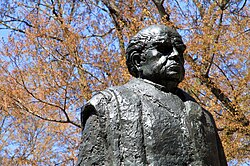
Domingo Faustino Sarmiento was a towering figure in 19th-century Latin American history, serving as the 7th President of Argentina from 1868 to 1874. A prolific writer, educator, and politician, Sarmiento dedicated his life to the belief that education was the primary tool for transforming a nation. As a key member of the Generation of 1837—a group of intellectuals advocating for republicanism and material progress—he sought to replace the rule of ruthless strongmen with a society based on law and enlightenment.
Key Facts
- Presidency: Served as President of Argentina from October 12, 1868, to October 11, 1874.
- Educational Legacy: Established 800 educational and military institutions, enabling 100,000 children to attend school.
- Literary Contribution: Wrote Facundo, a seminal critique of the dictatorship of Juan Manuel de Rosas.
- Political Philosophy: Contrasted "civilization" (democracy and intellect) with "barbarism" (the rule of the caudillo).
- Global Reach: Served as Plenipotentiary Minister to the United States and received an honorary degree from the University of Michigan.
Early Life and Intellectual Awakening
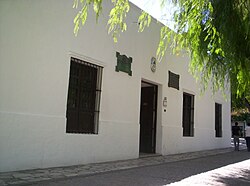
Born on February 15, 1811, in San Juan, Sarmiento grew up in a politically active but poor family. His academic journey began at La Escuela de la Patria, where he excelled and earned the title of First Citizen. Despite early pressures to enter the priesthood at the Loreto Seminary, Sarmiento's interests shifted toward secular knowledge and political activism.
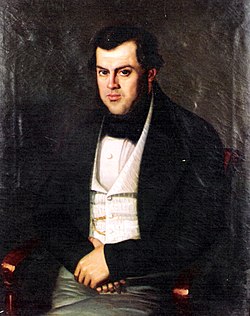
His early adulthood was marked by political volatility. After being arrested for conspiracy in 1840, Sarmiento began a series of exiles in Chile. It was during these periods that he developed his intellectual framework, writing for newspapers like El Mercurio and El Progreso. In 1842, he became the Director of the first Normal School (a school designed to train teachers) in South America.
The Influence of Facundo
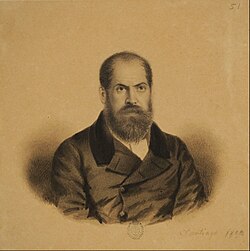
While in exile, Sarmiento wrote his most famous work, Facundo. In this text, he analyzed the conflict between the enlightened values of Europe and the "barbarism" of the caudillo—the ruthless regional strongmen who dominated the Argentine interior. This work established him as a leading voice against the dictatorship of Juan Manuel de Rosas.
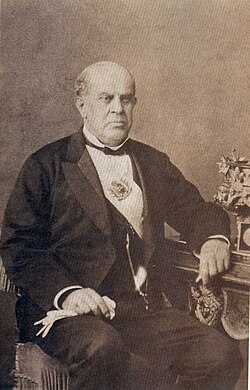
![Daguerreotype of Domingo Faustino Sarmiento after the Battle of Caseros. He is wearing the Brazilian Imperial Order of the Southern Cross given to him by Emperor Pedro II of Brazil during his exile in Petrópolis in 1852[28]](/images/df/0c/df0caefb9871d31967d6a15cf35c0d770e00b86ede40e601e57ce4689c10b3fb.jpg)
Political Ascent and Governance
Sarmiento returned to Argentina in 1855, working as an editor and serving in the provincial Senate. In 1862, he was elected Governor of San Juan, where he implemented the Statutory Law of Public Education, making primary school mandatory. His tenure as governor was characterized by aggressive infrastructure development, including the construction of hospitals, roads, and the promotion of mining and agriculture.
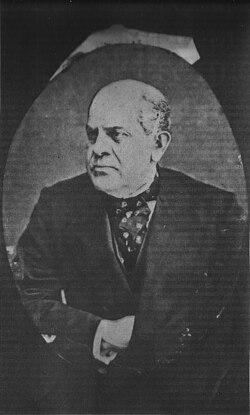
Following a diplomatic mission to the United States in 1865—where he was deeply moved by the assassination of Abraham Lincoln—Sarmiento was elected President of Argentina in 1868.
The Presidency (1868–1874)
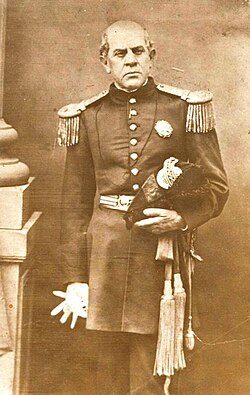
Sarmiento's presidency focused heavily on nation-building through intellect. He quadrupled central government educational subsidies to the provinces and focused on training teachers to ensure long-term prosperity. This effort laid the groundwork for Argentina becoming one of the most literate nations in the Western Hemisphere.
National Development and Challenges
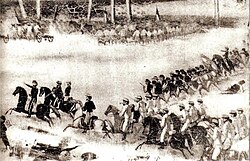
Beyond education, Sarmiento's administration oversaw the first national census in 1869, which recorded 1,836,490 inhabitants, revealing that 71% of the population was illiterate. His term also coincided with the conclusion of the Paraguayan War, a conflict that left Argentina with a staggering debt of 9 million pounds sterling and over 18,000 military deaths.
Final Years and Lasting Legacy
After his presidency, Sarmiento continued to serve in various capacities, including as a Senator for San Juan and the Interior Minister. In 1882, he successfully passed legislation for Free Education, ensuring schools were mandatory and separate from religious influence.
Sarmiento spent his final days in Paraguay, where he died of a heart attack on September 11, 1888. He was buried in the La Recoleta Cemetery in Buenos Aires under a sculpture of a condor, a design he created himself.
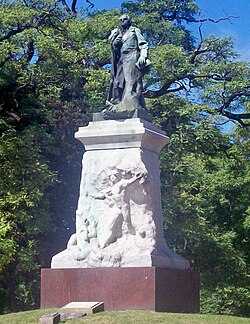
His legacy remains complex. While celebrated as a champion of literacy and modernization, his policies toward indigenous peoples have remained a point of historical controversy, leading to protests and the removal of his likeness from some institutions in the United States.
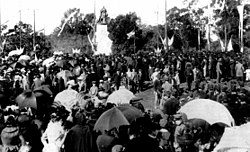
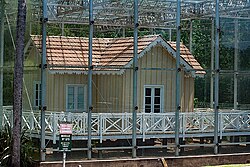
Summary of Sarmiento's Career
| Role | Period | Primary Contribution |
|---|---|---|
| Governor of San Juan | 1862–1864 | Mandatory primary education and infrastructure growth. |
| President of Argentina | 1868–1874 | Founded 800 institutions; quadrupled education subsidies. |
| Plenipotentiary Minister | 1865 | Diplomatic relations with the USA; wrote Vida de Lincoln. |
| Intellectual/Author | 1830s–1888 | Authored Facundo; advocated for "Civilization." |
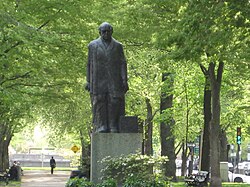
Frequently Asked Questions
What was the "Generation of 1837"?
The Generation of 1837 was a group of Argentine intellectuals and activists, including Sarmiento, Esteban Echeverría, and Bartolomé Mitre, who advocated for republicanism, free trade, and social progress during the 19th century.
What is the significance of the book Facundo?
Facundo is Sarmiento's most famous work, serving as a critique of the dictator Juan Manuel de Rosas. It famously contrasts the "civilization" of urban, educated society with the "barbarism" of the rural caudillos.
How did Sarmiento impact Argentine education?
Sarmiento is considered the father of Argentine education. He established hundreds of schools, trained teachers, and eventually passed laws making education free, mandatory, and secular.
What was Sarmiento's relationship with the United States?
Sarmiento served as a minister to the U.S. in 1865, where he studied the American educational system and developed a deep admiration for Abraham Lincoln, later writing a biography of him.
Why is Sarmiento a controversial figure today?
While praised for his educational reforms, Sarmiento is criticized for his views and policies regarding the indigenous populations of Argentina, which some historians describe as exclusionary or racist.