Newcastle United: The History and Evolution of the Magpies
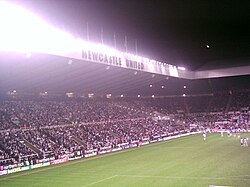
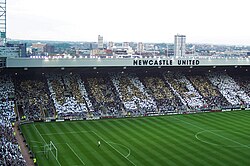
Known affectionately as The Magpies or the Toon Army, Newcastle United Football Club is one of England's most storied sporting institutions. Based in the heart of Tyneside, the club is deeply intertwined with the identity of its supporters, the Geordies, and plays its home matches at the iconic St James' Park.
From its early roots in the late 19th century to its current status as a global competitor under new ownership, Newcastle United has experienced the highest peaks of English football and the challenges of relegation, always maintaining one of the most loyal fanbases in the world.
Key Facts
- Founded: 1892 (following the merger of Stanley F.C. and East End F.C.).
- Stadium: St James' Park, with a capacity of 52,769.
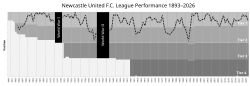
- Major Honours: 4 First Division titles and 6 FA Cup trophies.
- Record Goalscorer: Alan Shearer.
- Current Ownership: Majority owned by the Public Investment Fund (85%).
- League: Premier League.
A Journey Through Time: Club History
Formation and Early Glory (1881–1937)
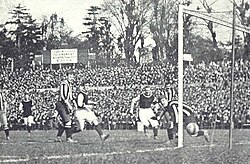
The club's origins date back to 1881 with Stanley F.C., and 1882 with East End F.C., eventually forming Newcastle United F.C. in 1892. The early 20th century marked a golden era for the club, securing four league titles between 1905 and 1927. This period established Newcastle as a powerhouse of the English game.
Post-War Era and Fluctuating Fortunes (1937–1992)
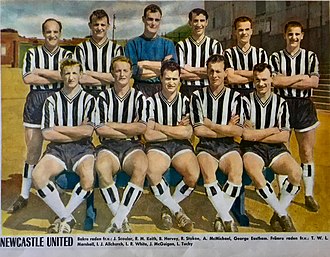
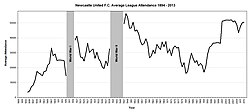
Following the war, the club continued to find success in cup competitions, winning the FA Cup in 1951, 1952, and 1955. However, the latter half of the century saw the club "bounce" between divisions, struggling for consistency but remaining a massive draw for spectators.
The Premier League and the Keegan Era (1993–2007)
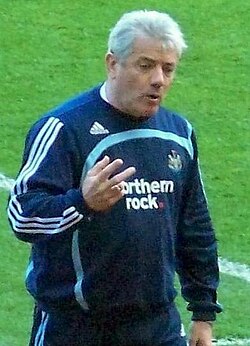
The 1990s saw a resurgence under the guidance of Kevin Keegan. Although the club did not win the league during this time, they became one of the most exciting teams in England, finishing as runners-up in the 1995–96 and 1996–97 seasons and qualifying for the Champions League.
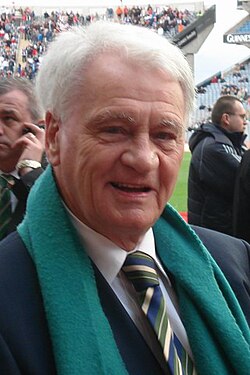
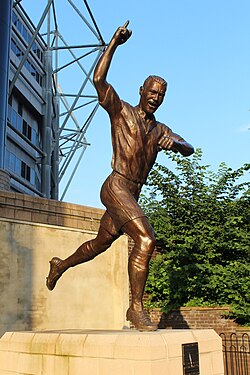
This era was further defined by the legendary Alan Shearer, the club's record goalscorer, and the management of Bobby Robson, who led the team for five years until 2004.
The Mike Ashley Era and Transition (2007–2021)
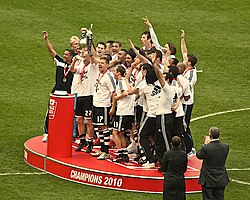
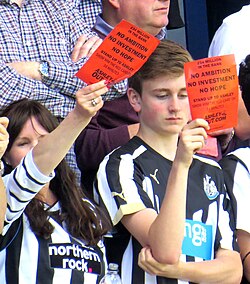
The tenure of owner Mike Ashley was often marked by tension between the board and the supporters. Despite periods of instability and a relegation in 2009, the club made an immediate return to the top flight in 2010. This period saw various managerial changes, including the tenure of Rafael Benítez from 2016 to 2019.

The PIF Era: A New Ambition (2021–Present)
In October 2021, a Saudi-led takeover by the Public Investment Fund (PIF) transformed the club's financial landscape. This shift has led to a significant increase in revenue and a climb in world rankings, with the club aiming to return to the pinnacle of European football.
![Image from 100% MAGS, showing thousands of Newcastle fans celebrating the completed takeover outside St. James' Park on 7 October 2021[138]](/images/64/c7/64c74f1351ed03de0eb15d224c7579ea4251710b5882a479b3ca403441a9ee3a.jpg)
Club Identity and Infrastructure
Newcastle United is renowned for its distinct visual identity, most notably the black and white striped kits. Over the decades, the club has partnered with various manufacturers such as Umbro, Adidas, and Castore, and sponsors ranging from Newcastle Brown Ale to Sela.
St James' Park remains the spiritual home of the club. It is a venue famous for its atmosphere and historical significance, having been the first stadium in the world to attract over one million league spectators in a single season (1946–47).
Club Overview and Performance
| Category | Details |
|---|---|
| Current Head Coach | Matthias Jaissle |
| Captain | Bruno Guimarães |
| League Titles | 4 (1904–05, 1906–07, 1908–09, 1926–27) |
| FA Cup Wins | 6 |
| Recent Revenue (23-24) | €371.8m |
Frequently Asked Questions
Who is the record goalscorer for Newcastle United?
Alan Shearer is the club's record goalscorer and remains one of the most iconic figures in the club's history.
What is the capacity of St James' Park?
The stadium currently has a capacity of 52,769 spectators.
Who owns Newcastle United currently?
The club is owned by the Public Investment Fund (85%) and RB Sports & Media (15%).
How many times has Newcastle United won the English league?
Newcastle United has won the league on four occasions: 1904–05, 1906–07, 1908–09, and 1926–27.
What are the nicknames of the club and its fans?
The club is known as The Magpies, the supporters are often called the Toon Army, and the local people of Newcastle are known as Geordies.