Exploring New South Wales: The Premier State of Australia
New South Wales (NSW) stands as a cornerstone of the Australian continent. Often referred to by its nicknames, "The First State" and "The Premier State," it is a region of immense historical significance, economic power, and breathtaking natural beauty. From the bustling urban center of Sydney to the rugged peaks of the Snowy Mountains, New South Wales offers a diverse landscape that has shaped the identity of a nation.
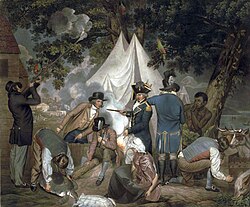
Key Facts
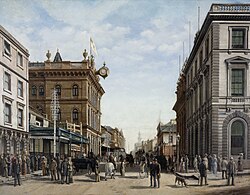
- Capital City: Sydney
- Established: 26 January 1788 (as a colony)
- Population: Approximately 8.6 million (2025 estimate)
- Highest Point: Mount Kosciuszko (2,228 m)
- State Motto: Orta Recens Quam Pura Nites ("Newly Risen, How Brightly You Shine")
- State Symbols: Waratah (flower), Kookaburra (bird), and Blue Groper (fish)
A Journey Through History
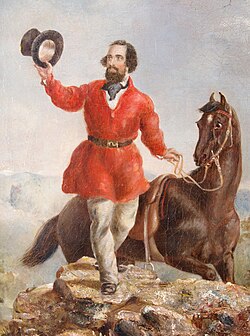
The history of New South Wales is a deep tapestry that begins long before European arrival. The original inhabitants are the Aboriginal people, who arrived in Australia between 40,000 and 60,000 years ago. Before European settlement, an estimated 250,000 Aboriginal people lived across the region.
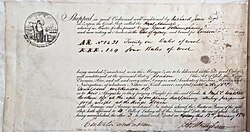
The modern era of the state began with British settlement in 1788. By 1850, the settler population had grown to 180,000. Following the establishment of responsible government in 1856, the colony eventually joined the Federation of Australia on 1 January 1901.
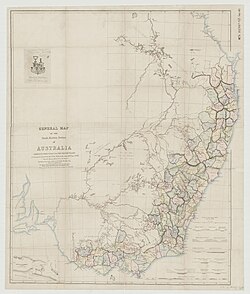
Geography and Climate
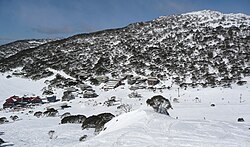
New South Wales covers a vast land area of 801,150 km². Its geography is incredibly varied, ranging from coastal regions to high-altitude mountains. The state is home to the highest elevation in Australia, Mount Kosciuszko, which reaches 2,228 meters.
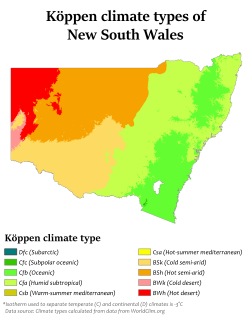
The climate across the state varies significantly. While much of the mainland experiences standard Australian seasonal patterns, the state has seen extreme temperature fluctuations. Record highs have reached 49.7°C, while record lows have plummeted to -23.0°C.
Natural Wonders and Landscapes
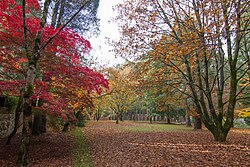
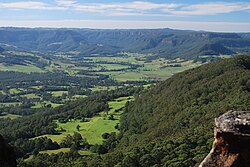
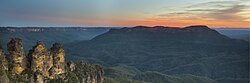
The state boasts several iconic natural landmarks. The Blue Mountains are famous for their unique geology and the stunning Three Sisters rock formation. Other notable areas include the Southern Highlands and the scenic vistas of Mount Wilson during the autumn season.
Demographics and Culture
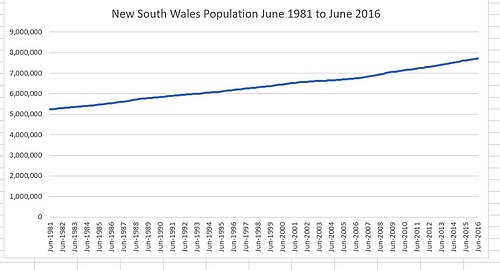
As of late 2025, New South Wales is home to approximately 8.6 million people, making up about 30% of Australia's total population. The state is highly multicultural; 34.6% of the population was born overseas, with significant communities from China, England, India, and New Zealand.
This diversity is reflected in the state's religious affiliations, with Christianity being the largest group (47.6%), followed by those with no religious affiliation (33.2%), Islam, Hinduism, and Buddhism.
Education and Institutions
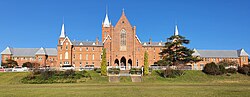
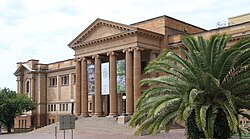
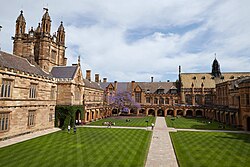
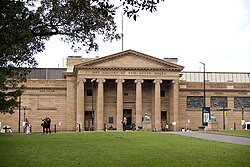
New South Wales is a hub for higher learning and culture. It is home to the University of Sydney, the oldest university in Australia, and prestigious institutions like St Stanislaus' College in Bathurst. The state also preserves its heritage through the State Library of New South Wales and the Art Gallery of New South Wales.
Economy and Infrastructure
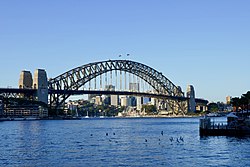
The economy of New South Wales is a powerhouse, with a 2020 estimated Gross State Product (GSP) of AU$624.9 billion. This economic strength is driven by various sectors, including agriculture, mining (notably black opal), and a robust service industry.
Agriculture and Industry
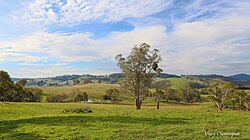
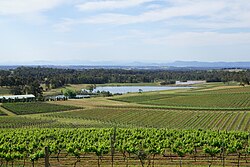
Agriculture remains a vital component of the state's economy. The Hunter Region is renowned for its vineyards, while other areas like Oberon feature extensive grazing fields. The state also plays a major role in the production of wheat and cotton.
Transport and Connectivity
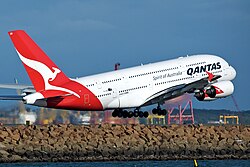
Connectivity is maintained through an extensive network of highways, including the Hume, Pacific, and New England Highways. For air travel, Sydney Airport serves as a major gateway, with airlines such as Qantas, Virgin Australia, and Jetstar providing domestic and international links.
Government and Administration
New South Wales operates as a federated parliamentary constitutional monarchy. The government is structured with a Monarch (Charles III), a Governor (Margaret Beazley), and a Premier (Chris Minns). The legislature consists of two houses: the Legislative Council (Upper House) and the Legislative Assembly (Lower House).
Summary of State Profile
| Category | Details |
|---|---|
| Total Area | 801,150 km² |
| Largest City | Sydney |
| Primary Language | English |
| Major Industry | Services, Agriculture, Mining |
| Time Zones | AEST, ACDT, AEDT, Lord Howe Island Time |
Frequently Asked Questions

![The Palace Hotel in Broken Hill, the only town in Australia to be listed on the National Heritage List[136][137]](/images/0d/67/0d6727db593f7f8a9609e0c666ec45770e7c311a3be88f19778aee7651e0c46e.jpg)
What is the highest point in New South Wales?
The highest elevation in the state is Mount Kosciuszko, which stands at 2,228 meters (7,310 ft).
Which city is the capital of New South Wales?
Sydney is the capital and the largest city in New South Wales.
What are the state symbols of New South Wales?
The official symbols include the Waratah (flower), the Kookaburra (bird), the Blue groper (fish), and the Platypus (mammal).
How diverse is the population of NSW?
The state is highly diverse; as of the 2021 census, 34.6% of the population was born overseas, and the most common ancestries include English, Australian, Irish, and Scottish.
What is the main economic driver of the state?
New South Wales has a massive economy with a GSP of approximately AU$624.9 billion, driven by diverse sectors including services, agriculture, and mining.