New Orleans History: From French Colonial Outpost to Modern Metropolis
New Orleans is a city defined by its relationship with water, trade, and a complex tapestry of global influences. From its geological origins as a silt deposit of the Mississippi River to its current status as a global hub for music and tourism, the city has survived colonial shifts, devastating epidemics, and catastrophic storms. Its unique identity is a product of French, Spanish, African, and American legacies blending into a singular cultural landscape.
Key Facts
- Founded: 1718 by the French.
- Louisiana Purchase: Acquired by the United States from France in 1803.
- Economic Peak: The largest port in the Southern U.S. during the 19th century, dominating cotton exports.
- Major Disasters: Sauvé's Crevasse (1849) and Hurricane Katrina (2005).
- Cultural Legacy: A polyglot history involving French, Spanish, African, and Creole populations.
Pre-history and Native American Roots

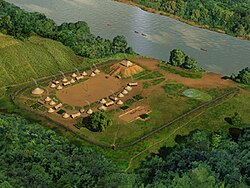
The land that supports New Orleans began forming around 2200 BCE as the Mississippi River deposited silt to create the delta region. Long before European arrival, the area was inhabited by Native Americans for approximately 1,300 years. The Mississippian culture established mounds and earthworks, while later inhabitants created a vital trade route via a portage between the Mississippi River and the headwaters of Bayou St. John (known natively as Bayouk Choupique), which flowed into Lake Pontchartrain.
Archaeological evidence confirms settlements dating back to at least 400 C.E. One of the original names for the area was Bulbancha, a Choctaw word meaning "place of many tongues," reflecting its long-standing role as a diverse trading hub.
The Colonial Era and the Louisiana Purchase
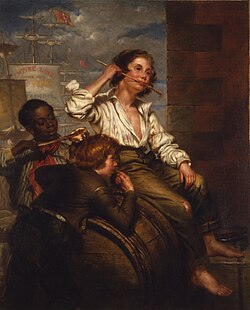
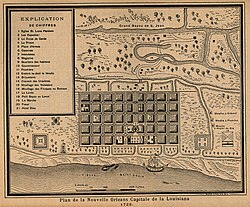
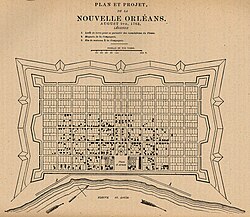
The city was officially founded by the French in 1718. Over the following century, control of the region shifted between France and Spain. During the Spanish interregnum, the city saw significant commercial growth. In 1794, the opening of the Carondelet Canal—connecting the river levee to Lake Pontchartrain via Bayou St. John—provided a major boost to trade. The late 18th century also saw the establishment of a firm sugar processing industry.
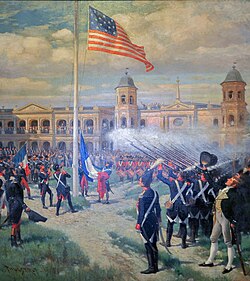
In April 1803, Napoleon Bonaparte sold Louisiana (New France) to the United States in the Louisiana Purchase. The transition of power was brief and formal: Pierre Clément de Laussat took control for France on November 30, 1803, and handed it over to the U.S. on December 20, 1803. During this window, Laussat abolished the Spanish cabildo (the colonial administrative council) and established the city's first city council.
Early American Growth and Conflict
The early 19th century was a period of rapid expansion and political volatility. The city became a cosmopolitan center, attracting Americans, Africans, and Creoles (people of French descent born in the Americas), as well as Creoles of color (people of mixed European and African ancestry), many of whom arrived following the revolution in Haiti.
This era was marked by the Aaron Burr conspiracy (1806–1807), which led to a period of martial law, and culminated in the War of 1812. The conflict's final major engagement, the Battle of New Orleans in 1815, remains one of the most significant military events in the city's history.

The 19th Century: Commerce, Crisis, and Civil War
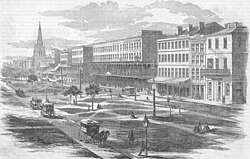
By 1840, New Orleans had grown into the third-largest city in the U.S. and the largest in the South, with a population of roughly 102,000. It served as the primary gateway for exporting cotton and farm products to New England and Western Europe.
Environmental and Health Challenges
The city's geography made it vulnerable to flooding. On May 3, 1849, a levee breach known as Sauvé's Crevasse left 12,000 people homeless, marking the most disastrous flood in the city's history until 2005.
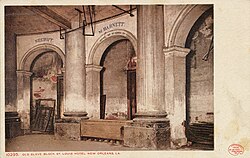
Public health was another constant struggle. From 1817 to 1905, yellow fever epidemics periodically devastated the population, with the 1853 outbreak killing approximately 8,000 people. At the time, the role of mosquitoes in spreading the disease was unknown, and primitive sanitation exacerbated the crisis.
The Civil War and Reconstruction
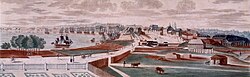
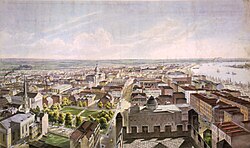
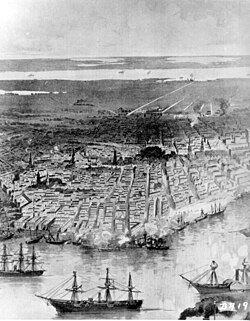
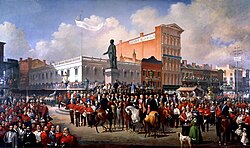
As the South's largest city at the onset of the American Civil War (1861–1865), New Orleans was an early target for Union forces. Following the war, the city served as the capital of Louisiana from 1865 to 1880, becoming a center of political struggle between various ethnic and political blocs during the Reconstruction era.
Modernization and the 20th Century
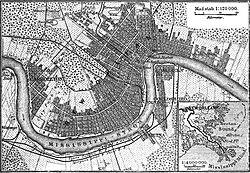
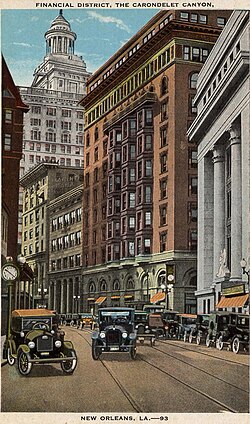
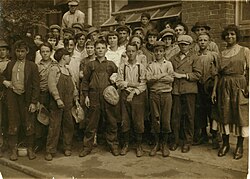
The turn of the century brought significant infrastructure improvements. In the 1900s and 1910s, engineer A. Baldwin Wood implemented an ambitious drainage plan using large-scale pumps that allowed the city to expand its habitable area. This period also saw the gradual decline of the French language; while a 1902 report noted that a vast majority of the population spoke or understood French, the last major French newspaper, L'Abeille de la Nouvelle-Orléans, closed in 1923.

The 21st Century and Hurricane Katrina
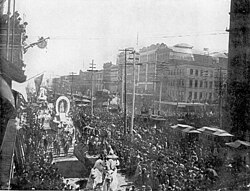
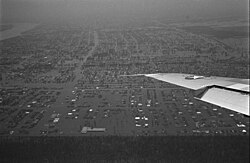
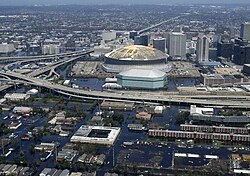
The most defining event of the modern era occurred on August 29, 2005, when Hurricane Katrina struck. Despite "contraflow" evacuation efforts that moved an estimated 600,000 people out of Greater New Orleans, the city suffered catastrophic levee failures and flooding.
While the city has rebuilt in the years since, the disaster resulted in a significant loss of the original population, particularly the Black community. This demographic shift has fundamentally altered the city's cultural fabric in ways that new arrivals have not been able to replicate.
| Era | Key Characteristics | Major Events/Milestones |
|---|---|---|
| Pre-Colonial | Native American trade hubs | Mississippian mound building; Bulbancha trading hub |
| Colonial (1718–1803) | French and Spanish rule | Founding (1718); Carondelet Canal (1794) |
| Early American (1803–1860) | Rapid commercial expansion | Louisiana Purchase (1803); Battle of New Orleans (1815) |
| Civil War & Reconstruction | Political and military conflict | Union capture; State capital (1865–1880) |
| Modern Era (1900–Present) | Infrastructure and resilience | Wood's drainage system; Hurricane Katrina (2005) |
Frequently Asked Questions
What was the Louisiana Purchase?
The Louisiana Purchase was the 1803 acquisition of a vast territory from France, led by Napoleon Bonaparte, which included New Orleans and portions of more than a dozen present-day U.S. states.
What was Sauvé's Crevasse?
Sauvé's Crevasse was a massive Mississippi River levee breach on May 3, 1849, that caused the worst flooding in New Orleans' history prior to Hurricane Katrina, leaving 12,000 people homeless.
Why was yellow fever so deadly in New Orleans?
Yellow fever was devastating because the cause—mosquitoes—was unknown for most of the 19th century. Primitive sanitation, a lack of public water systems, and a transient population of immigrants and sailors contributed to the spread.
How did A. Baldwin Wood change the city?
A. Baldwin Wood designed and installed a massive pumping and drainage system in the early 20th century, which allowed the city to drain swampland and expand its geographic area significantly.
What was the impact of Hurricane Katrina on the city's culture?
Beyond physical destruction, Katrina led to a significant loss of the city's original population, particularly the Black population. This loss has had a lasting impact on the unique cultural heritage of the city that cannot be fully replicated by new residents.