New 7 Wonders of the World: The Global Campaign and Its Winners
In 2001, a global initiative was launched to redefine the most iconic monuments of our era. Led by Canadian-Swiss Bernard Weber and organized by the Zurich-based New 7 Wonders Foundation (N7W), the campaign sought to identify a new set of world wonders through a massive public popularity poll. This effort culminated on July 7, 2007, at the Estádio da Luz in Lisbon, where the winners were officially announced to the world.
The selection process began with 200 existing monuments, which were eventually whittled down to 77 choices, and then to 21 candidates by a panel in 2006. The final winners were determined via free web-based and telephone voting. According to John Zogby, President/CEO of Zogby International, this initiative represented the largest poll on record.
Key Facts
- Founder: Bernard Weber.
- Organization: New 7 Wonders Foundation (N7W), supported by the commercial New Open World Corporation (NOWC).
- Voting Method: Public voting via the internet and telephone.
- Announcement Date: July 7, 2007.
- Honorary Status: The Giza Pyramids were granted honorary status as the only surviving member of the original Ancient Wonders.
- Subsequent Projects: The foundation later launched the New 7 Wonders of Nature (ended 2011) and New 7 Wonders Cities (ended 2014).
The Official Winners
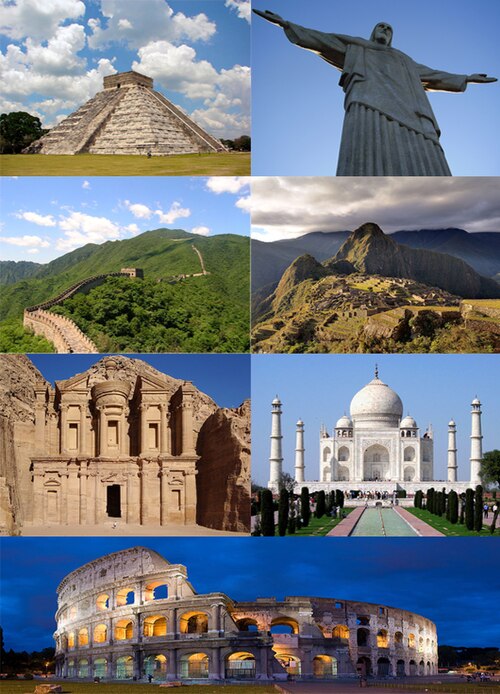
The final list comprises seven architectural and cultural marvels spanning several continents and centuries. While the poll was widely popular, some critics labeled it unscientific because participants were permitted to vote multiple times.
| Wonder | Location | Year |
|---|---|---|
| Giza Pyramids (Honorary) | Giza Necropolis, Egypt | 2560 BC |
| Petra | Ma'an, Jordan | 40 AD |
| Colosseum | Rome, Italy | 80 AD |
| Chichén Itzá | Yucatán, Mexico | 600 AD |
| Great Wall of China | China | 1368 AD |
| Machu Picchu | Cuzco Region, Peru | 1450 AD |
| Taj Mahal | Agra, India | 1643 AD |
| Christ the Redeemer | Rio de Janeiro, Brazil | 1931 AD |
National Campaigns and Global Reactions
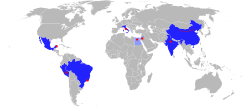
The competition sparked intense national pride, leading several countries to launch aggressive marketing campaigns to ensure their monuments won.
Brazil and Peru
In Brazil, the "Vote no Cristo" campaign received massive corporate backing from entities like Banco Bradesco and Rede Globo. Telecommunications operators even waived fees for SMS and phone votes. Newsweek reported that Rio de Janeiro was saturated with advertisements, including an airplane trailing a banner for a full month, resulting in an estimated 10 million Brazilian votes.
Similarly, the Peruvian Ministry of Commerce and Tourism led an intensive media campaign for Machu Picchu, which resulted in massive national participation and widespread celebration upon its victory.
Other National Efforts
- India: News channels, radio stations, and celebrities urged the public to vote for the Taj Mahal.
- Jordan: Queen Rania personally joined the campaign to support Petra.
- Mexico: News programs actively encouraged voting for Chichén Itzá.
The Case of Chile
The Moais of Easter Island did not make the final cut. However, the Chilean representative, Alberto Hortus, stated that Bernard Weber informed him the Moais finished eighth and were considered a "moral" wonder of the world.
Institutional Perspectives
The relationship between the New 7 Wonders Foundation and international bodies was complex. While the foundation eventually partnered with the United Nations to promote Millennium Development Goals, UNESCO (United Nations Educational, Scientific, and Cultural Organization) maintained a strict distance.
UNESCO, which manages the World Heritage List based on scientific and educational criteria, reaffirmed in 2007 that it had no link to the initiative. The organization argued that a private poll reflecting only the opinions of those with internet access could not replace scientific work or contribute sustainably to the preservation of sites.
Other Finalists
Beyond the seven winners, 13 other finalists were recognized for their significance. These included ancient sites like Stonehenge and the Acropolis of Athens, as well as modern landmarks such as the Eiffel Tower and the Sydney Opera House.
Frequently Asked Questions
Who organized the New 7 Wonders of the World?
The campaign was led by Bernard Weber and organized by the New 7 Wonders Foundation, which was supported by the commercial entity New Open World Corporation (NOWC).
Was the voting process scientific?
The poll was considered unscientific by some, including UNESCO, because it relied on a popularity vote where participants were allowed to vote repeatedly.
Why were the Giza Pyramids given honorary status?
The Giza Pyramids were granted honorary status because they are the only surviving monument from the original Seven Wonders of the Ancient World.
Did UNESCO support the campaign?
No. While UNESCO provided some early advice on nominees, it later distanced itself, stating that the private undertaking was not comparable to the scientific process used for the World Heritage List.
How was the campaign funded?
The New 7 Wonders Foundation relied on private donations and the sale of broadcast rights; it received no public funding.