Ming DynastyChinese historyHongwu EmperorYongle EmperorGreat Wall of China

Ming Dynasty: The Last Han Imperial Era of China

Ming Dynasty: The Last Han Imperial Era of China The Ming dynasty (1368–1644) stands as a monumental era in Chinese history, representing the final imperial dynasty ruled by the Han peopl...

Ming Dynasty: The Last Han Imperial Era of China

The Ming dynasty (1368–1644) stands as a monumental era in Chinese history, representing the final imperial dynasty ruled by the Han people. Emerging from the collapse of the Mongol-led Yuan dynasty, the Ming established a period of profound cultural achievement, architectural grandeur, and complex political shifts that shaped the early modern landscape of East Asia.

Initially established with its capital in Nanjing, the dynasty later shifted its political center to Beijing in 1403. While the primary capital fell in 1644 during a rebellion led by Li Zicheng, remnants of the imperial family continued to rule through various regimes known as the Southern Ming until 1662.
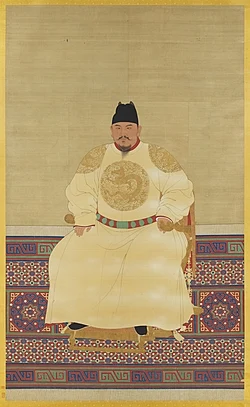
Portrait of the Hongwu Emperor (r. 1368–1398)

Key Facts

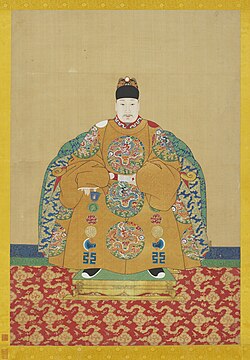
Portrait of the Wanli Emperor (r. 1572–1620)
  • Duration: 1368–1644 (Southern Ming survived until 1662).
  • Founding Ruler: The Hongwu Emperor.
  • Major Capitals: Nanjing (1368–1644) and Beijing (1403–1644).
  • Governance: Absolute monarchy led by an Emperor.
  • Core Philosophies: Confucianism, Taoism, and Buddhism.
  • Territorial Peak: Reached approximately 6,500,000 km² by 1450.

The Rise and Reign of Great Emperors
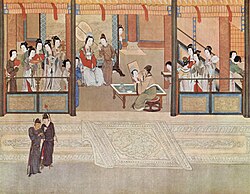
Spring morning in a Han palace, by Qiu Ying (1494–1552); excessive luxury and decadence marked the late Ming period, spurred by the enormous state bullion of incoming silver and by private transactions involving silver.

The dynasty was founded by the Hongwu Emperor, who rose to power following the decline of the Yuan. His reign laid the foundational structures of the Ming state. Later, the Yongle Emperor significantly expanded the dynasty's influence, designating Beijing as the new capital in 1420 and engaging in extensive foreign diplomacy.
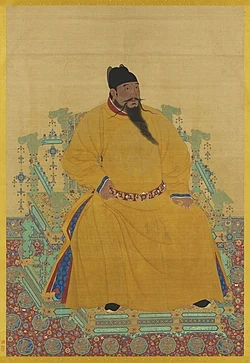
Portrait of the Yongle Emperor (r. 1402–1424)

The Yongle era was marked by significant maritime and diplomatic activity. This period saw the Ming court receive various tribute items from across the region, including products from Tibet and exotic gifts from distant lands, such as a giraffe presented by a Bengali envoy.
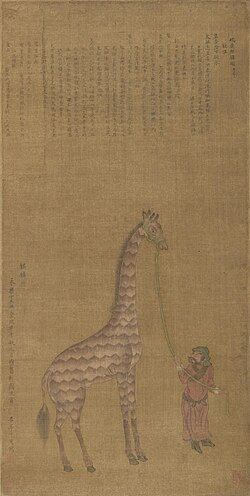
A Bengali envoy presenting a giraffe as a tributary gift in the name of King Saif Al-Din Hamzah Shah of Bengal (r. 1410–1412) to the Yongle Emperor
A 17th-century Tibetan thangka of Guhyasamaja Akshobhyavajra; the Ming court gathered various tribute items that were native products of Tibet (such as thangkas),[26] and in return granted gifts to Tibetan tribute-bearers.[27]

Imperial Governance and Society

The Ming government operated as an absolute monarchy, supported by a sophisticated bureaucracy of scholar-officials. These officials were selected through rigorous civil service examinations, a system that shaped the social hierarchy and intellectual life of the empire.

Candidates who had taken the civil service examinations would crowd around the wall where the results were posted; detail from a handscroll in ink and color on silk, by Qiu Ying (1494–1552).[122]

Within the imperial palace, power was often a delicate balance between the Emperor, his officials, and the eunuchs. While the Grand Secretariat and Six Ministries managed the state, eunuchs held significant influence within the imperial household, sometimes exerting control over the throne itself.
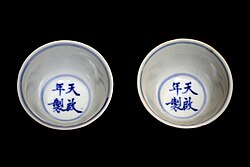
Tianqi-era teacups, from the Nantoyōsō Collection in Japan; the Tianqi Emperor was heavily influenced and largely controlled by the eunuch Wei Zhongxian (1568–1627).

Architecture, Defense, and Urban Life
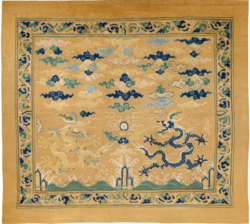
An imperial throne carpet with double dragon and seed pearl motif, 16th century

The Ming dynasty is perhaps most famous for its monumental architectural achievements. The Great Wall of China, as it is recognized today—constructed largely of brick and stone—is a massive product of the Ming era, designed to defend the northern frontiers.
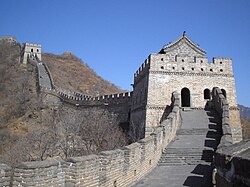
The Great Wall of China: while segments of earlier rammed earth walls were first unified by the Qin and Han dynasties, the vast majority of the brick and stone Great Wall is a product of the Ming.

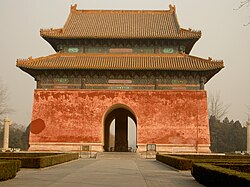
In the heart of the empire, the Forbidden City served as the seat of power. Structures like the Palace of Heavenly Purity stood as symbols of imperial majesty. Beyond the capital, the dynasty left lasting marks through the Ming tombs and the reconstruction of major landmarks like the Drum and Bell Towers of Beijing.
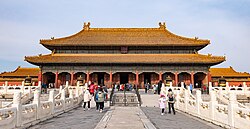
The Palace of Heavenly Purity in the Forbidden City
The Ming tombs, located 50 km (31 mi) north of Beijing
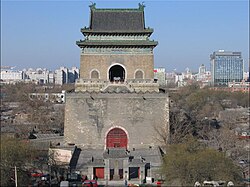
The Drum Tower and Bell Tower of Beijing was built in the Yuan and rebuilt in the Ming.

Defense was also critical at strategic points like the Shanhai Pass, a vital gate along the Great Wall that saw intense military activity during the transition to the Qing dynasty.
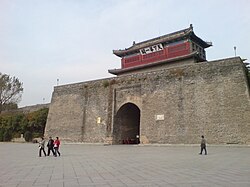
Shanhai Pass along the Great Wall, the gate where the Manchus were repeatedly repelled before being finally let through by Wu Sangui in 1644

Culture, Science, and the Arts

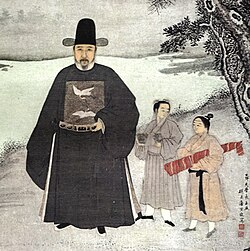
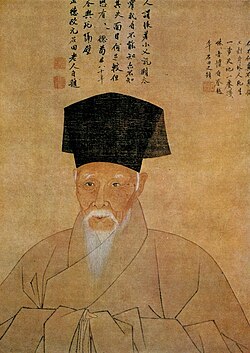
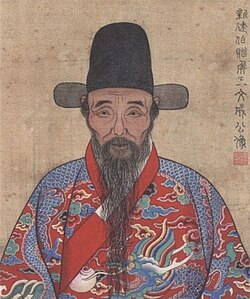
A portrait of Jiang Shunfu, an official under the Hongzhi Emperor, now in the Nanjing Museum. The decoration of two cranes on his chest is a "rank badge" that indicates he was a civil official of the first rank.

The Ming period was a golden age for Chinese arts and sciences. The era saw the perfection of blue and white porcelain, a ceramic style that became world-renowned. Artistic traditions flourished through various schools of painting, including the Wu School founded by Shen Zhou.
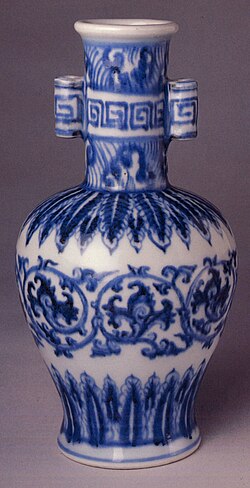
A Xuande period (1426–1435) imperial blue and white vase – Metropolitan Museum of Art, New York
Shen Zhou (1427–1509) founded the Wu School of painting, contributing greatly to Chinese artistic tradition.

Literature and philosophy also saw significant developments. The influence of Confucian thinkers like Wang Yangming provided new perspectives on morality and governance, while the era's scientific knowledge was documented in encyclopedias like the Tiangong Kaiwu, which detailed advanced processes such as iron smelting.
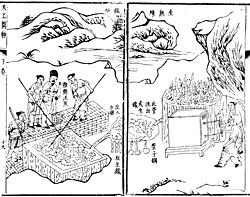
The puddling process of smelting iron ore to make pig iron and then wrought iron, with the right illustration displaying men working a blast furnace, from the Tiangong Kaiwu encyclopedia, 1637
Portrait of Wang Yangming (1472–1529), considered the most influential Confucian thinker since Zhu Xi

Economic and Technological Progress

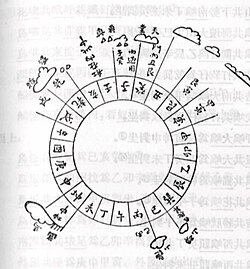
The economy transitioned from using paper money to a bimetallic system involving copper cashes and silver taels. This shift was influenced by the massive influx of silver through private and state transactions. Technological advancements were evident in maritime navigation, utilizing 24-point compass charts and sophisticated sailing directions to explore the known world.
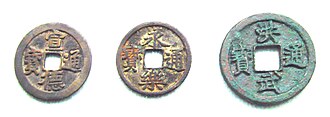
Ming coinage from the 14th–17th centuries
A 24-point compass chart employed by Zheng He during his explorations
Ming Dynasty Demographic and Territorial Overview
Metric Year/Period Value
Population 1393 65,000,000
Population 1500 125,000,000
Population 1600 160,000,000
Territory Area 1400 3,900,000 km²
Territory Area 1450 6,500,000 km²

The Decline and Fall

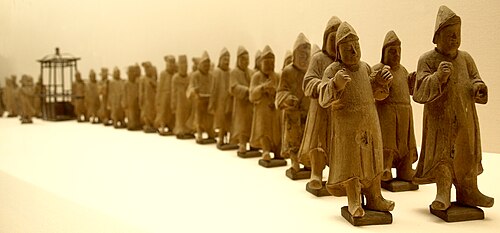
Processional figurines from the Shanghai tomb of Pan Yongzheng, a Ming dynasty official who lived during the 16th century

The later years of the Ming dynasty were characterized by economic instability, natural disasters, and internal political struggles. The influence of powerful eunuchs and the rising costs of military adventures and palace construction contributed to a breakdown in state authority. These internal pressures, combined with the rise of the Manchus, eventually led to the fall of Beijing in 1644 and the end of the dynasty's primary rule.

Frequently Asked Questions
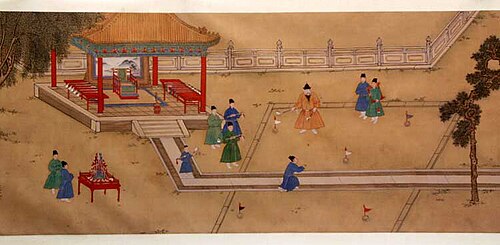
The Xuande Emperor playing chuiwan with his eunuchs, a game similar to golf, by an anonymous court painter of the Xuande period (1425–1435)
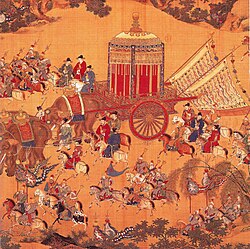
Detail of The Emperor's Approach showing the Wanli Emperor's royal carriage being pulled by elephants and escorted by cavalry
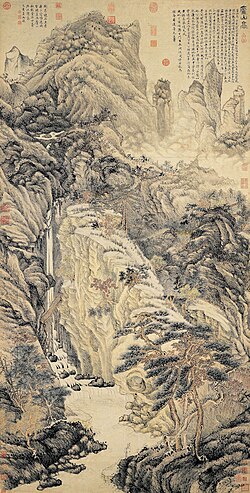
Lofty Mount Lu, by Shen Zhou, 1467
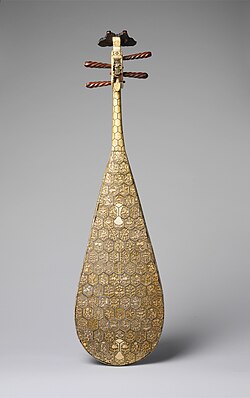
Decorated back of a pipa from the Ming dynasty
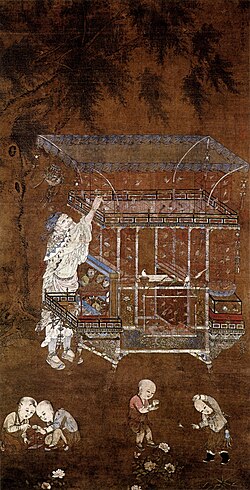
Painting of a peddler selling birds, by Ji Sheng (計盛), 15th century
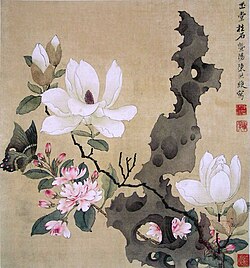
Painting of flowers, a butterfly, and rock sculpture by Chen Hongshou (1598–1652); small leaf album paintings like this one first became popular in the Song dynasty.
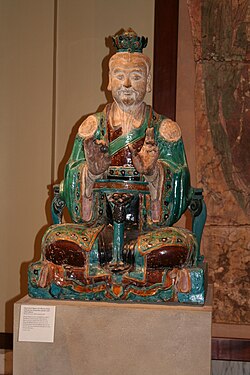
Glazed stoneware statue of a Taoist deity, 16th century
Bodhisattva Manjusri in Blanc-de-Chine, by He Chaozong, 17th century[157]
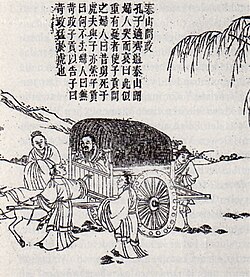
A Ming dynasty print drawing of Confucius on his way to the Zhou dynasty capital of Luoyang
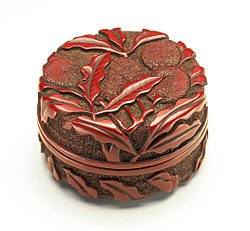
A Ming dynasty red "seal paste box" in carved lacquer
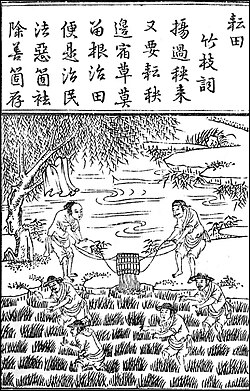
Weeding out the field, illustrated on Fan Kuang's Bianmintuzuan (便民图纂)
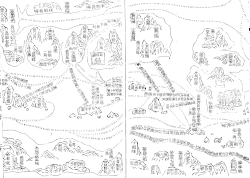
Map of the known world by Zheng He: India at the top, Ceylon at the upper right and East Africa along the bottom. Sailing directions and distances are marked using zhenlu (針路) or compass route.
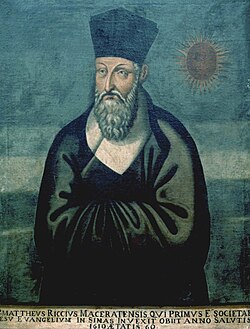
Portrait of Matteo Ricci by Yu Wenhui, Latinized as Emmanuel Pereira, dated the year of Ricci's death, 1610
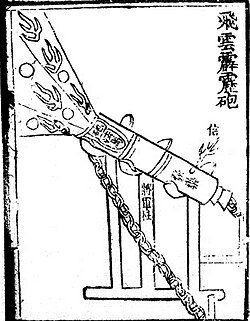
A cannon from the Huolongjing, compiled by Jiao Yu and Liu Bowen before the latter's death in 1375
The Xuande Emperor (r. 1425–1435); he stated in 1428 that his populace was dwindling due to palace construction and military adventures. But the population was rising under him, a fact noted by Zhou Chen—governor of South Zhili—in his 1432 report to the throne about widespread itinerant commerce.[216]
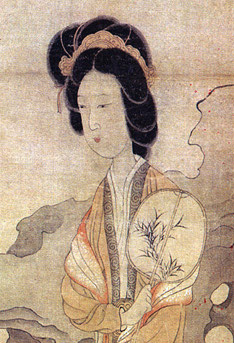
Appreciating Plums, by Chen Hongshou (1598–1652), showing a woman holding an oval fan while enjoying the beauty of the plum

What was the primary capital of the Ming Dynasty?

The dynasty initially established its capital in Nanjing in 1368. However, in 1403, the capital was moved to Beijing, which remained the primary seat of power until 1644.

How did the Ming Dynasty manage its borders?

The Ming heavily invested in defensive structures, most notably the extensive brick and stone sections of the Great Wall, to protect against northern incursions.

What role did silver play in the Ming economy?

As the dynasty progressed, the economy moved toward a bimetallic system. The influx of silver through trade and private transactions became a central component of the economic landscape.

Who were the Southern Ming?

The Southern Ming refers to the various rump regimes led by remnants of the Ming imperial family that continued to rule after the fall of Beijing in 1644, lasting until 1662.

What were the main religions during this period?

The Ming society was diverse, practicing Heaven worship, Taoism, Confucianism, Buddhism, Chinese folk religion, Islam, and Roman Catholicism.