Nectar Guides: The Floral Signposts of the Plant World
In the complex dance of nature, flowers do not simply wait to be found; they actively communicate with the creatures that sustain them. Many angiosperm species—flowering plants—utilize specialized markings known as nectar guides to direct pollinators toward their biological rewards. These patterns, which can manifest as lines, spots, or blotches, act as visual maps that lead insects directly to the prize.
While these markings are frequently referred to as "pollen guides" or "honey guides," some scientific authorities prefer the broader term floral guides to describe these essential navigational tools.
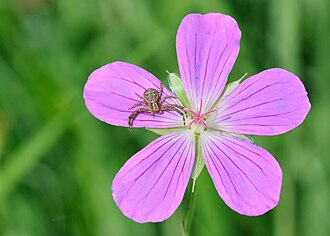
The Role of Nectar Guides in Pollination
Nectar guides serve as an interspecific signal—a communication between different species—indicating that a flower contains a valuable resource. While the most common rewards are nectar and pollen, some plants offer alternative substances such as oils, resins, scents, or waxes to attract specific visitors.
The evolution of these guides is driven by pollinator-mediated selection. This is a process where the behavior and preferences of pollinators influence which floral traits are passed down through generations. Nectar guides provide several evolutionary advantages:
- Increased Foraging Efficiency: By providing a clear path to the reward, guides reduce the "handling time" an insect spends searching, allowing them to find food more quickly.
- Enhanced Plant Fitness: By guiding pollinators effectively, these markings can decrease nectar robbing (when an insect takes nectar without contributing to pollination). This ensures more pollen is successfully transferred, increasing the plant's reproductive success.
Visibility and the Spectrum of Light
Not all nectar guides are created equal, and their visibility depends heavily on the observer. Some patterns are easily seen by the human eye. For example, the Dalmatian toadflax (*Linaria genistifolia*) features bright yellow flowers accented with distinct orange nectar guides.
However, many plants utilize a spectrum of light invisible to humans. In species like the meadow buttercup, nectar guides are only apparent under ultraviolet (UV) light. Under UV illumination, these flowers often reveal a darker center where the nectaries (nectar-producing organs) are located, along with intricate patterns on the petals.
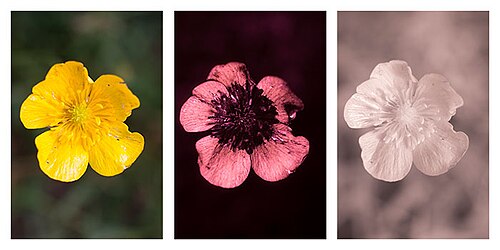
This ability to see ultraviolet light makes flowers significantly more attractive to honey bees and other insects. Scientists use specific terms to describe these colors in the insect visual spectrum:
- Bee violet: A term for ultraviolet colors that are invisible to humans.
- Bee purple: An analogous term for mixtures of greenish-yellow wavelengths (roughly 540 nm) combined with ultraviolet light.
Key Facts
- Nectar guides can appear as lines, spots, or blotches on flower petals.
- Common rewards signaled by guides include nectar, pollen, oil, resins, scents, and waxes.
- Guides improve pollinator efficiency by reducing the time spent searching for food.
- Some guides are only visible in the ultraviolet spectrum, such as those in the meadow buttercup.
- Nectar guides can help prevent nectar robbing, thereby increasing plant fitness.
Summary of Floral Guide Characteristics
| Feature | Visible Light Examples | Ultraviolet (UV) Examples |
|---|---|---|
| Visibility | Visible to humans (e.g., Dalmatian toadflax) | Invisible to humans (e.g., Meadow buttercup) |
| Common Patterns | Orange spots on yellow petals | Darkened centers and petal patterns |
| Primary Function | Directing pollinators to rewards | Attracting UV-sensitive insects like bees |
Frequently Asked Questions
What are the different names for nectar guides?
They are often called pollen guides or honey guides, though some researchers prefer the term floral guides.
Why are nectar guides important for plant fitness?
They increase fitness by making pollination more efficient and by reducing nectar robbing, which ensures more pollen is transferred between plants.
Can humans see all nectar guides?
No. While some, like the Dalmatian toadflax, are visible to us, many others are only visible in the ultraviolet spectrum.
What is "bee violet"?
Bee violet refers to ultraviolet colors that are part of the visual spectrum for many insects but remain invisible to the human eye.
What rewards do nectar guides lead pollinators to?
While nectar and pollen are the most common, guides can also lead pollinators to oils, resins, scents, or waxes.