Near Threatened Species: IUCN Conservation Status and Criteria
In the global effort to protect biodiversity, the International Union for Conservation of Nature (IUCN) provides a standardized system for evaluating the extinction risk of various taxa—groups of organisms sharing a common characteristic. One of the most critical designations in this system is Near Threatened (NT). This status serves as an early warning system for biologists and policymakers, identifying species that do not yet qualify as threatened but could slide into that category in the near future.
What Does Near Threatened Mean?
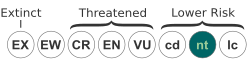
A species is categorized as Near Threatened when it is close to qualifying for a threatened status (such as Vulnerable, Endangered, or Critically Endangered) but does not currently meet all the necessary requirements. Essentially, these species are on the threshold of danger.
The rationale for this designation typically involves criteria that are nearly met or are plausible, such as a significant reduction in population numbers or a shrinking geographic range. Because these species are in a precarious position, the IUCN emphasizes the importance of reevaluating near-threatened taxa at appropriate intervals to ensure their status remains accurate.
Evolution of the IUCN Categories
The way the IUCN classifies species has evolved over time to become more streamlined. Before 2001, the organization utilized the Version 2.3 Categories and Criteria. Under this older system, both Near Threatened and Conservation Dependent species were grouped as subcategories under a broader heading called "Lower Risk" (LR).
Conservation Dependent (LR/cd) referred to species that relied on specific conservation efforts to prevent them from becoming threatened. Since 2001, these have no longer been considered a separate category; instead, they are integrated into the Near Threatened designation.
While some taxa evaluated before 2001 may still carry the LR/cd or LR/nt labels in older records, they would be classified simply as Near Threatened (NT) under current standards.
Key Facts
- Definition: Species that may become vulnerable to endangerment in the near future but do not currently meet threatened criteria.
- Primary Drivers: Common causes for NT status include habitat loss, illegal trade, poaching, and pollution.
- Historical Change: Since 2001, "Conservation Dependent" species are now categorized as Near Threatened.
- Monitoring: Regular reevaluation is essential to track whether a species is recovering or declining.
Examples of Near Threatened Species
Various animals across different taxonomic ranks are currently listed as Near Threatened due to a variety of environmental and human-led pressures:
- Eurasian Otter: This species was uplisted to near-threatened following positive conservation efforts, including the banning of harmful pesticides, the sanitization of rivers, and reintroduction programs.
- Maned Wolf: Primarily threatened by the loss of its natural habitat.
- Keel-billed Toucan: Affected by both habitat loss and the illegal pet trade.
- Plains Zebra: Facing pressures from hunting and habitat loss.
- Chilean Flamingo: Threatened by illegal mining, irrigation projects, and the hunting of both adults and eggs.
- Ball Python: Once common, this reptile is now near-threatened due to poaching and illegal trade.
Summary of Near Threatened Status
| Feature | Details |
|---|---|
| Current Status | Near Threatened (NT) |
| Former Status (Pre-2001) | Lower Risk / Near Threatened (LR/nt) or Conservation Dependent (LR/cd) |
| Typical Criteria | Plausible or nearly met criteria for "Vulnerable" (e.g., range or population decline) |
| Goal of Monitoring | Prevent the species from moving into a threatened category |
Frequently Asked Questions
Is a Near Threatened species considered endangered?
No, a Near Threatened species does not currently qualify for threatened status. However, it is recognized as being vulnerable to endangerment in the near future if current trends continue.
What happened to the "Conservation Dependent" category?
Since 2001, species that depend on conservation efforts to avoid becoming threatened are no longer listed separately; they are now included under the Near Threatened (NT) category.
Why are species listed as Near Threatened?
Species are usually listed as NT when they show signs of decline—such as shrinking habitats or falling population numbers—that nearly meet the scientific criteria for being "Vulnerable."
Can a species move out of the Near Threatened category?
Yes. As seen with the Eurasian otter, positive interventions like banning pesticides and restoring environments can help stabilize or improve a species' status.
Which groups of animals can be Near Threatened?
Any taxon can be listed as Near Threatened, including mammals, birds, reptiles, amphibians, fishes, insects, arthropods, invertebrates, molluscs, and plants.