Nativars: Balancing Horticultural Beauty and Ecological Function
In the world of gardening and conservation, the choice of plants can significantly impact local ecosystems. While many gardeners seek the beauty of bred varieties, there is a critical distinction between a standard cultivar and a nativar. A nativar—a portmanteau of "native" and "cultivar"—is a horticulturally bred strain of a plant species grown within its native historic range. Unlike wild-type plants, nativars are manipulated to express specific traits, which can either enhance or hinder their ability to support local wildlife.
Key Facts
- Definition: A nativar is a bred variety of a native species grown in its original geographic range.
- Purpose: They are developed for aesthetics, disease resistance, drought tolerance, or agricultural yield.
- Pollinator Impact: Changes in bloom color, shape, or nectar production can make nativars unrecognizable or useless to native bees and butterflies.
- Host Function: Some nativars still support larval insects, while others (especially those with altered foliage color) may be rejected.
- Genetic Risk: Using nativars in restoration can lead to genetic drift, reducing the overall fitness and adaptability of wild populations.
Why Nativars Are Developed
Horticulturists and scientists develop nativars for a wide array of practical and aesthetic reasons. In home gardens, the focus is often on aesthetic appeal, such as larger blooms, unique foliage shapes, or more pleasant scents. In agriculture and forestry, the goals shift toward improving crop yield, flavor, and overall quality.
Beyond beauty and profit, nativars are sometimes created for ecological restoration. A primary example is the American chestnut (Castanea dentata), where nativars are being developed to resist the devastating chestnut blight, with the ultimate goal of re-establishing the species in its native forests.
The Impact on Pollinator Relationships
One of the most significant concerns regarding nativars is their ability to fit the ecological niche—the specific role and space a species occupies in an ecosystem—of their wild counterparts. Because pollinators have co-evolved with native plants, even small changes in a plant's morphology can disrupt these relationships.
Bloom Color and Recognition
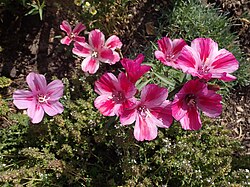
When a nativar dramatically alters the color of a flower, native pollinators may no longer recognize it as a food source. For example, the Godetia (Clarkia amoena) naturally produces pink flowers. Nativars bred for red, coral, or white blooms show significantly lower visitation rates from native bees, reducing their ecological value.
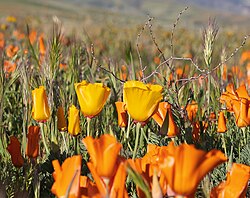
However, color changes do not always result in a loss of benefit. The California poppy (Eschscholzia californica) has a yellow-blooming cultivar that attracts pollinators as effectively as the wild-type orange blooms. This is likely because yellow variations occur naturally in the wild, meaning pollinators already recognize the color.
Nectar, Pollen, and Form
Physical mutations can also render a plant useless to insects. The ornamental cherry (Prunus serrulata) often produces less nectar and pollen than wild types. Specifically, the 'Kanzan' variety features a double-flowered mutation where extra petals cover the nectaries and reproductive organs, severely limiting pollinator access.
Extended Benefits
In some cases, nativars can actually increase ecological benefits. The great camass (Camassia leichtlinii) has white-blooming nativars that, despite differing from the blue wild-type, offer a longer bloom period. This extended availability of food results in higher overall pollinator visitation.
Larval Host Relationships
Many insects rely on specific native plants as larval hosts, using the plant's defensive chemicals for their own development. The impact of breeding on these relationships is mixed.
- Successful Hosts: Some milkweed nativars (Asclepias tuberosa and A. incarnata) remain suitable hosts for Monarch Butterfly larvae, despite changes in their defensive chemistry.
- Unsuccessful Hosts: The common ninebark (Physocarpus opulifolius) shows a clear divide. While the yellow-leaved 'Dart's Gold' nativar is accepted by the specialist ninebark beetle (Calligrapha spiraeae), the dark purple 'Monlo' nativar is avoided, possibly due to the deterrent effects of anthocyanin pigments.
Population Fitness and Restoration Risks
Using nativars for large-scale restoration can introduce genetic risks to wild populations. A study on Clarkia pulchella found that after eight generations of seed production for restoration, the plants showed significantly decreased survival rates and a three-fold reduction in flowering likelihood. This suggests a genetic bottleneck—a sharp reduction in genetic diversity—occurred during propagation.
When these less-fit nativars cross-breed with wild populations, it can cause genetic drift, reducing the overall ability of the species to survive extreme weather or adapt to environmental changes. Similarly, studies on Plantago lanceolata and Lotus corniculatus found that nativar hybrids might initially show increased vigor but struggle more under extreme conditions, ultimately harming the population's long-term resilience.
| Feature | Wild-Type Native | Nativar |
|---|---|---|
| Genetic Origin | Naturally occurring in the wild | Horticulturally bred |
| Primary Goal | Ecological survival/adaptation | Aesthetics, yield, or resistance |
| Pollinator Value | High (co-evolved) | Variable (can be reduced or increased) |
| Restoration Use | Ideal for genetic diversity | Risk of genetic drift and reduced fitness |
Frequently Asked Questions
What is the main difference between a nativar and a cultivar?
A cultivar is any cultivated variety of a plant. A nativar is specifically a cultivar of a species that is grown within its native historic geographic range.
Do nativars always harm pollinators?
No. While some nativars reduce pollinator visitation due to changes in color or nectar, others—like the yellow California poppy or the long-blooming great camass—maintain or even increase their ecological benefit.
Can nativars be used for environmental restoration?
While they are sometimes used (such as the American chestnut for blight resistance), they can pose risks. In some species, they may lead to genetic drift and reduced population fitness, making them less suitable than wild-type seeds.
Why do some insects avoid certain nativars?
Insects may not recognize a plant as a host if its appearance (like leaf color) changes too drastically, or they may be deterred by new chemical compounds, such as the anthocyanin pigments in purple-leaved ninebark.