National University of Córdoba
The National University of Córdoba (UNC) is a prestigious public institution located in Córdoba, Argentina. Founded in 1613, it holds the distinction of being the oldest university in Argentina and the third oldest in the Americas, following the National University of San Marcos in Peru and Saint Thomas Aquinas University in Colombia.
Due to its long-standing role as the cradle of higher education in the region, the city of Córdoba is affectionately known as La Docta ("The Wise"). Today, the university remains one of the largest in the country, characterized by its autonomy—meaning it manages its own budget, administration, and regulations—and its commitment to accessible education.
Key Facts
- Established: 1613
- Motto: Ut portet nomen meum coram gentibus ("Proclaim my name before the people")
- Student Population: 111,329 (as of 2014)
- Academic Staff: 8,203
- Campus Size: 1,115 hectares (urban)
- Endowment: US$ 175,552,772
- UNESCO Status: The Jesuit Block is a World Heritage Site
Historical Evolution
The Jesuit Era (1613–1767)
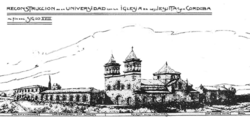
The university's origins trace back to 1610 with the founding of the Collegium Maximum by the Society of Jesus. While it initially served as a high-level intellectual center for the order, it gained the official authority to confer degrees on August 8, 1621, via a decree from Pope Gregory XV. For its first 150 years, the curriculum focused exclusively on theology and philosophy.
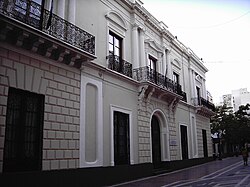
The Jesuits managed the institution until 1767, when they were expelled by King Carlos III. Control then shifted to the Franciscan order. During this era, the university also incorporated the College of Monserrat, founded in 1687. Together with the original university buildings and the Jesuit church, these structures form the Jesuit Block, recognized as a UNESCO World Heritage Site in 2000.
Transition to Secular and National Control
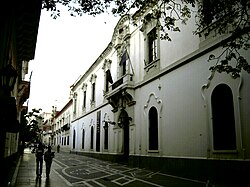
At the end of the 18th century, the university expanded its academic scope by establishing the School of Law and Social Sciences, moving beyond purely theological studies. Following a period of leadership conflict, the institution was renamed the Royal University of Saint Charles and Our Lady of Monserrat, placing it under the guidance of the secular clergy.
The 19th century brought significant political and academic shifts. Following the May Revolution of 1810 and the subsequent ratification of the national constitution, the university was nationalized in 1856. Under the presidency of Faustino Sarmiento, the university embraced the sciences, leading to the creation of the School of Exact, Physical, and Natural Sciences, the Astronomical Observatory, and the School of Medicine in 1877.
The University Reform of 1918
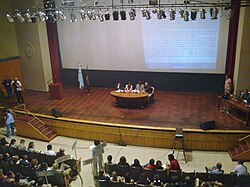
In 1918, the UNC became the epicenter of the University Reform. This student-led movement advocated for autonomy, co-governance, and the democratization of education. The revolution sparked a wave of academic change across Latin America, fostering a more inclusive and participatory approach to university administration.
Academic Structure and Facilities
Faculties and Specialized Schools
The university comprises a wide array of faculties covering diverse disciplines. The Faculty of Law, established in 1791, remains a cornerstone of Argentine political and legal life. Another notable institution is the School of Languages, which evolved from a department in 1920 to a full faculty in 2000. It offers undergraduate degrees in six languages: English, French, German, Italian, Portuguese, and Spanish.
Campus and Infrastructure
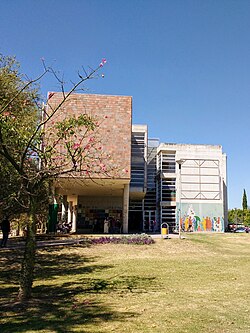
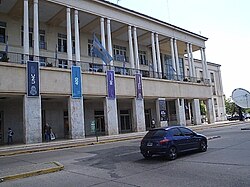
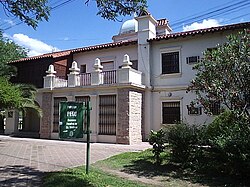
The university operates across multiple sites. The main campus is located in the city center, consisting of 23 buildings. In 1952, the University City (Ciudad Universitaria) was established in the southern district to provide more space for growth. Additionally, the university maintains an experimental agricultural station and an astronomical observatory.
Student Services and Affiliations
UNC provides comprehensive support for its students, including a healthcare system, athletic departments, and nutrition-focused dining services. The Main Library houses over 150,000 manuscripts and periodicals from the 19th century. The university also oversees several affiliated institutions, including the National Clinical Hospital and the Museum of Paleontology and Anthropology.
University Overview
| Category | Details |
|---|---|
| Type | Public / Autonomous |
| Location | Córdoba, Argentina |
| Undergraduate Students | 104,655 (2014) |
| Postgraduate Students | 7,673 (2014) |
| Global Ranking (THE 2017) | 801-1000 |
| Admission Requirement | Leveling course test (60% score) |
Notable Alumni
The university has produced many of Argentina's most influential figures, including Presidents Carlos Menem, Fernando de la Rua, and Héctor Cámpora. It has also graduated prominent governors, scientists, and artists, such as novelist Camila Sosa Villada and mathematician Laura Matusevich.
Frequently Asked Questions
How do I get admitted to the National University of Córdoba?
Admission to undergraduate studies is non-selective. The primary requirement is that applicants pass a leveling course test with a score higher than 4, which represents 60% of the correct answers.
What is the significance of the "University Reform of 1918"?
The 1918 Reform was a historic student-led movement at UNC that promoted autonomy, co-governance, and the democratization of higher education, influencing universities throughout Latin America.
What is the "Jesuit Block"?
The Jesuit Block consists of the original university physical plant, the Jesuit church, and the College of Monserrat. It was declared a UNESCO World Heritage Site in 2000.
Is the National University of Córdoba a private or public institution?
It is a public university funded by Argentine taxpayers, though it maintains autonomy in managing its budget, regulations, and administration.
Which languages are taught at the School of Languages?
The School of Languages offers undergraduate degrees in six languages: German, Spanish, French, English, Italian, and Portuguese.