National Parks: Preserving the World's Natural and Cultural Heritage
A national park is a designated nature park established for conservation purposes due to its unparalleled natural, historic, or cultural significance. These areas consist of natural, semi-natural, or developed land protected and owned by a government. While different nations apply varying standards for designation, the core motivation remains universal: the preservation of "wild nature" for future generations and the cultivation of national pride.
Most national parks are open to the public and are typically managed by national governments. However, in federal or devolved systems, responsibility may fall to regional or local authorities.
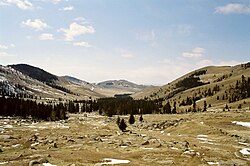
Key Facts
![Landscapes of the Koli National Park in North Karelia, Finland, have inspired many painters and composers, including Jean Sibelius, Juhani Aho, and Eero Järnefelt.[12]](/images/67/ab/67ab7bffe7320bb268f37c791df616543bf78ce03c857e5d9cbba060da9523c0.jpg)
- Yellowstone National Park (USA, 1872) is widely regarded as the first national park in the world.
- The Northeast Greenland National Park is the largest in the world meeting IUCN criteria, covering 972,000 km².
- Parks Canada, established in 1911, is the oldest national park service globally.
- The IUCN (International Union for Conservation of Nature) classifies national parks as Category II protected areas.
- National parks serve as critical hubs for nature-based tourism, often acting as a brand for high-quality natural environments.
Defining the National Park
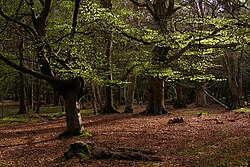
The International Union for Conservation of Nature (IUCN) and its World Commission on Protected Areas (WCPA) provide the global framework for these sites. In 2006, 6,555 national parks worldwide met the IUCN criteria. To be declared a national park under the 1969 IUCN definition, an area must generally possess:
- A minimum size of 1,000 hectares where nature protection takes precedence.
- Statutory legal protection.
- A budget and staff sufficient to ensure effective protection.
Beyond Category II, the IUCN manages various other protected area types, ranging from strict nature reserves to managed resource areas.
| IUCN Category | Type of Area | Example Park |
|---|---|---|
| Ia | Strict Nature Reserve | Swiss National Park, Switzerland |
| Ib | Wilderness Area | Everglades National Park, USA |
| II | National Park | Koli National Park, Finland |
| III | National Monument | Victoria Falls National Park, Zimbabwe |
| IV | Habitat Management Area | Vitosha National Park, Bulgaria |
| V | Protected Landscape | New Forest National Park, UK |
| VI | Managed Resource Protected Area | Delta Evrou, Greece |
The History of Protected Lands
![Mingan Archipelago National Park Reserve,[17] Gulf of St. Lawrence, Quebec, Canada](/images/a6/f3/a6f32a9a19656a675e72e7704084c8bdcccf727057d6a5418623bdd80197e2bb.jpg)
Early Conservation Efforts
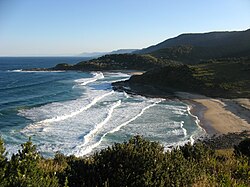
Before the formal "national park" label existed, several areas were legally protected. The Tobago Main Ridge Forest Reserve (1776) and the area around Bogd Khan Uul Mountain in Mongolia (1778) are among the oldest legally protected areas, originally restricted from cultivation to protect farmland.
In the United States, the first federal effort occurred on April 20, 1832, when President Andrew Jackson set aside land around Hot Springs, Arkansas, to protect thermal springs. However, clear federal control was not established until 1877.
The Rise of the National Park System
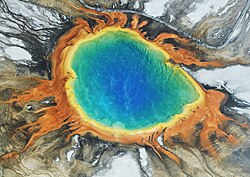
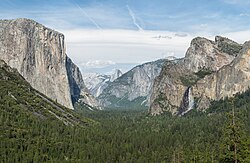
The modern era of national parks began with the establishment of Yellowstone in 1872, designed as a "pleasuring-ground for the benefit and enjoyment of the people." This movement was bolstered by conservation leaders such as John Muir, Theodore Roosevelt, Abraham Lincoln, Laurance Rockefeller, and Lady Bird Johnson.
The concept spread rapidly across the globe:
- North America: Canada established Banff National Park in 1885.
- Oceania: New Zealand created Tongariro National Park in 1887, and Australia established the Royal National Park.
- Europe: Sweden led the way in 1909 with nine national parks, followed by Switzerland in 1914.
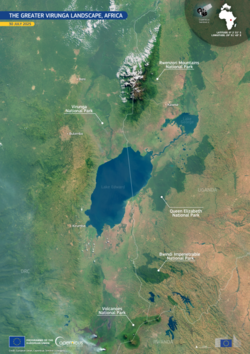
- Africa: The Albert National Park (now Virunga) was established in 1925 in the Congo Free State, and South Africa's Kruger National Park was designated in 1926.
Global Expansion and Unique Models
As the 20th century progressed, parks became tools for protecting diverse ecosystems. In 1989, China created the Qomolangma National Nature Preserve to protect the north slope of Mount Everest. This park is notable for having no separate warden staff, instead utilizing existing local authorities to reduce costs and increase coverage.
In the Caribbean, Jamaica established the Blue and John Crow Mountains National Park in 1993 to protect tropical montane rainforests, later becoming a UNESCO World Heritage Site in 2015.
Management and Economic Impact
National Park Services
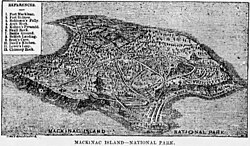
To manage these vast lands, dedicated agencies were formed. Canada created the world's first national park service on May 19, 1911, focusing on providing spiritual renewal and rest from urban settings. The United States followed later, passing the National Park Service Organic Act in 1916. Interestingly, while the U.S. National Park Service manages 433 sites, only 63 of those carry the official "National Park" designation.
Tourism and the "Brand" of Nature
The designation of a "national park" often acts as a powerful brand, signaling a high-quality natural environment with professional infrastructure. This has led to massive increases in nature-based tourism. For instance, tourism in Costa Rica's parks grew by 400% between 1985 and 1999.
![Manuel Antonio National Park in Costa Rica was listed by Forbes as one of the world's 12 most beautiful national parks.[13]](/images/ee/a7/eea70e4277e98e966871d65eafed67aabd0bdb8498342465a11f75900c19c5a1.jpg)
Frequently Asked Questions
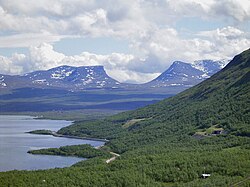
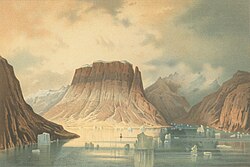
Which was the first national park in the world?
Yellowstone National Park in the United States, established in 1872, is widely held to be the first and oldest national park in the world.
What is the largest national park in the world?
The Northeast Greenland National Park, established in 1974, is the largest national park meeting the IUCN definition, covering 972,000 square kilometers.
What is the difference between a national park and other protected areas?
According to the IUCN, a National Park (Category II) is a relatively large area focused on protecting natural biodiversity along with visiting, education, and recreation. Other categories may be stricter (like Strict Nature Reserves) or more focused on managed resources.
Who is the oldest national park service?
Parks Canada is the world's oldest national park service, established on May 19, 1911.
How do national parks benefit the economy?
National parks drive significant economic growth through nature-based tourism, attracting visitors with the promise of well-preserved environments and developed tourist infrastructure.