National Library of Israel: Preserving Jewish Heritage and Global Culture
The National Library of Israel (NLI) serves as the primary repository for the cultural treasures of Israel and the broader Jewish heritage. Located in the Government complex (Kiryat HaMemshala) near the Knesset in Jerusalem, the library is a global hub for research, housing the world's most extensive collections of Hebraica and Judaica. With over 5 million volumes, the NLI preserves a vast array of rare manuscripts, books, and artifacts that document the history and intellectual contributions of the Jewish people.
Key Facts
- Established: 1892
- Collection Size: Over 5 million volumes
- Location: Jerusalem, Israel
- Legal Mandate: Legal deposit of all documents published in Israel
- Budget: Approximately 100 million NIS
- Staff: 367 employees
- Director: Oren Weinberg
A History of Evolution
The B'nai Brith Era (1892–1925)
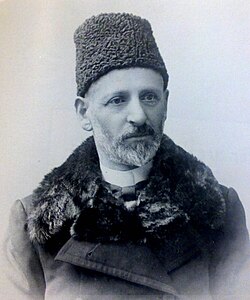
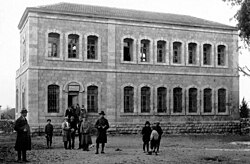
The vision for a national Jewish library was conceived by Joseph Chazanovitz, who sought to create a home for all works written by Jewish authors across all languages and cultures. Chazanovitz contributed approximately 15,000 volumes to form the library's core. Founded in 1892 as the B'nai Brith library, it was the first public library in the region of Palestine serving the Jewish community, initially located on B'nai Brith Street before moving to Ethiopia Street.
The Hebrew University Years (1925–2007)
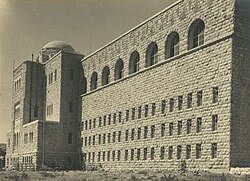
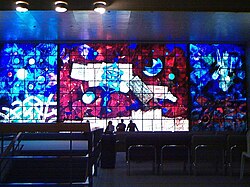
In 1920, the B'nai Brith collection became the foundation for the Hebrew University of Jerusalem's library, moving to Mount Scopus in 1925. Following the events of 1948, which blocked access to the Mount Scopus campus, the collection—which had grown to over one million books—was relocated to temporary quarters in Rehavia and various storerooms. In 1960, the collection moved to a new building in Givat Ram.
Legal Independence and National Status
The library's status evolved significantly in 2007 with the passage of the National Library Law. Effective July 23, 2008, the institution was officially renamed the National Library of Israel. It transitioned from a university subsidiary to an independent community interest company, jointly owned by the Government of Israel (50%), the Hebrew University (25%), and other organizations.
The Modern Era: A New Architectural Landmark
In 2014, plans were unveiled for a state-of-the-art 45,000 square meter facility designed by the renowned Basel-based architecture firm Herzog & de Meuron. After several delays, the new building opened its doors to the public on October 29, 2023. While the grand opening events were cancelled due to the October 7 attacks and the subsequent war in Gaza, the facility now provides modern infrastructure for the library's massive archives.
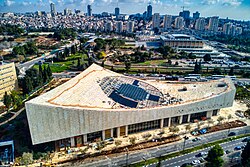
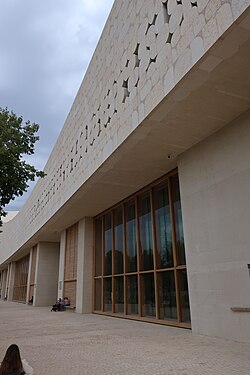
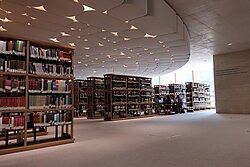
Mission and Digital Transformation
The NLI is mandated to secure copies of all materials published in Israel, regardless of language, as well as any global publications concerning the State of Israel, the Land of Israel, Judaism, and the Jewish people. By law, two copies of all printed matter published in Israel must be deposited here; this mandate was expanded in 2001 to include audio, video, and other non-print media.
Digitization and Global Access
To increase accessibility, the NLI has aggressively pursued scanning and online availability. Notable efforts include the digitization of the thirteenth-century Worms Mahzor and a project to digitize over 2,500 rare manuscripts from the Islamic world (written in Arabic, Persian, Turkish, and Urdu) dating from the ninth to twentieth centuries.
Special Collections and Archives
The library houses an eclectic range of specialized archives and personal papers from influential figures:
- Isaac Newton: Manuscripts focusing on theological subjects, mysticism, and predictions regarding the ancient Temple in Jerusalem.
- Max Brod: A comprehensive archive including the papers of Franz Kafka.
- Gershom Scholem: A dedicated collection for the research of Kabbalah and Hasidism.
- Martin Buber: The scholar's personal archives.
- Institutional Collections: Including the National Sound Archives and the Eran Laor Cartographic Collection.
The "Abandoned Property" Collection
The library also holds a collection of approximately 6,000 books labeled "AP" (Abandoned Property). These were transferred to the library in 1948 from the homes of Palestinian Arabs who fled West Jerusalem and other cities in Mandatory Palestine, including works from figures such as Khalil al-Sakakini and Henry Cattan.
| Category | Details |
|---|---|
| Total Volumes | 5 Million+ |
| Primary Focus | Hebraica and Judaica |
| Architects (New Building) | Herzog & de Meuron |
| Legal Status | Independent Community Interest Company |
| Key Digital Projects | Islamic World Manuscripts, Worms Mahzor |
Frequently Asked Questions
What is the primary mission of the National Library of Israel?
The library aims to collect and preserve all materials published in Israel, as well as any publications worldwide regarding the State of Israel, the Land of Israel, Judaism, and the Jewish people, including works in Hebrew, Yiddish, and Ladino.
Who designed the new National Library building?
The new 45,000 square meter building was designed by the Basel-based architecture firm Herzog & de Meuron and opened to the public in October 2023.
Does the library hold materials from non-Jewish authors?
Yes. The library collects all materials published in Israel regardless of language and is currently digitizing thousands of rare manuscripts from the Islamic world written in Arabic, Persian, Turkish, and Urdu.
What are some of the most famous personal archives held at the NLI?
The library houses the personal archives of Martin Buber and Gershom Scholem, the Max Brod archive (which includes Franz Kafka's papers), and theological manuscripts by Isaac Newton.
How does the legal deposit system work in Israel?
By law, two copies of all printed matter published in Israel must be deposited in the National Library. Since 2001, this requirement has extended to audio and video recordings and other non-print media.