National Archives and Records Administration: Preserving the History of the United States
The National Archives and Records Administration (NARA) serves as the primary custodian of the United States federal government's permanent holdings. By organizing vast quantities of data into record groups—which are classifications based on the originating government department or agency—NARA ensures that the nation's administrative and historical legacy remains accessible to the public and researchers alike.
These holdings are diverse in format, encompassing traditional paper documents, microfilm, still and motion pictures, and modern electronic media. To manage this scale, NARA utilizes the National Archives Catalog, a comprehensive system for archival descriptions. As of December 2012, this catalog contained approximately 10 billion logical data records, describing 527,000 artifacts and covering 81% of NARA's records, including 922,000 digital copies of digitized materials.

Key Facts
- Public Domain: Most NARA records are in the public domain because federal government works are generally excluded from copyright protection.
- Census Privacy: Personal data in census records is restricted for 72 years after collection.
- Founders Online: A free database providing access to 185,000 digitized documents from seven key U.S. founders.
- UAP Collection: A legally mandated collection of records regarding unidentified anomalous phenomena and non-human intelligence.
- Security: The Information Security Oversight Office monitors the government's security classification system.
Accessing Genealogical Records
A significant portion of NARA's users are family historians and genealogists. While the National Archives Catalog allows for online discovery, users can also request microfilm scans or paper copies. The catalog typically specifies the physical location of documents within NARA facilities.
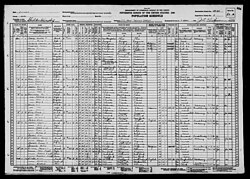
Census records are among the most sought-after materials, with data dating back to 1790. Due to privacy laws, personal information is restricted for 72 years; only statistical data is available to federal agencies during this window. For example, the 1950 census was released to the public in April 2022, and the 1960 census is scheduled for release in April 2032.
Digitization and Partnerships
To increase accessibility, NARA has partnered with organizations such as Familysearch.org, Fold3.com, and Ancestry.com to scan military records and ship passenger lists. While NARA aims to eventually provide free access to all digitized sources via its own catalog, some sensitive files—such as vital records and naturalization documents—remain restricted. These may be obtainable via the Freedom of Information Act (FOIA) if the requestor can verify their relationship to the subject.
Additionally, since 2005, NARA has hosted free annual genealogy fairs featuring research workshops and guest speakers to assist researchers of all skill levels.
Specialized Collections and Initiatives
Founders Online
Launched in 2013 through a cooperative agreement with the University of Virginia Press, Founders Online provides free public access to the letters and papers of seven influential founders: George Washington, Thomas Jefferson, James Madison, Benjamin Franklin, Alexander Hamilton, John Jay, and John Adams. The site features 185,000 digitized documents annotated by university presses at Harvard, Yale, Princeton, Columbia, and the University of Virginia over a 50-year period.
The UAP Records Collection
Under the National Defense Authorization Act (NDAA) for Fiscal Year 2024, which included the Unidentified Anomalous Phenomena Disclosure Act, NARA was mandated to establish a collection of records regarding Unidentified Anomalous Phenomena (UAP). This collection includes government-funded or provided records relating to technologies of unknown origin and non-human intelligence. Compliance is mandatory for all federal agencies, except where restricted by Executive Order 13526 or section 1843 of the 2023 NDAA.
Archival Recovery
To protect the integrity of its collections, NARA's Office of the Inspector General created the Archival Recovery Team in 2006 to investigate thefts and recover stolen records. While the team began as a law enforcement effort, non-law enforcement recovery activities are now managed by the NARA Office of the Chief Operating Officer.
Summary of NARA Resources
| Resource/Collection | Key Content | Access Status |
|---|---|---|
| National Archives Catalog | 10 billion logical data records | Publicly searchable online |
| Census Records | Family data from 1790 onwards | Public after 72 years |
| Founders Online | 185,000 documents from 7 founders | Free public access |
| UAP Collection | Non-human intelligence/UAP records | Legally mandated collection |
| Restricted Files | Vital and naturalization records | Available via FOIA (if eligible) |
Frequently Asked Questions
Why are some census records not available to the public?
Personal data in census records is restricted for 72 years after the date of collection to protect privacy. Only statistical data is available to federal agencies during this period.
Are all records at the National Archives free to use?
Most records are in the public domain because they are works of the federal government. However, some materials may be subject to donor agreements or copyright protections from non-government sources.
How can I access restricted naturalization or vital records?
These records are not available for general public viewing. However, they may be obtainable under the Freedom of Information Act (FOIA) if you can provide a verifiable relationship to the subject of the record.
What is the purpose of the Archival Recovery Team?
Established in 2006, this team is responsible for investigating the theft of records from NARA collections and working to recover those stolen materials.
Who are the seven founders featured in Founders Online?
The database includes the papers and letters of John Adams, Benjamin Franklin, Alexander Hamilton, John Jay, Thomas Jefferson, James Madison, and George Washington.