1900 United States Census: A Snapshot of a Growing Nation
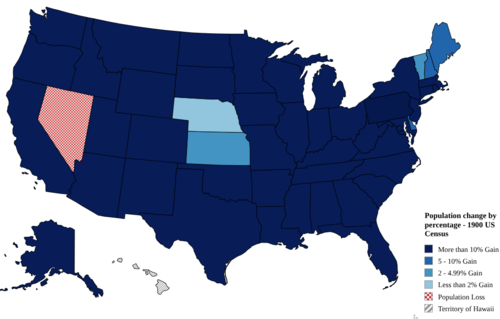
On June 1, 1900, the Census Office conducted the twelfth census of the United States, capturing a pivotal moment in American history. This massive undertaking determined that the resident population of the country had reached 76,212,168. This figure represented a significant growth of 21.01% compared to the 62,979,766 people recorded during the 1890 census.
This particular enumeration is historically significant as it was the final census conducted before the establishment of the permanent United States Census Bureau. Under the oversight of Frederick Howard Wines and Walter F. Willcox, the 1900 census provided a detailed look at the demographic shifts of the turn of the century.
Key Facts
- Total Population: 76,212,168 (a 21.01% increase from 1890).
- Most Populous State: New York, with 7,268,894 residents.
- Least Populous State: Nevada, with 42,335 residents.
- Urban Milestone: New York City became the first U.S. city to exceed three million people.
- Administrative Note: This was the last census before the permanent U.S. Census Bureau was founded.
Urban Expansion and the Rise of New York City
One of the most striking results of the 1900 census was the explosive growth of New York City. The city's population more than doubled in size, primarily due to its consolidation with Brooklyn. Before this merger, Brooklyn had stood as the fourth largest city in the United States on its own. This consolidation propelled New York City to a population of 3,437,202, cementing its status as the nation's dominant urban center.
Census Methodology and Data Collection
The 1900 census was comprehensive, gathering a wide array of personal and socioeconomic data. Enumerators—the officials responsible for collecting the data—asked residents a variety of questions to build a detailed profile of the American people.
Information Collected
The census forms required the following details:
- Personal Identity: Name, address, sex, race (listed as "Color or race"), and relationship to the head of the family.
- Vital Statistics: Age, month and year of birth, and marital status (including years married).
- Family Data: For women, the number of children born and the number currently living.
- Origins: Place of birth for the individual and their parents; for foreign-born residents, the year of immigration and naturalization status.
- Economic Status: Occupation, months of unemployment, and whether the home was owned (and if mortgaged) or rented.
- Education and Literacy: School attendance and the ability to speak English.
- Location: Whether the resident lived on a farm.
Despite the scale of the project, the conduct of the census was not without critics; statistician Frederick Ludwig Hoffman expressed criticism regarding how the census was managed.
State and City Population Rankings
The data reveals a nation in transition, with massive growth in the West and continued dominance in the Northeast and Midwest. While New York and Pennsylvania remained the most populous states, territories like Oklahoma saw staggering percentage increases.
| Rank | State | 1900 Population | 1890 Population | Percent Change |
|---|---|---|---|---|
| 1 | New York | 7,268,894 | 6,003,174 | 21.1% |
| 2 | Pennsylvania | 6,302,115 | 5,258,113 | 19.9% |
| 3 | Illinois | 4,821,550 | 3,826,352 | 26.0% |
| 4 | Ohio | 4,157,545 | 3,672,329 | 13.2% |
| 5 | Missouri | 3,106,665 | 2,679,185 | 16.0% |
| 6 | Texas | 3,048,710 | 2,235,527 | 36.4% |
| 7 | Massachusetts | 2,805,346 | 2,238,947 | 25.3% |
| 8 | Indiana | 2,516,462 | 2,192,404 | 14.8% |
| 9 | Michigan | 2,420,982 | 2,093,890 | 15.6% |
| 10 | Iowa | 2,231,853 | 1,912,297 | 16.7% |
Data Availability and Preservation
For historians and genealogists, accessing 1900 census data requires navigating several archives. In the 1940s, the Census Bureau microfilmed the original enumeration sheets; following this process, the original paper sheets were destroyed.
Today, these records are preserved in rolls at the National Archives and Records Administration. Additionally, digital access is available through several channels:
- IPUMS: Provides free microdata from the 1900 census.
- NHGIS: The National Historical Geographic Information System offers aggregate data for small areas and electronic boundary files.
- Online Indices: Various organizations host digital images of the microfilmed records.
Frequently Asked Questions
What was the total population of the US in 1900?
The total resident population was 76,212,168, which was a 21.01% increase from the 1890 census.
Why did New York City's population grow so rapidly in 1900?
New York City's population more than doubled largely because of its consolidation with Brooklyn, which had previously been the fourth largest city in the United States.
Which state had the smallest population in 1900?
Nevada was the least populous state, with a recorded population of 42,335.
Are the original 1900 census papers still available?
No, the original enumeration sheets were destroyed after they were microfilmed by the Census Bureau in the 1940s. However, the microfilm records are available through the National Archives.
What specific information was collected from women in the 1900 census?
In addition to general questions, women were asked to provide the number of children they had born and the number of those children who were still living.