Natal, Brazil: A Vibrant Coastal Capital of History and Nature
Perched on the northeastern edge of Brazil, Natal serves as the capital of the state of Rio Grande do Norte. Founded on December 25, 1599, the city is a captivating blend of colonial heritage, strategic military history, and some of the most breathtaking natural landscapes in South America. From its iconic dunes to its role as a pivotal hub during World War II, Natal offers a rich tapestry of experiences for residents and visitors alike.
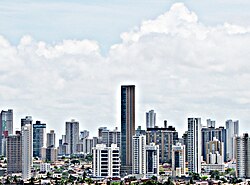
The city is geographically defined by its proximity to the Atlantic Ocean and the Potengi River, creating a landscape of stunning beaches and urban development. With a metropolitan population of approximately 1.52 million people, it is a center of education, commerce, and tourism in the Northeast region.
Key Facts
- Founded: December 25, 1599.
- Location: Capital of Rio Grande do Norte, Northeast Brazil.
- Population: Approximately 784,249 (Municipality) and 1.52 million (Metro).
- Climate: Tropical, with an average annual rainfall of 1,691.2 mm.
- Key Landmark: The Fort of the Three Wise Men (Forte dos Reis Magos).
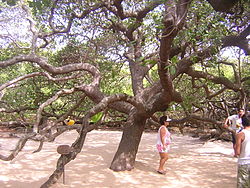
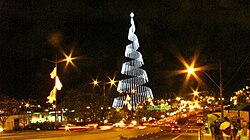
- Unique Feature: Home to the world's largest cashew tree.
Historical Evolution
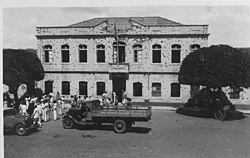
![André de Albuquerque Square, Natal's zero milestone[3]](/images/d3/13/d3137a31bca06c1c73d20630992236869f6b16bac2db0df517948da3312fffd2.jpg)
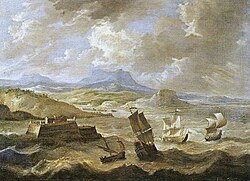
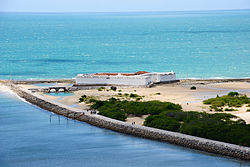
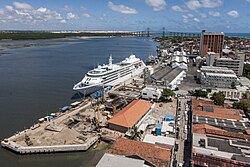
Natal's history is marked by its strategic coastal position. The city's origins are tied to the Fort of the Three Wise Men, a landmark of the city's founding that served as a primary defense against foreign incursions, including a period of Dutch occupation.
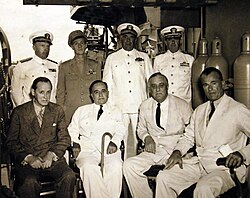
During the 20th century, Natal gained international significance during World War II. Due to its proximity to Africa, it became a vital strategic point for Allied forces. A notable historical event was the Potengi Conference on January 28, 1943, where Brazilian President Getúlio Vargas and U.S. President Franklin Delano Roosevelt met aboard the USS Humboldt.
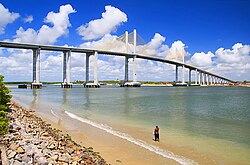
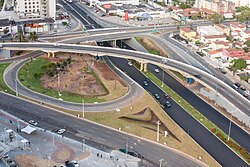
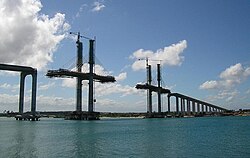
In more recent decades, the city has expanded its infrastructure. The inauguration of the Senator Carlos Alberto de Sousa Road Complex in 2000 coincided with the city's 400th anniversary, and the completion of the Newton Navarro Bridge in 2007 revolutionized local transit across the Potengi River.
Geography and Climate
![The Church of Saint Anthony, known as "Church of the Rooster," and the Museum of Sacred Art, which contains exhibitions of various objects related to the religious art of Rio Grande do Norte[18]](/images/ef/29/ef29730874aa4df7faf7218193abf01bf1ef61d3f7e08712760e2a99cc639722.jpg)
Natal enjoys a tropical climate characterized by warm temperatures year-round. The daily mean temperature typically fluctuates between 24.8°C in July and 27.6°C in February. Rainfall is most concentrated between April and July, with June being the wettest month, averaging 348.8 mm of precipitation.
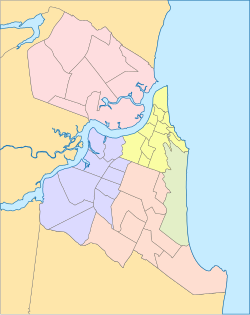
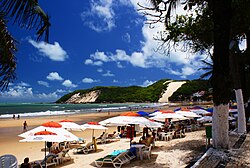
The city is divided into four primary zones: North, South, East, and West. The South Zone is particularly famous for its tourism, housing the luxurious hotels along the Via Costeira (Coastal Highway) and the renowned Ponta Negra beach.
Main Sights and Attractions
Natural Wonders
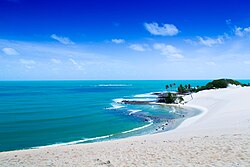
The Natal Dunes State Park is the second largest urban park in Brazil, offering a stark, beautiful contrast between the Atlantic Ocean and rolling sands.
![Natal Dunes State Park is the second largest urban park in Brazil.[140]](/images/db/dd/dbdd7d978fed37b1b7e45b65866784feaecac314fd813037c547386aacc5913d.jpg)
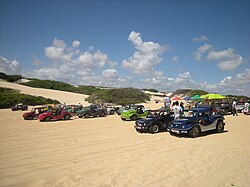
Visitors often flock to the Genipabu dunes for buggy rides, a staple of the local tourism experience, or visit the world's largest cashew tree, a botanical marvel of the region.
Cultural and Architectural Landmarks
The Historic Center is home to several significant religious and civic buildings, including the Parish Church of Our Lady of the Presentation and the Church of Our Lady of the Rosary of the Blacks, which was listed as a historical landmark in 1987.
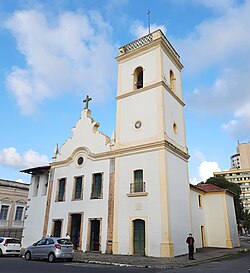
![The Church of Our Lady of the Rosary of the Blacks, the second oldest Catholic church in the city, was listed as a historical landmark in 1987[17]](/images/64/b4/64b49bb8dae03e26b89df40f87c46b5d3aa6cb63cab8ce522c88dba2f092b0bb.jpg)
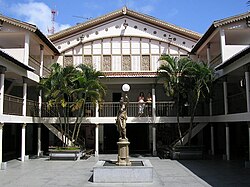
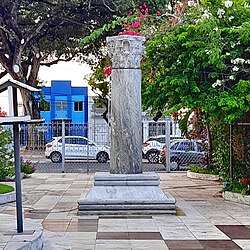
Other notable sites include the Alberto Maranhão Theatre and the Capitoline Column, a gift from Rome donated by Benito Mussolini.
Economy, Education, and Infrastructure
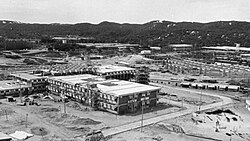
Natal's economy is diverse, with a GDP of R$206,832,516,000 as of 2019. The city is also a major educational hub, hosting the Federal University of Rio Grande do Norte (UFRN) and several other specialized institutes.
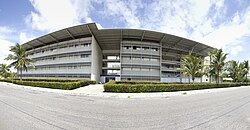
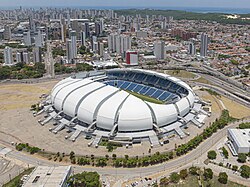
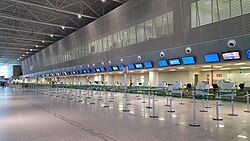
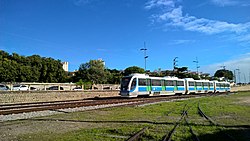
Transportation is facilitated by the Greater Natal International Airport and a network of highways, including the BR-101. For sports enthusiasts, the city boasts the Arena das Dunas, a world-class stadium built for the 2014 FIFA World Cup.
| Category | Details |
|---|---|
| Founded | December 25, 1599 |
| Metro Population | 1,520,000 |
| HDI (2010) | 0.763 (High) |
| Primary Airport | Greater Natal International Airport |
| Major Stadium | Arena das Dunas |
Frequently Asked Questions
![The Coastal Highway (RN-301), an expressway between the Atlantic Ocean and the Natal Dunes State Park, significantly boosted local tourism starting in the 1980s.[72] Along its length are the city's four-star and five-star hotels.[73]](/images/cf/1f/cf1fc53e60001d4624284221a237a8075c86722a229502c7b408d892f4b0a312.jpg)

When is the best time to visit Natal based on weather?
While warm year-round, the driest months are typically October through December, whereas the heaviest rains occur between April and July.
What is the significance of the Fort of the Three Wise Men?
The fort is a landmark of the city's founding in 1599 and served as a critical defensive structure against foreign invasions, including the Dutch.
Which beach is most famous in Natal?
Ponta Negra Beach is one of the most iconic, known for its beauty and the nearby Morro do Careca.
What role did Natal play in World War II?
Because of its geographic position closest to Africa, Natal was a strategic Allied base and hosted the Potengi Conference between Presidents Vargas and Roosevelt in 1943.
What is the largest urban park in Brazil located in Natal?
The Natal Dunes State Park is the second largest urban park in Brazil.