Nama People: History, Culture, and Resilience in Southern Africa
The Nama are an indigenous group with a deep ancestral connection to the landscapes of Southern Africa. Primarily residing in Namibia, Botswana, and South Africa, they are descendants of the Khoekhoe, the first known pastoralists in the region. With a population of approximately 230,000—including 112,156 in Namibia according to the 2023 census—the Nama have maintained a distinct cultural identity despite centuries of colonial conflict and displacement.
Their journey is one of adaptation, from the early days of cattle herding in the Cape Colony to their resistance against imperial powers in the deserts of the north.
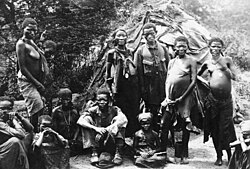
Key Facts
- Ancestry: Descended from the Khoekhoe people, the first pastoralists in southern Africa.
- Primary Regions: Namibia, Botswana, and South Africa.
- Languages: Nama and, rarely, Namibian Black German.
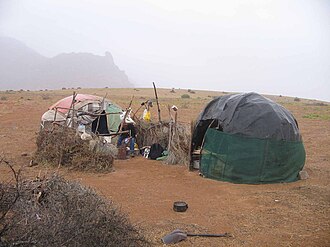
- Traditional Dwelling: The |haru oms, a portable rush-mat domed hut.
- Major Historical Figure: Hendrik Witbooi, a legendary leader and biblical prophet.
- Religion: Predominantly Christianity, alongside African Traditional Religion and Islam.
Ancestry and the Migration North
The roots of the Nama lie with the Khoekhoe people, who had settled in the Cape region at least a thousand years before the arrival of Europeans. Unlike the hunter-gatherer San people with whom they coexisted, the Khoekhoe practiced pastoral farming, grazing Nguni cattle and small livestock in the water-rich areas of the Cape.
The arrival of Jan van Riebeeck and the Dutch East India Company in 1652 marked the beginning of a territorial struggle. As Dutch settlements expanded during the 18th and 19th centuries, the Khoekhoe were pushed eastward into the Eastern Cape or northward across the Orange River into what was then known as German South West Africa (renamed Namibia in 1968).
Today, the Richtersveld National Park in South Africa serves as one of the few remaining sanctuaries where original Nama traditions survive. In this wilderness, the Nama continue to move with the seasons, speaking their native language and utilizing traditional architecture.
The Nama in German South West Africa
The Nama presence in Namibia was solidified by leaders such as Jager Afrikaner, who established a permanent settlement north of the !Garib in 1795. By 1823, his son Jonker Afrikaner led the Oorlam Afrikaner Nama community to |Ae||gams (modern-day Windhoek), creating a society based on trade, cattle, and a blend of Christianity and traditional worship of Tsui-||goab and Heitsi-Eibib.
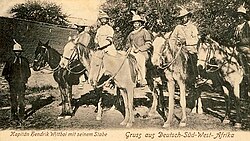
Leadership eventually passed through various figures, including Christian Afrikaner and Jan Jonker Afrikaner, before the rise of the Witbooi dynasty. Hendrik Witbooi, who took leadership in 1884, became a pivotal figure. A self-styled biblical prophet, Witbooi sought tribal supremacy and expanded his influence into Hoornkrans, which sparked a long-term military conflict with the Herero people under Chief Maharero.
Colonial Conflict and Resistance
The rivalry between the Nama and the Herero created instability that the German colonial administration sought to resolve. While the Herero entered into protection agreements with Germany, Hendrik Witbooi remained fiercely autonomous, famously declaring that he was a free man who answered only to God.
Tensions escalated in 1893 when Landeshauptmann Curt von François launched a surprise attack on the Witbooi Nama at Hoornkrans. The raid resulted in the deaths of nearly one hundred Nama women and children. This brutality forced Witbooi into a war of attrition against the colonizers. Although the Nama achieved early success through guerrilla tactics, they were eventually subdued in 1894 by Theodor Leutwein after running out of ammunition and being denied assistance by the English at Walvis Bay.
The Herero and Nama Genocide (1904–1908)
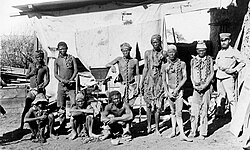
The most tragic chapter of Nama history occurred between 1904 and 1908. Under Lieutenant General Lothar von Trotha, the German Empire implemented a policy of extermination to clear indigenous people from agricultural lands for colonial prosperity.
The resulting genocide saw the confiscation of cattle and the forced driving of Nama and Herero populations into the desert. Many survivors were interned in concentration camps, such as Shark Island, or forced into slave labor to build railways and mine diamonds. This period of systemic violence led to a massive loss of life and the permanent displacement of many communities.
Cultural Identity and Traditions
Despite the trauma of colonialism and the later pressures of apartheid—which encouraged village life over traditional nomadic styles—the Nama have preserved key elements of their heritage.
Dress and Habitation
Nama women are known for their distinctive formal dresses, which resemble Victorian fashion. These long, flowing garments were adapted from the styles of 19th-century missionaries and have since become an integral symbol of Nama cultural identity.
Traditionally, the Nama lived in |haru oms, portable domed huts covered in rush mats. These structures provided essential protection from the blistering sun and were easily dismantled and moved as the community followed their livestock to new grazing lands.

Subtribes and Social Structure
The Nama are composed of several distinct clans, each with its own history and traditional center:
| Subtribe | Traditional Center / Location | Notes |
|---|---|---|
| ǀKhowesen | Gibeon | Descendants of Hendrik Witbooi |
| Khaiǁkhaun | Hoachanas | The oldest Nama clan in Namibia (Red Nation) |
| ǃGamiǂnun | Warmbad | Known as the Bondelswarts |
| ǂAonin | Utuseb and Rooibank | Known as the Topnaars |
| ǃKharakhoen | Gochas / Amper-Bo | Known as the Fransman Nama |
| Kharoǃoan | Keetmanshoop | Split from the Red Nation in 1850 |
Frequently Asked Questions
Who are the Nama people?
The Nama are an indigenous group in Southern Africa, primarily in Namibia, descended from the Khoekhoe people. They were the first pastoralists in the region, specializing in the herding of cattle and small livestock.
What is the significance of Hendrik Witbooi?
Hendrik Witbooi was a prominent Nama leader and biblical prophet who led his people in resistance against German colonial rule in the late 19th century, fighting for the autonomy and supremacy of his tribe.
What happened during the Herero and Nama genocide?
Between 1904 and 1908, the German Empire waged a war of extermination against the Nama and Herero peoples to seize their land. This involved driving populations into the desert, using concentration camps, and forcing survivors into slave labor.
What is a |haru oms?
A |haru oms is a traditional Nama dwelling. It is a portable, domed hut covered with rush mats, designed to protect inhabitants from the sun and allow for easy movement during seasonal grazing.
Why do Nama women wear Victorian-style dresses?
The traditional long, flowing dresses worn by Nama women were developed in the 1800s, influenced by the clothing of Christian missionaries. Over time, these dresses were adopted and integrated into Nama cultural identity.