Mylodon: The Giant Ground Sloth of the Pleistocene
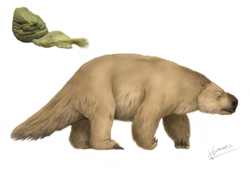
Among the most fascinating creatures of the prehistoric Americas was Mylodon, a genus of giant ground sloths that roamed South America from the Early Pleistocene to the Early Holocene. Unlike many extinct species known only from fragmented bones, Mylodon provides a rare glimpse into the past through remarkably preserved soft tissues, including skin and hair.
These massive herbivores were part of the Mylodontidae family, a group of ground sloths characterized by their robust builds and specialized anatomy. Their existence spanned approximately 1.95 million to 10,000 years ago, leaving behind a legacy of fossils across the Pampas and Patagonia.
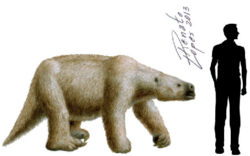
Key Facts
- Temporal Range: Approximately 1.95 million to 10,000 years ago.
- Primary Species: Mylodon darwini.
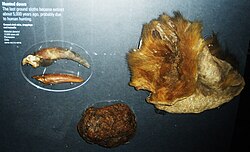
- Notable Finds: Mummified skin, hair, and coprolites (fossilized dung) from Cueva del Milodón.
- Physical Traits: Large size, thick skin, and a specialized Metacarpal Carpal Complex (MCC) in the wrist.
- Extinction: Occurred roughly 12,000 to 10,000 years ago, coinciding with human arrival and climate change.
Anatomy and Physical Characteristics
Skull and Dentition
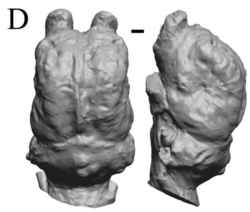
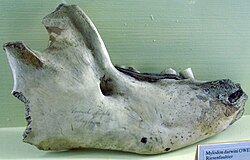
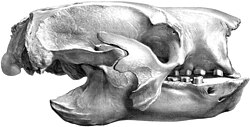
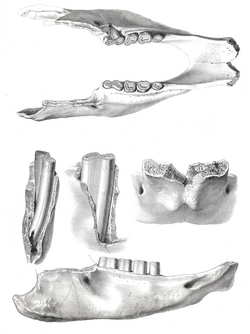
The skull of Mylodon was designed for a specialized diet. Its lower jaw was elongated, measuring between 42 and 48 cm, which was more pronounced than in related genera like Glossotherium or Lestodon. The jaw bone increased in height toward the rear, reaching about 10.5 to 12.7 cm below the last molar.
A defining feature was the symphysis—the joint where the two halves of the lower jaw meet—which was narrow and extended forward. The jaw's connection to the skull was relatively low, with the crown process rising up to 20 cm.
Postcranial Structure
Mylodon possessed a complex hand structure with five digits. A key anatomical feature was the Metacarpal Carpal Complex (MCC), where the metacarpal bone fused with a large polygonal bone on the first digit. This structure is a hallmark of many ground sloths.
The fourth digit featured the longest metacarpal bone (approximately 12.5 cm), followed closely by the fifth. Evidence suggests that only the three inner digits were clawed, with the second digit being the most well-documented, featuring a tubular third phalanx that supported a large claw.
The Rare Evidence of Soft Tissue
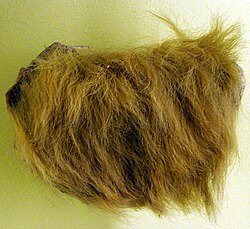
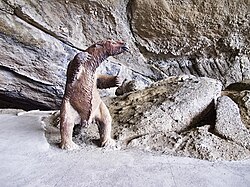
Mylodon is one of the few extinct mammals for which mummified skin remains exist. Most of these discoveries occurred in the Cueva del Milodón in Chile's Última Esperanza province. Some skin fragments reach lengths of 150 cm, with a thickness typically around 1 cm, though some areas reach 1.5 cm.
The skin was covered in stiff, slightly wavy hair ranging from 5 to over 20 cm in length. The shortest hairs were found on the back of the head, while the longest were on the limbs. The color of the fur varied from yellowish to reddish-brown. Interestingly, Mylodon lacked an undercoat, a trait similar to modern two-toed sloths.
Distribution and Fossil Record
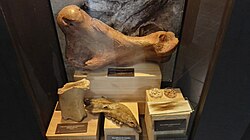
The earliest records of Mylodon date back to the Ensenadan faunal stage (1.95 Ma - 0.4 Ma). While rare in early stages, they became more prominent in the Upper Pleistocene, particularly in the Pampas region of Argentina and Uruguay. They often overlapped in territory with other mylodontids, though direct co-occurrence is rarely documented.
Significant finds include skulls from the El Palmar Formation in Entre Ríos and partial skeletons from Río Anisacate and Arroyo Quequén Salado. The Cueva del Milodón remains the most iconic site for these finds.

Taxonomy and Research History
The genus was first described by Richard Owen in 1840. Initially, Owen established the genus Glossotherium based on a skull fragment, believing the animal was insectivorous and related to anteaters. However, after examining a nearly complete skeleton from the Río de la Plata, he realized the animal was a sloth and renamed the species Mylodon robustus, later associating the original fragment with Mylodon darwinii.

Extinction and Human Interaction
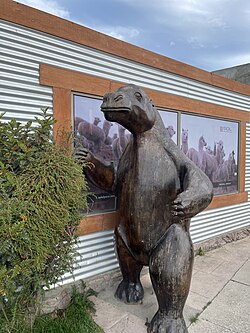
Mylodon vanished between 12,000 and 10,000 years ago. This extinction coincides with two major events: the arrival of humans in the Americas and significant climatic shifts. There is strong evidence that early humans hunted Mylodon for food.
At Fell's Cave (Cueva Fell) in Chilean Patagonia, researchers found burned and fractured bones of Mylodon darwini alongside human artifacts dating to approximately 12,766–12,354 years BP. Similar associations have been found at Piedra Museo in Argentina.
Summary of Mylodon Characteristics
| Feature | Description |
|---|---|
| Temporal Range | ~1.95 Ma to 10,000 years ago |
| Geographic Range | South America (Argentina, Chile, Uruguay) |
| Lower Jaw Length | 42 to 48 cm |
| Skin/Fur | Reddish-brown, stiff hair, no undercoat |
| Wrist Anatomy | Metacarpal Carpal Complex (MCC) |
| Extinction Cause | Climate change and human predation |
Frequently Asked Questions
What made Mylodon different from other ground sloths?
Mylodon is distinguished by its elongated lower jaw and the rare preservation of its skin and hair. It also possessed a specific wrist structure known as the Metacarpal Carpal Complex (MCC) and lacked the undercoat found in three-toed sloths.
Where were the most important Mylodon fossils found?
The Cueva del Milodón in the Chilean province of Última Esperanza is the most significant site, providing mummified skin, hair, and other remains that have allowed scientists to reconstruct the animal's appearance.
Did humans hunt Mylodon?
Yes, evidence from sites like Fell's Cave and Piedra Museo shows fractured and burned Mylodon bones associated with human tools, suggesting they were a food source for early inhabitants of Patagonia.
When did Mylodon go extinct?
Mylodon became extinct approximately 12,000 to 10,000 years ago at the end of the Pleistocene, as part of a wider extinction of megafauna in the Americas.
What was the role of Richard Owen in Mylodon research?
Richard Owen first described the genus in 1840. He initially misidentified some remains as an insectivore (Glossotherium) before correctly classifying the animal as a giant ground sloth.