Musta'arabi Jews: The Indigenous Arabic-Speaking Communities of the Middle East
Long before the arrival of exiles from the Iberian Peninsula, a distinct group of Jewish communities flourished across the Middle East and North Africa (MENA). Known as the Musta'arabi Jews (from the Arabic al-Mustaʿribīn, meaning "arabized"), these were Arabic-speaking Jews who had integrated into the cultural and linguistic fabric of the region following the Muslim conquests of the seventh century.
Unlike the later Sephardic arrivals, the Musta'arabim were indigenous to the lands they inhabited, adopting the language and customs of the Arab world while maintaining their ancestral faith. Their history is a testament to the long-standing Jewish presence in the Levant and North Africa, bridging the gap between ancient Hebrew roots and the modern Jewish experience.
Key Facts
- Definition: Arabic-speaking Jews native to the MENA region prior to the 1492 Sephardic migration.
- Language: They spoke Arabic and various forms of Judeo-Arabic.
- Geography: Primarily located in the Levant (Syria, Palestine) and North Africa (Morocco, Algeria, Tunisia, Libya, Egypt).
- Integration: Over centuries, they largely amalgamated with Sephardic communities, adopting Sephardic liturgy (nusach).
- Legacy: Some of the oldest synagogues and cemeteries in the Jewish world, particularly in Peki'in, are attributed to this community.
The Origins and Identity of the Musta'arabim
The term "Musta'arabi" is derived from the Arabic word for "arabized." This mirrors the term "Mozarab," used to describe Christians in Islamic Spain who adopted Arabic culture without converting to Islam. In the context of the Jewish people, it referred to those who lived among Arabs and adopted their language and cultural orientation.
Following the Muslim conquest of the Levant in the first half of the seventh century, the local Jewish population—much like the Christian majority—became culturally Arabized. In later centuries, Sephardic immigrants referred to these native Jews as Murishkes or Moriscos, terms that likely meant "Easterners" or "Moorish."
The Musta'arabi Experience in the Land of Israel
In the Land of Israel, the Musta'arabim were one of the three pillars of the Old Yishuv (the pre-Zionist Jewish community), alongside Sephardic and Ashkenazi Jews. They were descendants of ancient Hebrews who remained in the land through the destruction of the Second Temple in 70 AD until the First Aliyah in 1881.
Historically, these communities were often rural and engaged in agricultural work. However, centuries of persecution during the Crusader, Mamluk, and Ottoman periods led to a decline in their numbers. Once a majority in the Galilee, they eventually became a small minority.
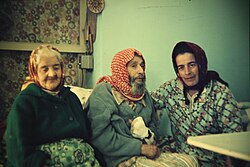
One of the most significant strongholds was the village of Peki'in. While many residents were forced to evacuate during the 1936–1939 Arab revolt, a small number eventually returned. The synagogues and cemeteries in Peki'in are among the oldest in the Jewish world, with some dating back to the Mishnaic and Second Temple periods.
Historical Eras and Transitions
- Roman and Byzantine Eras: Most lived in small villages in the Galilee and around Jerusalem, speaking Aramaic and facing severe oppression under Byzantine rule.
- The Crusades: Jews fought alongside Arabs against the Crusaders, notably at Haifa in 1100, though many were massacred during the 1099 Siege of Jerusalem.
- Mamluk and Ottoman Periods: Population centers like Safed and Tiberias grew. By 1500, over 10,000 Jews lived in the Safed region, focusing on rabbinic studies and the exportation of etrogim.
The Sephardic Influence and Amalgamation
The trajectory of the Musta'arabi community changed drastically following the Alhambra Decree of 1492 and the Portuguese expulsions of 1497. Sephardic exiles settled in the Mediterranean Basin, including the Galilee cities of Safed and Tiberias. This sparked a "golden age" of Jewish life in the Four Holy Cities: Jerusalem, Safed, Tiberias, and Hebron.
While Musta'arabim and Sephardim initially maintained separate synagogues, they often shared a Chief Rabbi. Over time, the communities merged. The Musta'arabim largely adopted the nusach (liturgy) of the Sephardim, influenced by the Shulchan Aruch and the Kabbalistic teachings of Isaac Luria.
| Feature | Musta'arabi Tradition | Sephardic Tradition |
|---|---|---|
| Origin | Indigenous to MENA region | Exiles from Spain and Portugal |
| Primary Language | Judeo-Arabic | Judeo-Spanish (Ladino) |
| Liturgy | Local rites (e.g., Aram Soba) | Standardized Sephardic nusach |
| Settlement | Rural villages and ancient cities | Urban centers and Holy Cities |
The Syrian Musta'arabi Rite
The Maḥzor Aram Soba provides a glimpse into the distinct liturgical practices of the Syrian Musta'arabim before they were absorbed into the Sephardic rite. Notable differences included:
- The recitation of Psalm 8 every night before the Evening Service.
- The recitation of 72 biblical verses immediately following the Morning Service Amidah.
- The "Alpha-Beta" tradition: reciting Psalms 119–134 before Evening Services on Motzaei Shabbat.
- Specific, varying Seliḥot (penitential prayers) for each week of the month of Elul.
As commercial printing centers in Livorno and Vienna produced standardized Sephardic prayer books, the oral traditions of the Musta'arabim gradually faded. By the early 20th century, the distinct rite was nearly extinct, with the last official public usage recorded in 1935 at the Great Synagogue of Aleppo.
Modern Legacy and Assimilation
Today, the Musta'arabim have almost entirely assimilated into mainstream Sephardic Israeli life. In the United States, descendants of these communities primarily reside in New York, California, and Washington, following general Syrian traditions. A small cultural marker remains among some families who light an extra candle on Hanukkah as a gesture of gratitude for their historical acceptance by the Sephardic community.
Frequently Asked Questions
Who were the Musta'arabi Jews?
They were the indigenous, Arabic-speaking Jewish communities of the Middle East and North Africa who lived in these regions before the arrival of Sephardic Jews from Spain and Portugal.
How do Musta'arabi Jews differ from Sephardic Jews?
The primary difference was origin: Musta'arabim were native to the Arab world and spoke Judeo-Arabic, while Sephardim were exiles from the Iberian Peninsula who brought Judeo-Spanish (Ladino) and different religious customs.
What happened to the Musta'arabi liturgy?
Over time, the Musta'arabi rite was largely replaced by the Sephardic nusach due to the influence of the Shulchan Aruch, Kabbalistic teachings, and the availability of standardized Sephardic prayer books.
Where can the legacy of the Musta'arabi Jews still be seen?
Their legacy is most visible in the village of Peki'in in Israel, which houses some of the oldest Jewish synagogues and cemeteries in the world, dating back to the Talmudic and Second Temple periods.
Are there any Musta'arabi communities today?
Most have fully assimilated into the broader Sephardic or Mizrahi Jewish identity. While they are no longer a distinct organized community, many individuals of Musta'arabi descent live in Israel and the United States.