Museums: History, Management, and the Evolution of Cultural Preservation
Museums serve as the custodians of human achievement, natural history, and collective memory. From the private cabinets of curiosity in the Renaissance to the massive, digitally integrated institutions of today, these spaces do more than store objects; they shape how we perceive our past and our place in the world. By blending education, preservation, and exhibition, museums translate complex historical and scientific data into tangible experiences for the public.
Key Facts
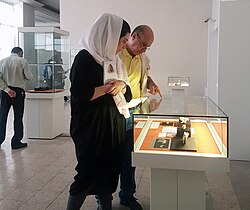
- Ancient Origins: Some of the earliest museum-like records date back to the city of Ur (circa 530 BCE).
- Diverse Typologies: Museums range from specialized categories like automotive and medical to broad encyclopedic institutions.
- Management Roles: Professional operations require a synergy between curators, conservators, collection managers, and exhibit designers.
- Modern Challenges: Current institutional priorities include decolonization, the repatriation of human remains, and labor unionization.
- Funding Models: Institutions operate under various legal frameworks, including public, private, non-profit, and trust-managed structures.
The Evolution of the Museum
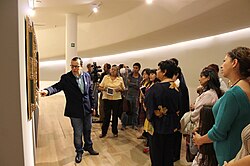
Ancient and Early Foundations
The concept of the museum is rooted in the desire to collect and categorize. Early examples include the efforts of Ptolemy I Soter in ancient Egypt and the first known museum labels found in the city of Ur, dating to approximately 530 BCE.

The Rise of Modern Institutions
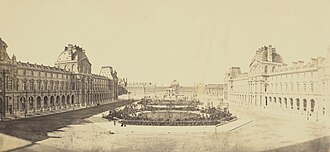
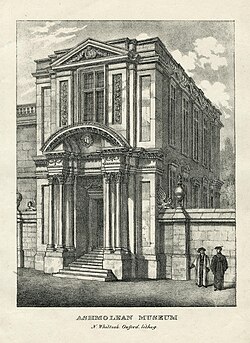
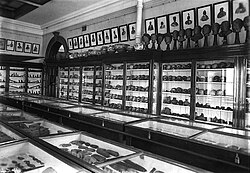
The transition to the modern public museum occurred primarily in Europe during the 18th and 19th centuries. Institutions like the British Museum and the Louvre transformed from royal collections into public spaces intended for education and national prestige.
As the model spread globally, different nations developed their own approaches. For example, the Nantong Museum stands as a significant milestone as the first Chinese-sponsored museum.

Museum Management and Operations
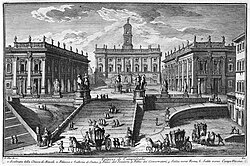
Running a museum is a complex logistical operation that balances public access with the strict requirements of preservation. This process involves several specialized roles and strategic planning phases.
Professional Roles
- Curators: Responsible for the intellectual content and selection of items.
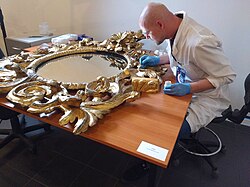
- Conservators: Specialists who perform the physical restoration and stabilization of artifacts.
- Collection Managers: Oversee the acquisition and storage of items to ensure long-term safety.
- Exhibit Designers: Plan the visual and spatial arrangement of galleries to enhance visitor engagement.

Preservation and Storage
Protection is the primary mandate of any museum. This includes climate-controlled storage and the use of visible storage, where the public can view items not currently on display. However, funding gaps can lead to catastrophic losses; for instance, a 2018 fire at the National Museum of Brazil destroyed over 90% of its contents due to a lack of adequate funding.
![Officials blamed a lack of funding for a 2018 fire at the National Museum of Brazil that destroyed over 90% of its contents.[84]](/images/b0/5b/b05b5c096e92d71ec6fcc0fef0f99e76f24121a193382ff08bc10045a6d1dcb7.jpg)
Exhibition Design
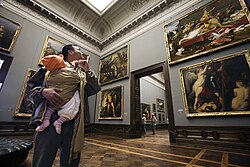
Designers must choose how to present information. This can range from the traditional "salon style"—where paintings are grouped densely on walls—to modern, immersive installations like those seen in the construction of Titanic Belfast.
Types of Museums
Museums are categorized by their scope and the nature of their collections. While some are encyclopedic (covering a vast array of human knowledge), others are highly specialized.
| Category | Focus Area | Example/Scope |
|---|---|---|
| Natural History | Biology, Geology, Paleontology | Fossils and specimens |
| Art | Visual Arts, Sculpture, Painting | Galleries and salons |
| Archaeological | Ancient civilizations, Artifacts | Excavated sites and relics |
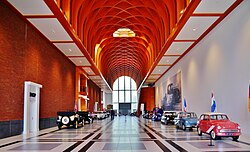
| Specialized | Automotive, Aviation, Medical | Technology and industry |
| Living History | Reenactments, Historic sites | Open-air museums |
Contemporary Challenges and Ethics
Modern museums are currently navigating a period of significant social and ethical transition. The focus has shifted from mere acquisition to the ethics of ownership.
Decolonization and Repatriation
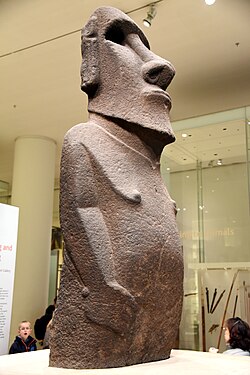
Many institutions are facing demands for repatriation—the return of cultural artifacts and human remains to their countries of origin. High-profile examples include disputes over Moai figures from Easter Island and the Parthenon Marbles.
Labor and Unionization
There is a growing movement toward unionization among museum staff to address pay, benefits, and job security. In February 2025, workers at the Brooklyn Museum rallied against planned layoffs, highlighting a broader trend of labor activism within cultural institutions.

Sustainability and Digital Culture
Museums are adapting to the 21st century by integrating digital culture and addressing climate change. This includes rethinking energy-intensive climate control rules for collections and developing virtual museum experiences to increase accessibility.
Frequently Asked Questions



What is the difference between a curator and a conservator?
A curator focuses on the research, selection, and interpretation of the collection, while a conservator focuses on the physical repair, cleaning, and preservation of the objects.
What is repatriation in a museum context?
Repatriation is the process of returning cultural objects or human remains to their original community or country of origin, often as part of a decolonization effort.
How are museums typically funded?
Funding varies by legal structure; it can come from government grants (public), private donations and endowments (non-profit), or corporate investments (for-profit).
What is an encyclopedic museum?
An encyclopedic museum is a large institution that aims to represent a comprehensive range of human history, art, and culture across different eras and geographies, rather than focusing on a single niche.
Why are museum workers unionizing?
Workers are increasingly forming unions to negotiate for better wages, contest mass layoffs, and ensure that management consults staff on institutional changes.