Muisca Civilization: The Golden Legacy of the Colombian Highlands
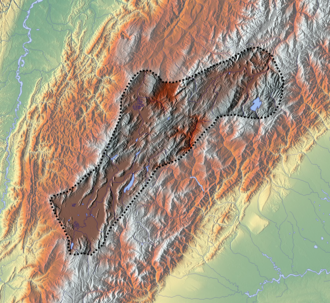
High in the Andean peaks of modern-day Colombia, the Muisca people developed one of the most sophisticated societies in the pre-Columbian Americas. Inhabiting the Altiplano Cundiboyacense—a high-altitude plateau—the Muisca created a complex confederation known for its advanced goldwork, strategic salt trade, and the legendary origins of the myth of El Dorado.
From their early roots as hunter-gatherers to their organization into powerful chiefdoms, the Muisca left an indelible mark on the cultural and geographical landscape of the Eastern Ranges of the Andes.
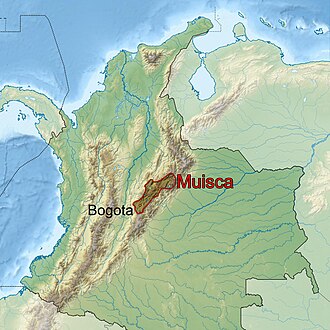
Key Facts
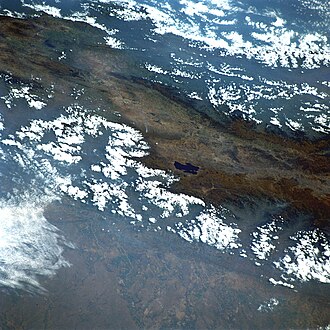
- Territory: Approximately 25,000 km² across the Altiplano Cundiboyacense in Colombia.
- Language: Muysccubun, a dialect of the Chibcha language family.
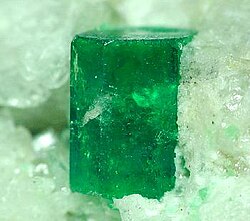
- Economy: Based on the production of salt, emeralds, and copper.
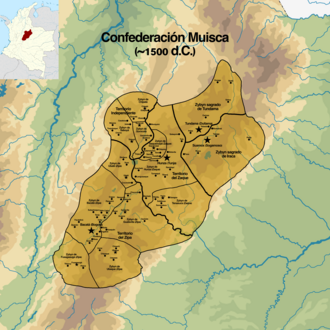
- Political Structure: A confederation led by two primary rulers: the Zipa and the Zaque.
- Legend: The Muisca rituals are widely believed to be the source of the El Dorado legend.
Ancient Roots and Archaeology
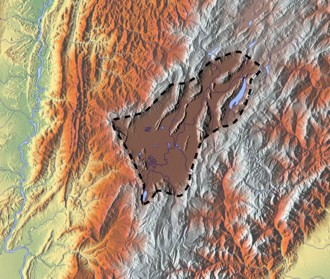
Human activity in the Altiplano Cundiboyacense dates back to the Archaic Period of the Holocene. One of the most significant sites in the Americas, El Abra, provides evidence of habitation approximately 13,000 years ago.
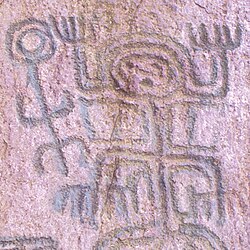
Archaeological findings in Tibitó and the Bogotá savanna reveal a progression of lithic tools used by specialized hunters as early as 9740 BCE. By 5000 BCE, human skeletons confirm the presence of the El Abra culture, setting the stage for the later arrival of the Muisca.
The Rise of the Muisca Era
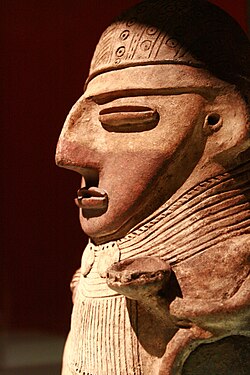
The group identified as Muisca migrated to the highlands during the Formative stage (between 1000 BCE and 500 CE). This period marked a critical transition from nomadic hunter-gatherer lifestyles to sedentary farming.
Around 1500 BCE, agrarian groups with ceramic traditions arrived from the lowlands, establishing permanent housing and extracting salt from the earth. A second wave of migrants between 800 BCE and 500 BCE introduced multicolor ceramics and expanded farming practices. These settlers integrated with earlier inhabitants to form the distinct Muisca cultural and political profile.
Language and Communication
The Muisca spoke Muysccubun, a Chibcha dialect. This language links them to other indigenous groups, such as the U'wa of the Sierra Nevada del Cocuy and the Kogi and Wiwa of the Sierra Nevada de Santa Marta. Many Chibcha words were eventually absorbed into Colombian Spanish.
Political and Social Organization
![Muisca numerals as depicted by Acosta, Von Humboldt and Zerda[15]](/images/fa/88/fa8852a867636bc16f3ac29b89b4a89ffa98507e51d6f3d1a8dec417f98d944a.webp)
The Muisca were not a single empire but a Confederation of chiefdoms. Their social hierarchy was strictly organized to maintain order and religious devotion:
- Zipa or Zaque: The supreme leaders of the confederation.
- Iraca: High priests.
- Cacique: Local chiefs.
- Capitan: Military or administrative captains.
- Sybyn and Uta: Lower-level social and kinship units.
The territory was split primarily between the Zipa (ruling the southern region, including the Bogotá savanna) and the Zaque (ruling the northern region, centered around Hunza). Several autonomous chiefdoms, such as Tinjacá and Saboyá, operated independently of these two powers.
Economy and Natural Wealth
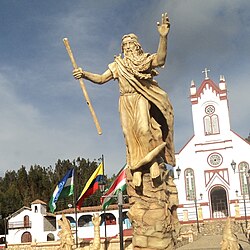
The Muisca economy was driven by the control of highly valued natural resources. They were master traders who leveraged their geography to dominate regional commerce.
| Resource | Significance | Key Locations |
|---|---|---|
| Salt | Essential preservative and trade commodity | Zipaquirá, Nemocón, Tausa |
| Emeralds | Highly prized gemstones; Colombia remains a top producer | Muzo |
| Copper | Used for tools and ornamental items | Various highland mines |
Religion and the Legend of El Dorado
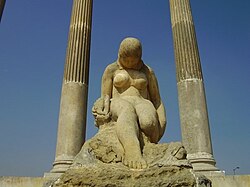
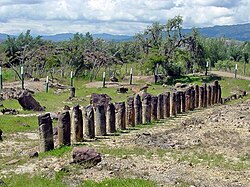
Muisca spirituality was deeply tied to nature and astronomy. They constructed astronomical temples, such as El Infiernito, to track celestial movements. Their pantheon included deities like the water goddess Sie (identified with Bachué) and the figure of Bochica.
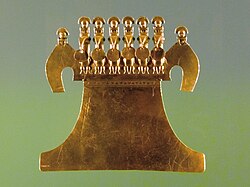
The most famous legacy of Muisca religion is the El Dorado legend. This myth likely originated from the initiation rituals of new Zipas at Lake Guatavita, where the leader would be covered in gold dust and dive into the lake as an offering. Spanish explorers, hearing reports of this "Golden One," spent decades searching for a mythical city of gold that did not exist.
The Spanish Conquest and Colonial Era
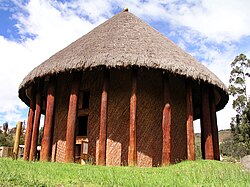
In the 16th century, Spanish conquistadors exploited the existing rivalries between the Zipa and the Zaque. Despite attempts by the Muisca leaders to unify against the invaders, the Spanish prevailed. The last sovereigns, Sagipa and Aquiminzaque, were executed in 1539 and 1540, respectively.
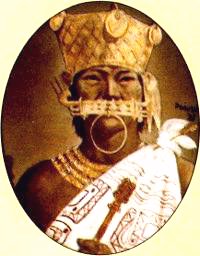
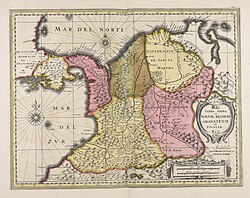
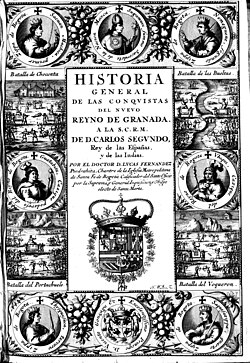
Following the conquest, the Muisca population declined sharply due to war and disease, with many assimilating into the general colonial population. The region was incorporated into the Nuevo Reino de Granada.
Modern Legacy and Cultural Recovery
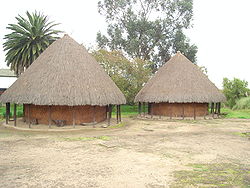
After Colombia's independence in 1810, many indigenous reservations were dissolved or reduced. A significant cultural blow occurred in 1948 when the state banned chicha, a traditional corn-based alcoholic drink, a prohibition that lasted until 1991.
Since 1989, there has been a concerted effort to reconstruct indigenous councils. Today, the Cabildo Mayor del Pueblo Muisca works toward linguistic and cultural recuperation, representing communities in areas such as Cota, Chía, and Bosa.

Frequently Asked Questions
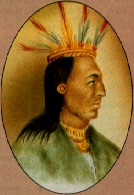
Who were the primary leaders of the Muisca?
The Muisca were led by two main sovereigns: the Zipa, who ruled the southern territories including the Bogotá savanna, and the Zaque, who ruled the northern territories centered in Hunza.
What is the origin of the El Dorado legend?
The legend likely stems from Muisca initiation rituals at Lake Guatavita, where a new Zipa was covered in gold powder and submerged in the lake as a religious offering.
What language did the Muisca speak?
They spoke Muysccubun, a dialect of the Chibcha language family, which is related to languages spoken by other groups in the Sierra Nevada de Santa Marta and the Sierra Nevada del Cocuy.
What were the main products of the Muisca economy?
The Muisca economy relied heavily on the production and trade of salt (from mines in Zipaquirá and Nemocón), emeralds (from Muzo), and copper.
Do Muisca descendants still exist today?
Yes. While the population decreased significantly during colonization, descendants live in rural municipalities such as Cota, Chía, and Tenjo, and active indigenous councils continue to work toward cultural revitalization.