Mosul: The Resilient Pearl of the North
Known as the Pearl of the North, Mosul is a metropolis of profound historical depth and cultural complexity. Located in the Nineveh Governorate of Iraq, it stands as the country's second-largest city, serving as a vital hub where diverse ethnic and religious identities have mingled for centuries. From its ancient roots near Nineveh to its modern struggles and rebirth, Mosul remains a symbol of endurance in the heart of Mesopotamia.
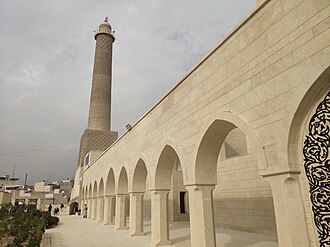
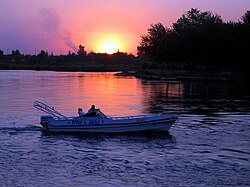
The city is defined by its relationship with the Tigris River, which bisects the urban landscape and provides a lifeline for its population of approximately 1,792,000 people. Its unique identity is further cemented by its nickname, "the hunchback" (al-Ḥadbā), derived from the iconic leaning minaret of the Great Mosque of al-Nuri.
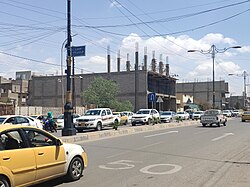
Key Facts
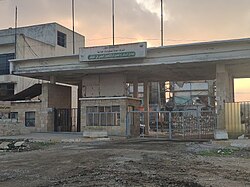
- Population: 1,792,000 (2023), ranking 2nd in Iraq.
- Location: Nineveh Governorate, Iraq, situated along the Tigris River.
- Nicknames: The Pearl of the North and "The Hunchback" (al-Ḥadbā).
- Geography: Total area of 180 km² with an elevation of 223 meters.
- Infrastructure: Five major bridges cross the Tigris, including the Al Shohada, Fifth, Old (Iron), and Fourth bridges.
A Journey Through History
Ancient Roots and the Middle Ages
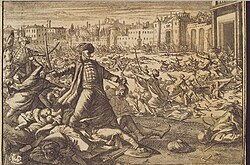
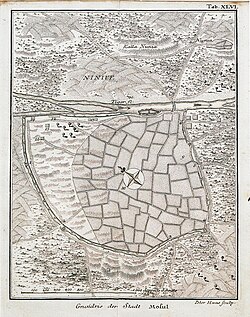
Mosul's history is inextricably linked to the ancient city of Nineveh. Through the early Middle Ages and into the 9th century, the city evolved into a strategic center of power and trade. By the 13th century, it had become a focal point of regional conflict, as evidenced by the siege of Mosul between 1261 and 1263.
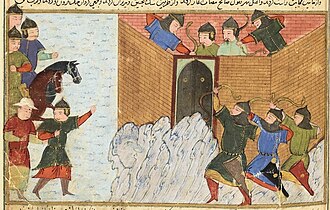
The Golden Age of Metalworking
During its peak, Mosul was world-renowned as a metalworking hub. The city's artisans specialized in intricate brass work, often featuring inlaid precious metals and complex iconography. Some of the most famous examples include the Blacas ewer (1232) and the Homberg ewer (1242–43), the latter of which features Christian iconography.
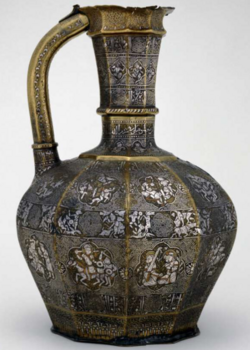
![Ewer from Mosul, 1246–1247 CE[25][26]](/images/79/24/7924f0bb6dc148893f6a78a301f902ab149ff1c0fed0075792df47a29e8b43ea.jpg)
![Homberg ewer. Inlaid Brass with Christian Iconography. probably Mosul, dated 1242–43[27]](/images/8c/12/8c12e2c6270e5b4c12dee81bef3d9d8ead2f373aa7d685998f6f895b3215347f.jpg)
Ottoman Influence and the Modern Era
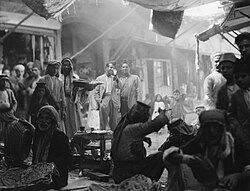
The Ottoman period brought further administrative shifts, including the conquest of Mosul by Mustafa Pasha in 1631. As the city transitioned into the 20th century, it became a microcosm of Iraq's pluralistic society, hosting Arab, Kurdish, Assyrian, and Armenian communities.
Conflict and Recovery in the 21st Century
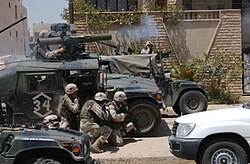
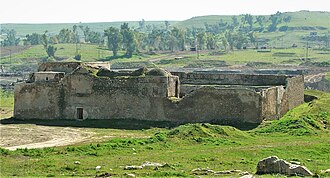
The dawn of the 21st century brought significant turmoil. In July 2003, a gun battle in the city resulted in the deaths of Saddam Hussein's sons, Uday and Qusay. The city later faced a devastating period between 2014 and 2017 when it fell under the control of the Islamic State (IS). During this occupation, countless cultural landmarks were destroyed, including the 6th-century Dair Mar Elia monastery and the Al-Hadba minaret.
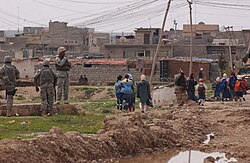
Following a fierce battle, Mosul was liberated in 2017. Since then, the city has entered a phase of reconstruction. The Great Mosque of al-Nuri and its leaning minaret are being restored, signaling a return to normalcy and the preservation of the city's architectural heritage.
Cultural and Religious Heritage
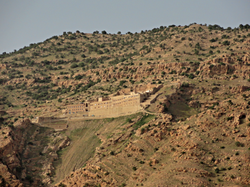
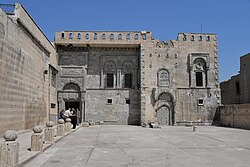
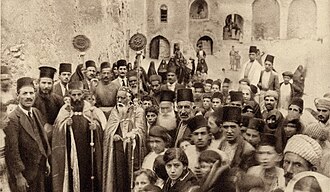
Mosul's spiritual landscape is a tapestry of faiths. The city is home to numerous mosques, shrines, and historic Christian sites. Notable among these are the Mar Mattai Monastery of the Syriac Orthodox Church and the Church of Saint Thomas.
Education and Modern Life
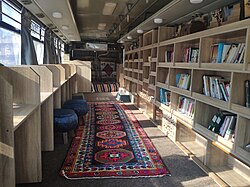
Despite the scars of war, education remains a priority. The University of Mosul continues to be a center of learning, and the city has seen the introduction of innovative projects like mobile libraries to encourage literacy among the youth.
City Profile and Climate
Mosul experiences a climate characterized by hot summers and cool winters. Precipitation is highest in December and January, while July and August see peak temperatures that can reach nearly 50°C.
| Metric | Value/Detail |
|---|---|
| Average Annual Precipitation | 356.8 mm |
| Record High Temperature | 49.4°C |
| Record Low Temperature | -17.6°C |
| Elevation | 223 m |
| Primary Water Source | Tigris River |
Notable Figures from Mosul
The city has produced a wide array of influential figures across various fields:
- Arts & Music: Kathem Al Saher (pop singer) and Munir Bashir (musician).
- Politics & Diplomacy: Tariq Aziz (Deputy Prime Minister) and Ghazi Mashal Ajil al-Yawer (Interim President).
- Scholarship & Science: Hormuzd Rassam (archaeologist) and Abdulahad AbdulNour (physician).
- Religion: Asenath Barzani (first Jewish female rabbi) and Ignatius Zakka I (Patriarch of Antioch).

Frequently Asked Questions
Why is Mosul called "the hunchback"?
The nickname comes from the Arabic word "al-Ḥadbā," referring to the leaning minaret of the Great Mosque of al-Nuri, which gave the city a distinctive architectural silhouette.
What was Mosul's primary industry in the Middle Ages?
Mosul was a world-renowned hub for metalworking, specifically the production of high-quality inlaid brass ewers and vessels.
Which river flows through Mosul?
The Tigris River flows through the city, and it is crossed by five major bridges that connect the eastern and western sides of the metropolis.
What happened to Mosul between 2014 and 2017?
The city was captured and occupied by the Islamic State (IS), leading to widespread destruction of cultural and religious sites. It was liberated by Iraqi and allied forces in 2017.
What is the significance of the Dair Mar Elia monastery?
Dair Mar Elia is the oldest monastery of the Assyrian Church of the East, dating back to the 6th century, though it was tragically destroyed in 2014.