Mollisols: The World's Most Productive Agricultural Soils
In the study of pedology (the study of soil), few soil orders are as economically vital as Mollisols. Recognized by the USDA soil taxonomy, Mollisols are the gold standard for agricultural productivity due to their exceptional nutrient density and deep organic layers. These soils form the backbone of some of the most fertile regions on Earth, supporting vast amounts of the world's food production.
What Defines a Mollisol?
The defining characteristic of a Mollisol is the mollic epipedon. This is a deep, nutrient-enriched surface horizon—the top layer of soil—that typically ranges between 60 and 80 cm (24–31 in) in depth. This layer is characterized by a high concentration of organic matter and a soft, granular structure.
The mollic epipedon is created through the long-term accumulation of organic materials derived from decaying plant roots. This process results in a soil that is naturally fertile and capable of sustaining intensive crop growth.
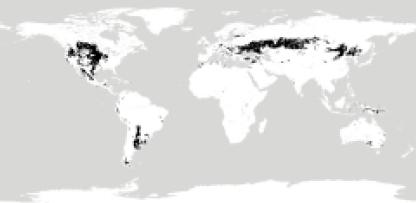
Distribution and Environmental Influence
Mollisols are primarily found in savannahs and mountain valleys, with significant concentrations in the North American Great Plains and Central Asia. These soils typically develop in humid continental or semi-arid climates, often originating from parent materials such as loess (wind-blown silt) and limestone.
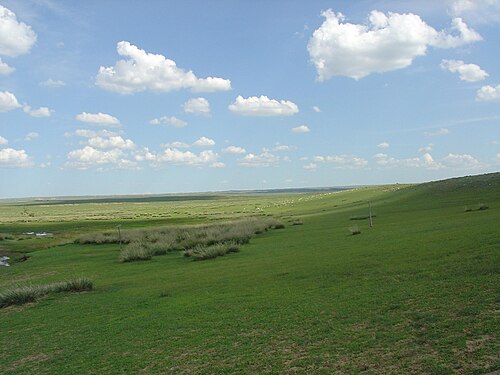
The development of these soils has been historically shaped by two major factors: frequent fires and pedoturbation—the mixing of soil layers by organisms like earthworms and ants. Because of their inherent fertility, Mollisols are highly prized for farming. It was estimated that by 2003, only 14 to 26 percent of these grassland ecosystems remained in a natural state, with the rest converted to agricultural use.
Geologic History and Evolution
While many soil orders date back to the Carboniferous Ice Age approximately 280 million years ago, Mollisols appeared later. Paleopedological records suggest they may have existed as early as the Maastrichtian period, though they are confidently identified in the Eocene. Their widespread development is closely linked to the global cooling and drying trends that occurred during the Oligocene, Miocene, and Pliocene epochs.
Classification and Suborders
Mollisols are categorized into several suborders based on their moisture regimes and temperature profiles:
- Albolls: Wet soils with an eluvial horizon (a layer where minerals have been leached).
- Aquolls: Wet soils with an aquic moisture regime.
- Cryolls: Soils from cold climates with frigid or cryic temperature regimes.
- Gelolls: Soils from very cold climates where the mean annual soil temperature is below 0 °C.
- Rendolls: Soils derived from lime parent material.
- Udolls: Soils from humid climates with an udic moisture regime.
- Ustolls: Soils from subhumid climates with an ustic moisture regime.
- Xerolls: Soils from Mediterranean climates with a xeric moisture regime.
Specialized Variations
In high mountain plateaus, such as the Andean altiplano and Tibet, soils similar to Mollisols exist but are affected by cryoturbation (soil mixing due to freeze-thaw cycles) and permafrost. These are known as Molliturbels or Mollorthels. Unlike many other cold-climate soils, these are not acidic, making them the best grazing lands in these regions.
It is important to distinguish Mollisols from other soils with mollic epipedons. For example, Vertisols also have these horizons but are defined by high clay content and shrink-swell characteristics. Similarly, some Andisols may possess mollic epipedons, but their andic (volcanic) properties take taxonomic precedence.
Comparative Soil Frameworks
| USDA Taxonomy | World Reference Base (WRB) Equivalent | Distinguishing Feature |
|---|---|---|
| Mollisol | Chernozems, Kastanozems, Phaeozems | Deep, organic-rich surface horizon |
| Shallow Mollisol | Leptosols | Gravelly or thin soil profile |
| Aquolls | Gleysols, Stagnosols, Planosols | Saturated/wet conditions |
| Mollisol with natric horizon | Solonetz | High sodium content |
Key Facts
- Global Coverage: Mollisols cover approximately 7% of the Earth's ice-free land area.
- Defining Feature: The mollic epipedon, a nutrient-rich surface layer 60–80 cm deep.
- Economic Value: They are the most agriculturally productive soil order globally.
- Primary Locations: Common in the North American Great Plains and Central Asia.
- Parent Materials: Frequently formed from limestone and loess.
Frequently Asked Questions
What makes Mollisols so fertile?
Their fertility comes from the mollic epipedon, a deep surface horizon rich in organic matter derived from the long-term decomposition of plant roots.
How do Mollisols differ from Vertisols?
While both can have a mollic epipedon, Vertisols are dominated by high clay content and a characteristic shrink-swell behavior that overrides the mollic classification.
Where are Mollisols most commonly found?
They are typically found in grassland ecosystems, such as the steppe biomes of Central Asia and the Great Plains of North America, as well as some savannahs and mountain valleys.
What is the difference between a Mollisol and a Chernozem?
The difference is primarily one of classification systems; Mollisol is the term used in the USDA soil taxonomy, while Chernozem is one of the categories used in the World Reference Base for Soil Resources (WRB).
Why are Molliturbels important in cold climates?
Molliturbels and Mollorthels provide the best grazing land in high-altitude cold climates, such as Tibet, because they lack the acidity found in many other soils of similar environments.