Argentina Climate Change: Environmental Impacts and Future Projections
Argentina is facing a transformative shift in its environmental landscape as climate change alters precipitation patterns and temperature stability. While some regions are experiencing an increase in rainfall, others are grappling with severe water scarcity. These shifts are not merely atmospheric; they are creating a ripple effect that threatens the nation's energy security, agricultural productivity, and urban infrastructure.
Key Facts
- Emissions: Argentina emitted approximately 422 million tonnes of greenhouse gases in 2023, ranking it as the 22nd highest emitter globally.
- Temperature Trends: Mean temperatures rose by 0.5 °C between 1901 and 2012, with Patagonia seeing increases exceeding 1 °C.
- Water Security: Glacial retreat in the Andes is reducing river flows, with some hydroelectric losses reaching 40%.
- Extreme Weather: Drought frequency is predicted to increase by 65% by 2050, while heatwaves are projected to last 6,247% longer.
- Climate Goals: The nation aims to cap net emissions at 349 million tonnes by 2030 and achieve carbon neutrality by 2050.
Temperature Shifts and Atmospheric Changes
The warming of Argentina has been uneven. In the Andean regions of Patagonia, temperatures have risen by more than 1 °C (1.80 °F), leading to the retreat of nearly all glaciers. This is critical because these glaciers provide essential water to the country's arid zones.
Outside of Patagonia, the temperature trend is more complex. While minimum temperatures have risen due to increased greenhouse gas concentrations, maximum temperatures have decreased in areas north of 40S. This cooling effect is attributed to higher precipitation, which increases cloud cover and evaporation.
Atmospheric circulation has also been altered by ozone depletion, resulting in fewer frost days and a rise in "hot nights." Heatwaves—defined as three consecutive days where temperatures exceed the 90th percentile of the 1961–1990 average—have become more frequent and intense.
![Absolute maximum temperatures recorded in Argentina during the December 2013 heat wave. This heat wave was the longest and the most intense in Argentina.[1]](/images/e3/a2/e3a23b2e24dec8b3bf9d33e142014e0874926f33ee286bac79b769f8c1fad13e.gif)
Future Temperature Projections
Looking toward 2016–2035, the IPCC Fifth Assessment Report suggests two primary scenarios. Under RCP 4.5 (a moderate scenario), temperatures are expected to rise by 1.0 °C nationwide, with the northwest seeing increases of 2 to 2.5 °C. Under the more severe RCP 8.5, the northwest could see a temperature spike of up to 3.5 °C. In both cases, summer warming will be the most pronounced.
Precipitation and Extreme Weather Events
Precipitation patterns are shifting dramatically. Since 1970, the northeast has seen a 10% increase in rainfall, while parts of La Pampa and western Buenos Aires have seen increases of up to 40%. However, this is not a universal trend; the Cuyo region and Andean Patagonia have experienced a decrease in precipitation, with some Andean areas seeing a 30%–50% reduction since the mid-20th century.
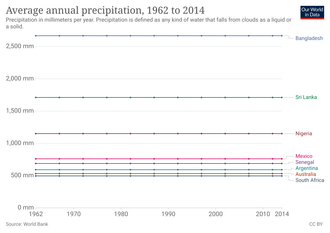
These changes often manifest as catastrophic events. In March 2025, Bahia Blanca suffered devastating floods that killed 16 people. Research by World Weather Attribution linked this to climate change, noting that extreme heat and humidity—combined with moisture from the Amazon—produced 300 mm of rain in just six hours. Such an event would have been nearly impossible without the influence of global warming.
Impacts on Agriculture and Economy
Agriculture, a cornerstone of the Argentine economy, is highly vulnerable. In the Cuyo region, the combination of lower precipitation and higher temperatures is creating a potential water crisis. Earlier snowmelts lead to higher river flows in spring but critical shortages in summer when irrigation demand peaks. This forces a reliance on groundwater, which increases costs and risks depleting aquifers.
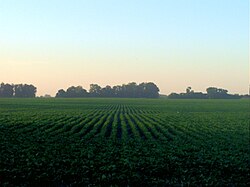
While the boundaries for viable agricultural production have actually expanded westward by over 100 km due to increased rainfall in some areas, this benefit is offset by the increased frequency of hail, strong winds, and flooding. Furthermore, the northern and central regions face a risk of desertification as higher temperatures drive evaporation faster than precipitation can replenish the soil.
Urban Vulnerability and Public Health
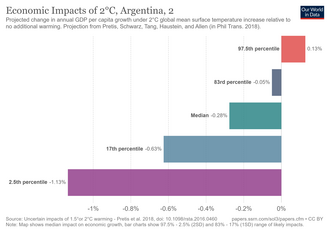
Argentina's urban centers are particularly at risk. Many cities are located near bodies of water, making them susceptible to flooding during intense precipitation events. Additionally, heatwaves place immense pressure on energy and water grids, increasing the demand for cooling services.
Public health is also a concern. As temperatures rise, the habitats for vectors carrying tropical diseases—such as malaria, Chagas disease, and dengue—are expanding southward, bringing these illnesses to new populations.
Sea Level Rise and Coastal Risks
Because much of Argentina's coastline consists of high cliffs, permanent land loss from sea level rise is limited. However, a 1-meter rise in sea levels could result in the loss of valuable agricultural land. The primary threat to coastal cities, specifically Buenos Aires, is the increased frequency and intensity of storm surges.
Mitigation and Adaptation Strategies
Argentina has committed to several climate goals through its Nationally Determined Contribution, including a net emission cap of 349 million tonnes by 2030 and a goal of net zero by 2050. One promising pathway is Carbon Capture and Storage (CCS), which involves capturing CO2 from industrial sources and storing it underground.
While commercial-scale CCS is not yet operational, the Neuquén, Golfo San Jorge, and Austral–Magallanes sedimentary basins have been identified as having significant geological storage potential. These technologies, along with hydrogen energy, are central to the 2022 National Adaptation and Mitigation Plan.
| Region/Sector | Observed/Predicted Change | Primary Impact |
|---|---|---|
| Patagonia (Andean) | Temp increase > 1 °C | Glacial retreat and reduced water availability |
| Northeast/Central | Increased precipitation | Higher flood risk and socioeconomic losses |
| Cuyo Region | Decreased river flow | Water crisis for agriculture and viticulture |
| Urban Areas | Intense heat/rain | Energy grid strain and flash flooding |
| Public Health | Warming temperatures | Southward spread of tropical diseases |
Frequently Asked Questions
How is climate change affecting Argentina's energy production?
Higher temperatures reduce winter snowfall in the mountains, which decreases river flow. This has led to observed losses of up to 40% in hydroelectric energy production.
Will crop yields in Argentina decrease due to warming?
The impact is mixed. While productivity for wheat, soybean, and maize may remain stable overall by mid-century, production is expected to shift; it may increase in the southern and western Pampas but decrease in the north due to aridity and desertification.
Is Buenos Aires at risk of disappearing due to sea level rise?
Permanent flooding is unlikely for most of the coast due to high cliffs, but Buenos Aires is significantly vulnerable to an increase in the frequency and severity of storm surges.
What are the health risks associated with these climate changes?
The primary health risk is the expansion of tropical disease vectors. As the climate warms, diseases like dengue, malaria, and Chagas disease are predicted to spread further south.
What is Argentina doing to reduce its carbon footprint?
Argentina has pledged to reach carbon neutrality by 2050 and is exploring Carbon Capture and Storage (CCS) in major sedimentary basins to reduce emissions from industrial sectors and power generation.