Mojave People: A History of Resilience and Cultural Adaptation
The history of the Mojave people is a testament to endurance in the face of profound social and cultural disruption. For generations, the Mojave maintained a rich oral tradition, as their language was not written in precolonial times. However, the arrival of outside cultures, the spread of disease, and the encroachment of settlers interrupted the transmission of sacred songs and stories, forcing the tribe to adapt to a dominant foreign language and culture.
One of the most enduring challenges has been the preservation of their identity, even in the way their name is recorded. Over 50 variations of the tribal name exist in Spanish and English transliterations, including Hamock avi, Amacava, and Jamajabs. A notable translation error in the 1917 Handbook of the American Indians North of Mexico incorrectly suggested the name meant "three mountains," referring to the peaks known as The Needles. In reality, the Mojave call these peaks Huukyámpve, meaning "where the battle took place," commemorating the victory of the God-son, Mastamho, over the sea serpent.
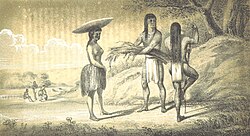
Ancestral Lands and Spiritual Geography
The Mojave ancestral territory centered around the Colorado River, which they call Aha Macav. Their lands spanned a vast region from Black Canyon in the north—marked by the pillars of the First House of Mutavilya—down to the Quechan Valley. In modern terms, this territory stretched from the site of the Hoover Dam to approximately one hundred miles below Parker Dam.
Central to their spiritual life is Avi kwame, or Spirit Mountain, which serves as the heart of their spiritual world.
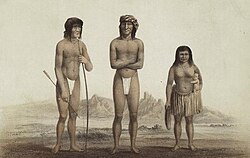
Early European Contact and 19th Century Conflict
European contact began in 1604 when Juan Onate led a Spanish expedition into Mojave territory in search of silver. Later, in 1775, the Spanish friar Francisco Garcés met with the tribe. By 1826, the arrival of Jedediah Smith and other European-American fur trappers marked the beginning of a more volatile era characterized by increasingly violent encounters.
Following the United States' annexation of Arizona in 1850, the U.S. Army entered the region. In April 1859, Lieutenant Colonel William Hoffman led the Expedition of the Colorado to establish a military post to protect emigrants from Mojave attacks. After a period of tension and the massacre of members of the Rose-Baley Party, the Mojave warriors withdrew, and the army occupied the land that would become Fort Mojave.
On April 23, 1859, Hoffman presented the Mojave with a stark choice: submission or extermination. The Mojave chose submission. At that time, the population was estimated at 4,000 people, organized into 22 clans identified by totems.
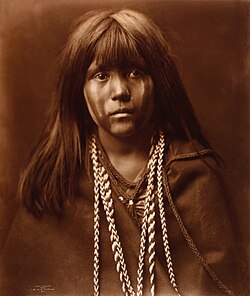
The Era of Reservations and Forced Assimilation
In 1865, the Colorado River Reservation was established. While many Mojave were legally required to live there, many others remained in the Mojave Valley. Because the War Department initially declined to force them onto the reservation, these individuals remained relatively free to practice their tribal customs.
This autonomy ended in 1890 when the post was transferred from the War Department to the Office of Indian Affairs. The government launched an intensive assimilation program—the process of forcing a minority group to adopt the customs and language of a dominant culture. Fort Mojave was converted into a boarding school where children aged 6 to 18 were compelled to live and learn English.
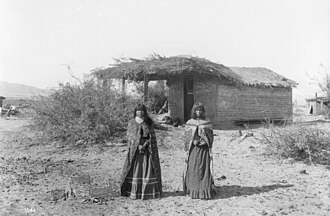
The boarding school experience was often traumatic. Students were forced to adopt European-American clothing, hairstyles, and manners. The use of the Mojave language or traditional customs was strictly forbidden and punishable by corporal punishment; for example, a first offense at Fort Mojave resulted in five lashes of the whip—a practice that deeply scandalized the Mojave, who did not discipline their children in such a manner.
20th Century Legacy and Tribal Governance
The assimilation program continued until 1931, leaving a lasting impact on tribal governance and kinship. Administrators assigned English names to children and divided the people into two legal entities: the Mojave Tribe on the Colorado River Reservation and the Fort Mojave Indian Tribe on the Fort Mojave Indian Reservation. These divisions ignored the traditional clan system.
Despite these efforts to erase their heritage, the Mojave showed remarkable resilience. By the late 1960s, 18 of the original 22 traditional clans were still surviving. In 1957, the Fort Mojave Indian Tribe formally ratified its constitution, establishing a modern framework for tribal sovereignty.
Key Facts
- Ancestral Home: The Colorado River (Aha Macav), from Hoover Dam to 100 miles below Parker Dam.
- Spiritual Center: Avi kwame (Spirit Mountain).
- Population (1859): Approximately 4,000 people divided into 22 totemic clans.
- Key Landmark: Huukyámpve (The Needles), site of the legendary battle between Mastamho and the sea serpent.
- Legal Entities: The Mojave Tribe (Colorado River Reservation) and the Fort Mojave Indian Tribe (Fort Mojave Indian Reservation).
| Period/Year | Event | Impact |
|---|---|---|
| 1604 | Juan Onate Expedition | First Spanish contact in search of silver. |
| 1859 | Establishment of Fort Mojave | Forced submission of the Mojave to the U.S. Army. |
| 1865 | Colorado River Reservation | Legal establishment of tribal lands. |
| 1890–1931 | Boarding School Era | Forced assimilation and suppression of native language. |
| 1957 | Constitutional Ratification | Fort Mojave Indian Tribe formalizes its government. |
Frequently Asked Questions
What does the name "Mohave" actually mean?
While some early sources incorrectly claimed it meant "three mountains," the Mojave identify the peaks known as The Needles as Huukyámpve, meaning "where the battle took place," referring to the victory of the God-son Mastamho over a sea serpent.
Where were the ancestral lands of the Mojave?
Their lands were located along the Colorado River (Aha Macav), stretching from Black Canyon (near the modern Hoover Dam) to the Quechan Valley, about one hundred miles below Parker Dam.
What was the purpose of the Fort Mojave boarding school?
The school was part of a U.S. federal assimilation policy designed to force Native children to adopt English language, European-American customs, and clothing, under the belief that this was the only way for native peoples to survive.
How did the boarding schools affect Mojave culture?
The schools disrupted the transmission of oral histories and songs, punished the use of the native language with corporal punishment, and imposed a tribal division that did not reflect traditional clan and kinship systems.
Did the traditional clan system survive the assimilation era?
Yes. Despite the pressures of assimilation and the imposition of new tribal registrations, 18 of the 22 traditional totemic clans were still surviving by the late 1960s.