Hualapai Bands and Villages
The Hualapai (also known as the Pa'a or Pai) and the Havasupai share a common ethnic origin, though U.S. government policies eventually established them as politically separate groups. Historically, the Hualapai were organized into a sophisticated social structure consisting of three primary subtribes, which were further divided into seven bands and eventually into thirteen or fourteen regional local groups. These local groups comprised extended family units living in small, strategically placed villages.
Key Facts
- Three Subtribes: The Hualapai were divided into the Plateau People, Middle Mountain People, and Yavapai Fighters.
- Havasupai Connection: The Havasupai originated as one band of the Plateau People subtribe.
- Geographic Range: Their territory spanned from the Colorado River and Grand Canyon to the Cerbat and Black Mountains.
- Social Structure: The population was organized from subtribes down to regional bands and extended family villages.
- Conflict Impact: The Yavapai Fighters and certain Plateau bands suffered heavy losses during the Hualapai War due to combat, famine, and disease.
The Plateau People (Ko'audva Kopaya)
Known as "The People Up Above," the Plateau People occupied the canyon and plateau country, primarily east of the Truxton Canyon Wash and the Grand Wash Cliffs. Their territory included various canyons such as Quartermaster, Meriwhitica, and Peach Springs, as well as the Music Mountains and the current Hualapai Reservation.
Mata'va-kapai (Northern People)
This group included the Ha Dooba Pa'a (Clay Springs band), who inhabited the Music Mountains and Grand Wash Cliffs, and the Tanyika Ha' Pa'a (Grass Springs band). While the Clay Springs band suffered heavy losses during wartime, the Grass Springs band largely avoided the fighting.
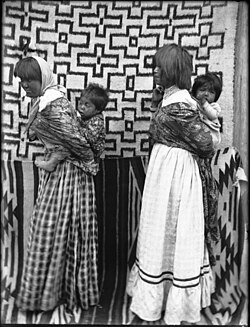
Ko'o'u-kapai (Mesa People)
The Mesa People consisted of the Kwagwe' Pa'a (Hackberry Springs band), who later merged with the Peach Springs band, and the He'l Pa'a (Milkweed Springs band). The latter group, located between Truxton Canyon and Peach Springs, suffered significant casualties. Their villages, such as Hê'l, were notably used for the irrigation of tobacco.
Nyav-kapai (Eastern People)
Occupying the Colorado Plateau and canyon lands, this group included the Yi Kwat Pa'a (Lower Peach Springs band), whose former territory now houses the administrative headquarters of the Hualapai Reserve. Other groups included the Ha'kasa Pa'a (Pine Springs band) and the Havasooa Pa'a (Cataract Canyon band). The Havasooa Pa'a, who call themselves the "People of the Blue Green Water," are known today as the Havasupai.
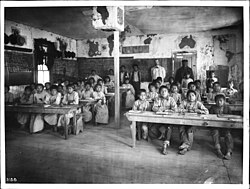
The Middle Mountain People (Witoov Mi'uka Pa'a)
The "Separate Mountain Range People" lived west of the Plateau People, primarily north of present-day Kingman. Their range covered the Black and Cerbat Mountains, as well as the Hualapai, Detrital, and Sacramento Valleys.
Soto'lve-kapai (Western People)
This group was split between the Wikawhata Pa'a (Red Rock band) in the north near Lake Mead and the Ha Emete Pa'a (Cerbat Mountains band) in the south. Following heavy casualties, the Red Rock band merged with the Cerbat Mountain band. Most of their settlements were established near springs along the eastern slopes of the mountain ranges.
The Yavapai Fighters
The Yavapai Fighters were the largest of the three subtribes, occupying the southern half of Hualapai territory. They were the first to engage in conflict with the Ji'wha' (the "Enemy" Yavapai) to their south. This group was nearly decimated during the Hualapai War through a combination of military combat, the systematic destruction of crops and supplies by the U.S. Army, and subsequent famine and disease.
Hual'la-pai (Pinery People)
The Amat Whala Pa'a (Hualapai Mountains band) lived in the Hualapai Mountains east of Kingman, with villages concentrated near streams and springs at the northern end of the range.
Kwe'va-kapai (Southern People)
This group included the Tekiauvla Pa'a (Big Sandy River band) and the Burro Creek band. The Burro Creek band frequently intermarried with the adjacent Yavapai, leading Americans to often mistake them for Yavapai. After the war, they merged with larger Hualapai groups.
Hakia'tce-pai (Mohon Mountain People)
Also known as the Talta'l-kuwa, these people occupied rugged mountain country. They included the Ha'a Kiacha Pa'a (Mohon Mountains band), centered around Fort Rock Creek, and the Whala Kijapa P'a (Juniper Mountains band).
Summary of Hualapai Subtribes
| Subtribe | Common Name | Primary Region | Notable Bands |
|---|---|---|---|
| Ko'audva Kopaya | Plateau People | East (Canyons & Plateaus) | Peach Springs, Havasupai, Hackberry |
| Witoov Mi'uka Pa'a | Middle Mountain People | West (Cerbat & Black Mountains) | Cerbat Mountains, Red Rock |
| Yavapai Fighters | Southern People | South (Hualapai & Mohon Mountains) | Big Sandy River, Burro Creek, Mohon Mountains |
Frequently Asked Questions
What is the relationship between the Hualapai and the Havasupai?
Ethnically, they are one people. The Havasupai originated as a band of the Plateau People subtribe (the Havasooa Pa'a) but became a politically separate group due to U.S. government policy.
Who were the "Yavapai Fighters"?
They were the largest Hualapai subtribe, occupying the southern territory. They were named for their role as the first line of defense against the Yavapai (Ji'wha') to their south.
How was the Hualapai social structure organized?
The society was organized hierarchically: three subtribes were divided into seven bands, which were further split into thirteen or fourteen regional local groups consisting of extended family villages.
What caused the decline of the Yavapai Fighters?
The group was nearly wiped out during the Hualapai War due to direct fighting, the U.S. Army's systematic destruction of their fields and supplies, and the resulting outbreaks of disease and famine.
Where is the current Hualapai Reservation located in relation to historical bands?
The current reservation encompasses the former territory of the Plateau People, specifically including the lands of the Lower Peach Springs band (Yi Kwat Pa'a), where the administrative headquarters are now located.