Modern Language Association: Academic Contributions and Institutional Challenges
The Modern Language Association (MLA) serves as a cornerstone for scholars of language and literature, providing the essential infrastructure for academic research, professional networking, and standardized documentation. From publishing the most widely used citation guides to hosting massive annual gatherings, the MLA shapes how literary studies are conducted and communicated globally.
Academic Publications and Digital Resources
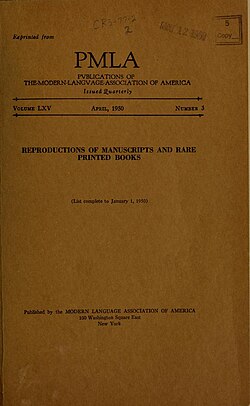
The MLA is renowned for its scholarly publications, most notably the Publications of the Modern Language Association of America, which remains one of the most prestigious journals in the field of literary studies. To address the practical needs of educators, the association publishes Profession, an online journal hosted on MLA Commons that focuses on the professional challenges faced by language and literature teachers.
For students and researchers, the MLA provides critical tools for academic integrity and discovery. The MLA Handbook, a guide tailored for undergraduate and high school students, has achieved massive reach with over 6,500,000 copies sold. Additionally, the association maintains the MLA International Bibliography, the industry-standard database for language and literature research.
Expanding its digital footprint, the MLA launched Humanities Commons in November 2016. This open-access, crossdisciplinary hub facilitates scholarship for anyone interested in the humanities and is a collaborative effort involving other non-profit organizations, including the College Art Association, the Association for Jewish Studies, and the Association for Slavic, East European, and Eurasian Studies. The association also offers the MLA Language Map, which utilizes 2000 U.S. Census data to map the distribution of thirty languages and seven less common language groups across the United States and Canada.
The MLA Annual Convention
Since 1884, the MLA has hosted a national four-day convention, which stands as the most significant annual event for language and literature scholars. Originally held during the last week of December, the event shifted in 2011 to the first Thursday following January 2. The convention rotates among major U.S. cities and typically attracts between 8,000 and 12,000 members.
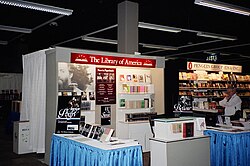
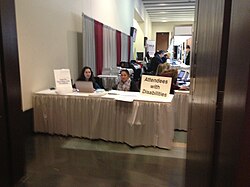
The convention serves as both an intellectual and professional marketplace. It features approximately 800 sessions, ranging from paper presentations and panel discussions to poetry readings, film screenings, and interdisciplinary studies involving music and art. Beyond the academic discourse, the event is a primary venue for recruitment, as university language departments frequently interview teaching candidates there. The MLA also supports this process through its online Job Information List (JIL).
Key Facts
- Handbook Reach: The MLA Handbook has sold more than 6.5 million copies.
- Convention Scale: Attracts 8,000 to 12,000 members annually across roughly 800 sessions.
- Digital Hub: Humanities Commons provides open-access research tools for the humanities.
- Standardization: Produces the MLA International Bibliography, the standard for the field.
- Demographic Data: The MLA Language Map tracks 30+ languages based on 2000 Census data.
Institutional Debates and Controversies
The MLA has frequently been a site of deliberation regarding race, gender, and class. These shifts have drawn criticism from conservative voices; for instance, Roger Kimball and Hilton Kramer wrote in The New Criterion that the association has supported a "rampant politicization of literary study," specifically citing the elevation of popular culture to the same status as classic literature.
Resolutions and Political Tensions
The association has faced significant internal conflict regarding the Israeli-Palestinian conflict. In June 2014, a resolution critical of Israel's academic travel restrictions failed after a majority of members declined to vote. This period was marked by heated rhetoric, with some members raising alarms over antisemitic comments made during the debates.
In January 2017, the MLA rejected a proposal to boycott Israeli academic institutions by a vote of 113–79. The proposal, introduced by "MLA Members for Justice in Palestine" and supported by figures like Judith Butler and Viet Thanh Nguyen, was aligned with the Boycott, Divestment and Sanctions (BDS) movement. Opponents, including the Louis D. Brandeis Center for Human Rights Under Law, argued that such a move would be ultra vires—meaning it would exceed the association's original legal mission and authority.
Leadership and Ethics
In May 2018, Judith Butler, then President-Elect of the MLA, co-authored a letter to New York University defending professor Avital Ronell against a sexual harassment suit. The letter accused the complainant of a "malicious campaign." This action led to widespread condemnation and calls for Butler's resignation. The MLA Executive Council subsequently stated that the letter was unauthorized and contradicted the association's Statement of Professional Ethics. Ronell was eventually found guilty of sexual harassment and suspended for one year.
Most recently, at the 2025 annual meeting in New Orleans, the executive council blocked a member vote on a resolution endorsing BDS and acknowledging accusations of genocide and scholasticide (the systematic destruction of education). The council cited "legal and fiduciary" challenges as the reason for blocking the vote, leading to protests and calls for members to resign.
Summary of MLA Core Activities
| Category | Key Offering/Event | Primary Purpose |
|---|---|---|
| Publications | MLA Handbook | Standardized citation and formatting guide |
| Research | MLA International Bibliography | Standard bibliographic database for language studies |
| Networking | Annual Convention | Scholarship presentation and job placement |
| Digital Access | Humanities Commons | Open-access crossdisciplinary research hub |
| Data | MLA Language Map | Visualizing language speaker distribution in NA |
Frequently Asked Questions
What is the purpose of the MLA Handbook?
The MLA Handbook is a guide designed for high school and undergraduate students to provide standardized rules for documenting sources and formatting academic papers in the humanities.
When and where does the MLA Annual Convention take place?
The convention is a four-day event held annually starting the first Thursday after January 2. It rotates among various major cities across different regions of the United States.
What is the MLA International Bibliography?
It is the standard online database used by scholars and students to find references and research materials within the fields of language and literature.
What is the "ultra vires" argument mentioned in MLA resolutions?
The term ultra vires refers to the claim that certain actions, such as political boycotts, go beyond the legal authority and original mission of the association.
What is Humanities Commons?
Launched in 2016, it is an open-access, crossdisciplinary digital hub for humanities research, created in partnership with several other non-profit academic organizations.