No Other Land: Critical Acclaim and Political Controversy
No Other Land is a powerful documentary that serves as a cinematic diary of the Palestinian experience. By blending activist interrogation with tight filmmaking, the documentary captures the harrowing realities of life under Israeli occupation, specifically focusing on the community of Masafer Yatta. The film has emerged as a significant cultural touchstone, garnering universal acclaim from critics while sparking intense political debate across the globe.
Key Facts
- Critical Reception: Holds a 100% positive rating on Rotten Tomatoes and a Metacritic score of 93/100.
- Major Awards: Won the Academy Award for Best Documentary Feature Film and the Berlinale Documentary Award.
- Core Themes: Explores the inequality between Israeli and Palestinian legal systems and the erasure of Palestinian communities.
- Controversy: Condemned by both Israeli officials and the BDS movement for opposing reasons.
- Recognition: Ranked 13th on IndieWire's list of the 100 Best Movies of the 2020s (as of June 2025).
Critical Response and Artistic Merit
Critics have praised the film for its urgency and its ability to act as a tool for truth and resistance. Reviewers have noted that the camera functions not as a detached observer, but as an extension of the filmmakers' activism. Many have highlighted the film's concise and powerful assembly of footage, describing it as a devastating portrait of the current Israeli-Palestinian conflict.
Industry publications such as Variety and IndieWire have lauded the production's tight direction, while others have emphasized its role in recording proof of the existence of villages facing demolition. The film is widely regarded as a vital document that positions itself as a step toward a future of equal freedom for both Palestinians and Israelis.
Awards and Global Recognition
The film has achieved an extraordinary level of success on the international festival circuit and among critics' circles. From its early wins at the Berlin International Film Festival to its ultimate victory at the Academy Awards, No Other Land has been recognized for its courage and cinematic quality.
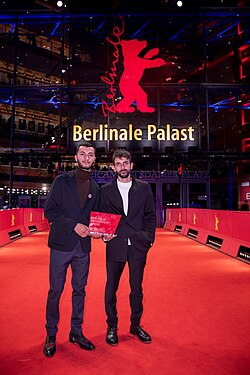
Beyond the Oscars, the film received numerous accolades from the New York Film Critics Circle, the Los Angeles Film Critics Association, and the International Documentary Association, where it won both Best Feature Documentary and Best Director.
| Award Body | Category | Result |
|---|---|---|
| Academy Awards | Best Documentary Feature Film | Won |
| Berlin International Film Festival | Berlinale Documentary Award | Won |
| Berlin International Film Festival | Panorama Audience Award | Won |
| Gotham Awards | Best Documentary Feature | Won |
| European Film Awards | European Documentary | Won |
| Cinema Eye Honors | Outstanding Non-Fiction Feature | Won |
Political Controversy and Criticism
Despite its critical success, No Other Land has become a lightning rod for political conflict. The controversy began prominently at the 74th Berlin International Film Festival, where filmmakers Yuval Abraham and Basel Adra used their acceptance speeches to highlight the legal inequalities between Israelis and Palestinians and to call for an end to the occupation and arms supplies to Israel.
Pro-Israeli Criticism
Israeli officials, including Culture Minister Miki Zohar, have denounced the film as "sabotage" and "propaganda," arguing that it defames the State of Israel. Some critics have accused the film of cultural appropriation for its use of the song "Ein Li Eretz Acheret," while others, including the NGO Regavim, claim the film contains fabrications. German officials also criticized the filmmakers' Berlinale speeches as "one-sided" and "anti-Israeli propaganda." Similarly, the Creative Community for Peace argued that the narrative demonizes Israelis by overlooking security rationales in the West Bank.
Pro-Palestinian Criticism
Conversely, the film faced criticism from the Palestinian Campaign for the Academic and Cultural Boycott of Israel (PACBI). The movement argued that the film violates anti-normalization guidelines—policies that discourage interaction with Israeli institutions or individuals that might legitimize the occupation. PACBI asserted that Palestinians do not need Israeli validation to narrate their own history.
However, this stance was contested by local leaders in Masafer Yatta. Nidal Younis, head of the village council, defended the collaboration, stating that the film tells the Palestinian story and that Yuval Abraham is a true partner in their defense against settler and army attacks.
Frequently Asked Questions
What is the main focus of No Other Land?
The film is a documentary that chronicles the Palestinian experience, specifically focusing on the community of Masafer Yatta and the impact of the Israeli occupation.
Who are the primary filmmakers?
The film was created by a team including Basel Adra and Yuval Abraham, among others such as Hamdan Ballal and Rachel Szor.
Why did the BDS movement criticize the film?
The Palestinian Campaign for the Academic and Cultural Boycott of Israel (PACBI) claimed the film violated anti-normalization guidelines by collaborating with an Israeli filmmaker.
How did the film perform at the Academy Awards?
The film won the Oscar for Best Documentary Feature Film in 2025.
What was the reaction of the Berlin International Film Festival organizers to the filmmakers' speeches?
The organizers stated that the filmmakers' statements were independent and should be accepted as long as they respected the legal framework.